

If your ears started ringing after a concert, a cold or a stressful week, the first question is usually the same: can tinnitus go away? The honest answer is that it often does, especially when it has a clear, temporary cause. When it lasts for months, it usually becomes much less noticeable over time, even if it never disappears completely.
- Key takeaways:
- Tinnitus often goes away on its own when triggered by temporary causes like noise, earwax, infections or certain medications.
- Persistent tinnitus is less likely to disappear but usually fades into the background over time.
- Protecting your ears and managing stress and sleep can help reduce symptoms.
- See a doctor if tinnitus lasts longer than a week or is accompanied by other symptoms.
- Supplements have not been proven to cure tinnitus, but some people choose to try them alongside other steps.
When tinnitus usually goes away
- After loud noise. Ringing after a concert, a gunshot or power tools often fades within hours to a few days. Repeated exposure, though, can make it permanent.
- Earwax blockage. Once the wax is safely removed by a clinician, the ringing often stops.
- Ear infections and colds. Tinnitus caused by fluid or congestion usually clears as the infection does.
- Medication side effects. Some drugs, including high doses of aspirin, can cause tinnitus that eases when the dose changes. Never stop a prescribed medicine without talking to your doctor.
- Stress and poor sleep. These rarely cause tinnitus on their own, but they make it louder. Ringing often settles as life calms down.
Why does tinnitus go away in these cases?
Tinnitus is a symptom, not a disease. When it is caused by something temporary, like loud noise or an ear infection, removing the cause often allows your hearing system to recover. For example, loud noise can temporarily overstimulate the hair cells in your inner ear, leading to ringing. As these cells recover, the noise fades. Similarly, earwax or congestion can block normal sound, so clearing them restores normal hearing and quiets the ringing.
How long does temporary tinnitus last?
Most cases of temporary tinnitus last from a few minutes to a few days. If you have been to a loud event and notice ringing, it usually fades within 24 to 48 hours. Ear infections or congestion-related tinnitus may linger for days or even a couple of weeks, but typically resolves as your infection clears. If your tinnitus is linked to a medication, it may resolve within days of stopping or changing the dose, but always consult your doctor before making any changes to prescribed medicines.
When it is more likely to stay
Tinnitus linked to age-related hearing loss or long-term noise damage tends to be longer lasting. Even then, most people find it becomes far less bothersome within six to twelve months. This process is called habituation: the brain learns to treat the sound as unimportant background noise, much like the hum of a fridge.
Why does chronic tinnitus persist?
Chronic tinnitus is usually a sign that some of the hair cells in the inner ear have been damaged. These cells convert sound waves into electrical signals for the brain. When they are damaged by age or repeated exposure to loud noise, the brain may try to compensate for the missing input by creating its own noise, what we perceive as tinnitus. In these cases, the ringing may not go away completely, but most people gradually become less aware of it as their brain adapts.
What is habituation?
Habituation is the process by which your brain learns to ignore the tinnitus sound. Over time, your mind treats it like any other background noise, such as a refrigerator hum or traffic outside your window. This does not mean the tinnitus is gone, but it becomes much less noticeable and less distressing. Many people with chronic tinnitus report that after several months, they are only aware of the sound in quiet moments or when they focus on it.

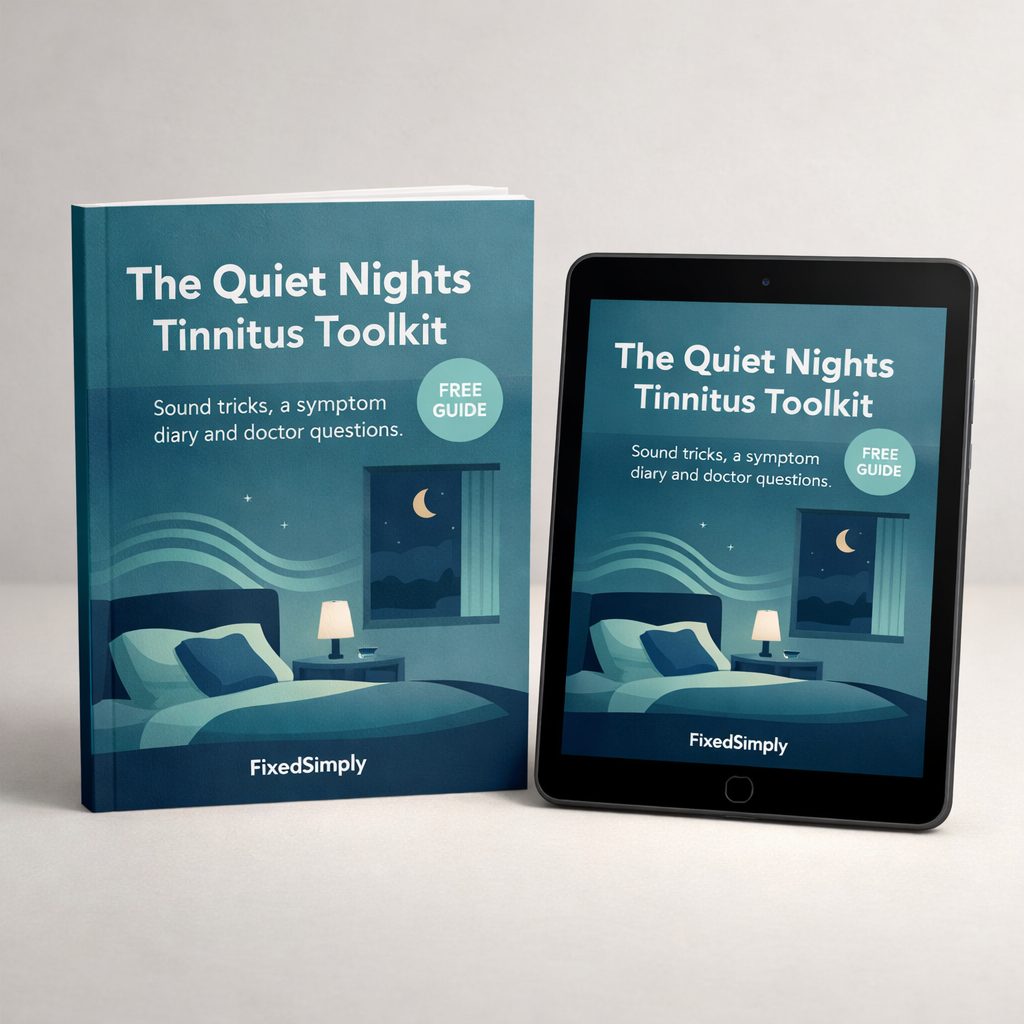
The Quiet Nights Tinnitus Toolkit
Calmer ears, better nights. Inside you get:
- 7 sound tricks that make ringing less noticeable
- A printable symptom and trigger diary
- The questions to ask your doctor or audiologist
100% free. No spam, unsubscribe anytime. Privacy policy.
How long is too long?
See a doctor or audiologist if tinnitus lasts more than a week or two, or sooner if it bothers you. Get urgent care if you have sudden hearing loss in one ear, tinnitus that pulses with your heartbeat, or ringing with dizziness, facial weakness or a severe headache. Sudden hearing loss is time-sensitive, and treatment within days gives the best chance of recovery.
Checklist: When to seek medical help for tinnitus
- Tinnitus lasts more than one to two weeks
- Tinnitus is severe, worsening or affecting your sleep or mood
- You have sudden hearing loss in one or both ears
- Tinnitus pulses in time with your heartbeat (pulsatile tinnitus)
- You have dizziness, balance problems, facial weakness or severe headache with tinnitus
- Tinnitus starts after a head injury
Prompt evaluation can rule out rare but serious causes and help you find relief sooner.
What helps while you wait
Use gentle background sound
Silence makes tinnitus seem louder. A fan, a white-noise machine, rain sounds or soft music, especially at bedtime, takes the edge off.
- Try playing soft music, nature sounds or white noise at night to mask the ringing.
- Some people find a bedside sound machine or a phone app helpful.
- Keep the volume low enough to be soothing, not distracting.
Protect your ears
Wear earplugs at concerts and with loud tools, and keep headphones below about 60% volume. This stops temporary ringing becoming permanent.
- Use hearing protection in noisy environments, such as concerts, sporting events or while using power tools.
- Limit headphone use and keep the volume at a safe level, you should be able to hear someone speaking nearby.
- Avoid sudden loud noises, which can trigger or worsen tinnitus.
Look after sleep and stress
Regular sleep, exercise and relaxation techniques lower the volume of tinnitus for many people. If it is affecting your mood, cognitive behavioral therapy (CBT) for tinnitus has good evidence for reducing distress.
- Stick to a regular sleep schedule and create a calming bedtime routine.
- Gentle exercise, such as walking or yoga, can help reduce stress and improve sleep.
- Try relaxation techniques: deep breathing, progressive muscle relaxation or mindfulness meditation.
- If tinnitus is causing anxiety or depression, consider seeing a therapist with experience in tinnitus management or CBT.
Get your hearing checked
If you have some hearing loss, hearing aids often make tinnitus much less noticeable because they bring back the outside sounds the brain has been missing.
- Schedule a hearing test with an audiologist if your tinnitus is persistent or you have any hearing difficulty.
- Hearing aids not only improve hearing but can also mask tinnitus by amplifying environmental sounds.
- Your audiologist can discuss sound therapy or other management options tailored to your needs.
Do supplements help tinnitus go away?
Research on supplements for tinnitus is limited, and none has been shown to make it go away. Some readers still try one alongside the steps above, often because it comes with a money-back guarantee. Options readers ask about include Audifort, Quietum Plus and Zeneara. Check any supplement with your pharmacist first, and treat it as an extra, not a replacement for a hearing check.


For a fuller overview, see our guide on what actually helps with tinnitus.
Common mistakes to avoid
- Ignoring persistent tinnitus. Waiting too long to seek help can delay treatment for underlying issues.
- Stopping medications without advice. Always consult your doctor before changing or stopping any prescribed medicine.
- Using cotton swabs to remove earwax. This can push wax deeper and damage your ear canal. Let a professional handle earwax removal.
- Overprotecting your ears. Wearing earplugs all day in quiet environments can make your ears more sensitive to sound. Use protection only in loud settings.
- Relying solely on supplements. There is no proven supplement cure for tinnitus. Use evidence-based methods and consult your healthcare provider.
Frequently asked questions
Can tinnitus go away completely?
Yes, tinnitus can go away completely, especially if it is caused by a temporary trigger like loud noise, earwax or an infection. However, when it results from permanent hearing loss or nerve damage, it is less likely to disappear but often becomes much less noticeable over time.
How can I tell if my tinnitus is temporary or permanent?
Tinnitus linked to a specific event (like a concert or illness) and fading within days is usually temporary. If it persists for weeks or is associated with hearing loss, it may be more permanent. Only a hearing professional can determine the cause and outlook for your tinnitus.
What are the red-flag symptoms with tinnitus?
Seek urgent medical care if you have tinnitus with sudden hearing loss, dizziness, facial weakness, severe headache or if the ringing pulses with your heartbeat. These can signal serious medical conditions that need prompt attention.
Does stress make tinnitus worse?
Yes, stress and poor sleep can make tinnitus seem louder and more bothersome. Managing stress through relaxation techniques, exercise and good sleep habits often helps reduce the impact of tinnitus.
Are there effective medical treatments for tinnitus?
There is no cure for most chronic tinnitus, but many people benefit from hearing aids, sound therapy, counseling and cognitive behavioral therapy. These approaches help reduce awareness and distress from tinnitus. Your doctor or audiologist can guide you to the best options for your situation.
Should I try supplements for tinnitus?
There is no solid evidence that supplements cure or prevent tinnitus. Some people choose to try them, but they should not replace proven treatments like hearing checks or therapy. Always discuss any supplement with your pharmacist or doctor first.
The bottom line
Tinnitus from noise, wax, infections or medication often goes away on its own. Longer-lasting tinnitus usually fades into the background as the brain habituates. Protect your ears, use background sound, look after sleep and get checked if it lasts more than a couple of weeks.
Want this as a handy printable?
The Quiet Nights Tinnitus Toolkit
Calmer ears, better nights. Inside you get:
- 7 sound tricks that make ringing less noticeable
- A printable symptom and trigger diary
- The questions to ask your doctor or audiologist
100% free. No spam, unsubscribe anytime. Privacy policy.
Disclosure: links marked as sponsored are affiliate links. If you buy through them we may earn a commission at no extra cost to you. This article is for information only and is not medical advice.
Sources and further reading
This guide is for general information only and is not a substitute for professional advice. See our editorial policy.
Products mentioned in this guide
Affiliate links. Results vary. This is not medical advice.
2 thoughts on “Can Tinnitus Go Away on Its Own? What to Expect and What Helps”
Comments are closed.