
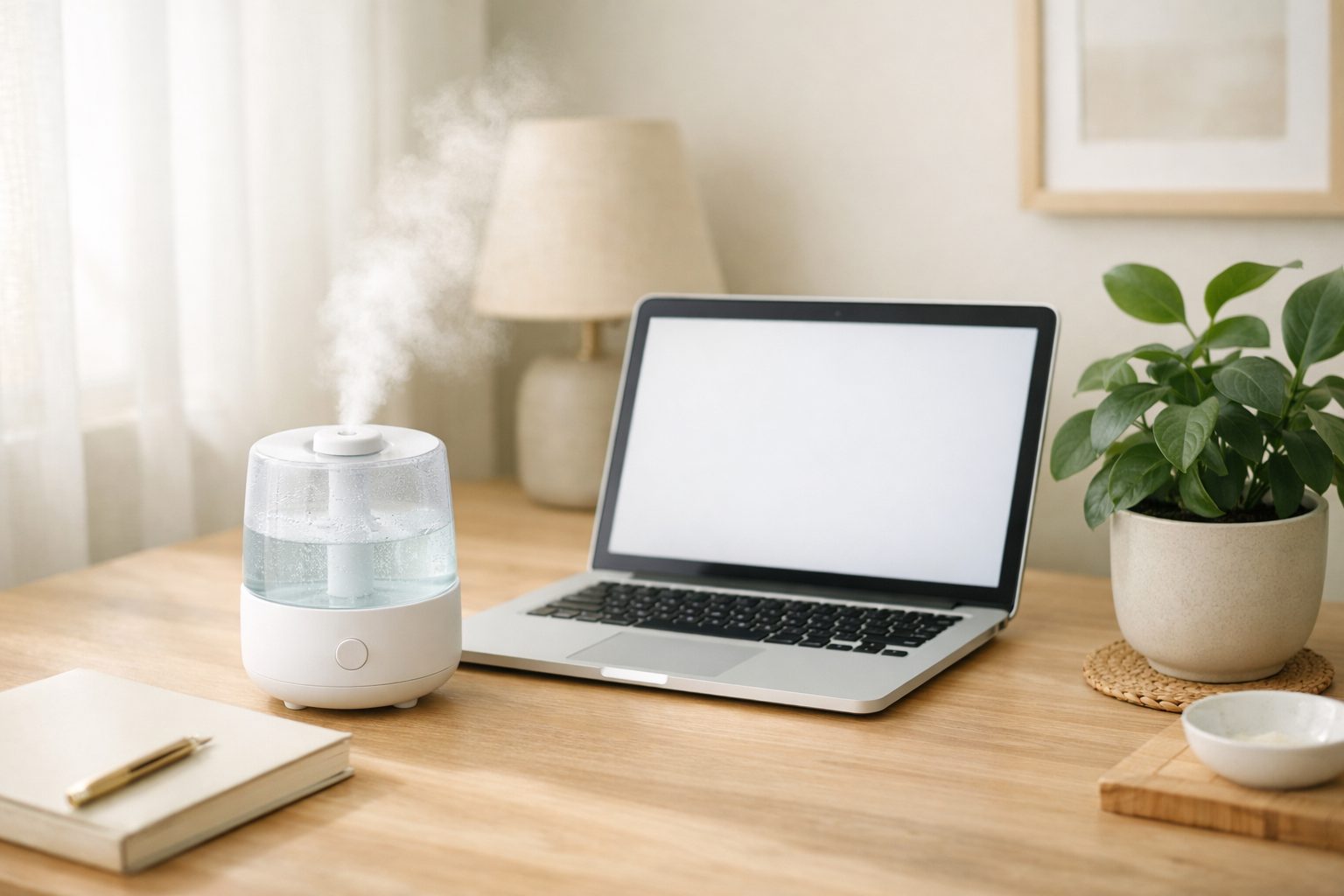
If your eyes feel gritty and tired, especially in winter or air-conditioned rooms, dry air could be part of the problem. A humidifier for dry eyes is a simple, drug-free way to help. Here is how to use one well.
- Key takeaways:
- Dry indoor air speeds up tear evaporation, making dry eyes worse.
- Humidifiers can help by raising room humidity to a comfortable level (40% to 50%).
- Both cool-mist and warm-mist humidifiers work for dry eyes, but cool-mist is safer for most homes.
- Proper placement, regular cleaning, and correct use are essential for safety and effectiveness.
- Persistent, painful, or worsening symptoms need an eye doctor’s attention.
Why humidity matters
Your eyes are protected by a thin layer of tears, called the tear film, which keeps the surface moist and comfortable. The tear film has three layers: an oily (lipid) layer on top, a watery (aqueous) layer in the middle, and a mucous layer closest to the eye. The oily layer slows down evaporation of the watery part. When indoor air is dry, especially in winter or in rooms with air conditioning or forced-air heating, tears evaporate more quickly. This leaves your eyes feeling gritty, tired, and irritated.
Increasing humidity in the room slows down this evaporation process. Several small studies have shown that raising room humidity can help stabilize the tear film and improve comfort for people with dry eye symptoms. If you spend a lot of time in dry indoor air, a humidifier can make a noticeable difference in how your eyes feel.
The right humidity level
Aim for about 40% to 50% indoor humidity. This is the “sweet spot” for comfort and eye health. If humidity drops below 30%, you may notice dry eyes and skin. If it rises above 60%, you risk mold growth and dust mites, which can trigger allergies and respiratory issues.
A simple, inexpensive device called a hygrometer measures indoor humidity. Place one in your bedroom or office to check the levels. Adjust your humidifier until you reach the target range, and monitor it regularly, especially during seasonal changes.
- Below 30%: Air is too dry for eyes and skin.
- 40% to 50%: Ideal for comfort and eye health.
- Above 60%: Too humid; risk of mold and dust mites increases.

Cool-mist or warm-mist?
- Cool-mist humidifiers are safer around children and pets and use less energy.
- Warm-mist humidifiers boil water, which reduces some germs, but they get hot.
Either works for dry eyes; choose based on safety and convenience.
Both types of humidifiers add moisture to the air and can help with dry eyes. The main differences are:
- Cool-mist humidifiers use ultrasonic vibration or a fan to release a cool, fine mist. They are energy-efficient and safe for homes with children or pets, since there is no hot water involved. However, they need regular cleaning to prevent bacteria and mold.
- Warm-mist humidifiers (also called steam vaporizers) heat water to create steam, which kills some germs in the water. The steam cools slightly before it leaves the machine, but the device itself gets hot and can be a burn risk if touched or knocked over. They may use a little more electricity and take more effort to clean because of mineral buildup.
For most people, a cool-mist humidifier is the easiest and safest option. However, if you are concerned about germs or live in a very cold climate, you may prefer a warm-mist model. Both types work equally well for dry eyes, so let safety, maintenance, and personal preference guide your choice.
Placement and use
- Place it a few feet away, not blowing directly into your face.
- Use it in the rooms where you spend the most time: bedroom and office.
- Run it overnight if your eyes feel worst in the morning.
Proper placement and use of your humidifier make a big difference in how effective it is for dry eyes. Here are some practical tips:
- Choose the right room. Bedrooms and home offices are good choices, since you spend many hours there. If your eyes feel dryest overnight or when you wake up, running a humidifier while you sleep can help.
- Position it correctly. Place the humidifier a few feet from your bed or workspace, not right next to your face. Direct mist blowing into your face can be uncomfortable and may not be more effective. Instead, aim for gentle, even humidity in the whole room.
- Keep doors and windows closed. This helps maintain a stable humidity level and prevents the moist air from escaping.
- Monitor humidity. Use your hygrometer to check that you are staying in the 40% to 50% range. Adjust the humidifier’s settings or run time as needed.
- Use distilled or demineralized water. Tap water contains minerals that can leave white dust on surfaces and inside the machine, and may promote bacterial growth.
Many people find that running their humidifier overnight provides the greatest relief, especially in winter when heating systems dry out the air. If you work at a desk or computer, consider using a humidifier in your workspace as well.

The Healthy Eyes Checklist
Protect your eyesight after 40. Inside you get:
- Screen and lighting habits that ease eye strain
- Eye-friendly foods for your shopping list
- Warning signs that need an eye exam fast
100% free. No spam, unsubscribe anytime. Privacy policy.
Keep it clean
Dirty humidifiers can spread bacteria and mold. Empty and rinse daily, clean weekly as the manufacturer recommends, and use distilled or demineralized water to avoid white mineral dust.
Neglecting humidifier cleaning is one of the most common mistakes people make. Bacteria and mold can grow quickly in standing water, and then be released into the air, potentially causing respiratory issues or allergic reactions. To keep your humidifier safe and effective:
- Empty and rinse the tank every day. Do not leave water sitting in the humidifier when not in use.
- Clean thoroughly at least once a week. Follow the manufacturer’s instructions. Usually this means scrubbing the tank and any removable parts with a mild disinfectant or vinegar solution, then rinsing well with clean water.
- Use distilled or demineralized water. This prevents mineral buildup (white dust) and reduces the risk of bacteria and mold.
- Replace filters or wicks as recommended. Some humidifiers have filters that need regular changing to work properly.
Set a reminder on your phone or calendar to keep up with cleaning. A clean humidifier is essential for your health and for the device to work as intended.
Other dry eye relief
- Preservative-free artificial tears
- Warm compresses and lid massage
- The 20-20-20 screen rule and full blinks
- Point car and desk fans away from your face
See dry eyes: signs, causes and simple relief.
Using a humidifier is just one part of managing dry eyes. Consider these additional steps for relief:
- Artificial tears: Over-the-counter, preservative-free eye drops can help keep eyes moist throughout the day. Use as directed, especially if you spend long hours at a computer or in dry environments.
- Warm compresses and lid massage: Applying a warm, damp washcloth to closed eyes for several minutes can help loosen clogged oil glands and improve tear quality. Gently massaging your eyelids may also help.
- Screen habits: Follow the 20-20-20 rule: every 20 minutes, look at something 20 feet away for 20 seconds. This helps reduce eye strain and encourages full blinking, which spreads tears evenly over the eye surface.
- Adjust airflow: Point fans, air vents, and car heaters away from your face. Direct air movement can quickly dry out your eyes.
Sometimes, making small changes in your daily routine can make a big difference in how your eyes feel.
Checklist: Using a humidifier for dry eyes
- Check room humidity with a hygrometer (aim for 40% to 50%).
- Choose a cool-mist or warm-mist humidifier based on your needs.
- Place the humidifier several feet from your bed or workspace, not right next to your face.
- Use distilled or demineralized water.
- Empty and rinse the tank daily.
- Clean the humidifier thoroughly every week.
- Monitor for mold or mineral buildup.
- Combine with other dry eye relief methods as needed.
- See an eye doctor if symptoms persist or worsen.
When to see an eye doctor
If symptoms last more than a few weeks, or you have pain, redness, discharge or vision changes, get checked.
Most cases of mild dry eye respond to home remedies like humidifiers, eye drops, and lifestyle changes. However, some symptoms may indicate a more serious condition that needs professional evaluation. See an eye doctor promptly if you experience:
- Persistent dryness, discomfort, or irritation lasting more than two to three weeks
- Eye pain or severe redness
- Discharge from the eye
- Sudden changes in vision, such as blurriness or loss of vision
- Sensitivity to light
These could be signs of infection, inflammation, or other eye diseases that require medical treatment. Early diagnosis can help prevent complications and protect your vision.
Eye-health supplements
Readers sometimes add an eye formula such as VisiFlora; evidence is mixed.

Some people try supplements marketed for eye health, such as omega-3 fatty acids or formulas containing vitamins and antioxidants. While a few studies suggest that certain nutrients may support overall eye health, the evidence for supplements specifically improving dry eye symptoms is mixed. Talk to your doctor before starting any new supplement, especially if you take other medications or have health conditions.
Frequently asked questions
How quickly will a humidifier help my dry eyes?
Many people notice some relief within a few days of using a humidifier, especially if their symptoms are strongly linked to dry indoor air. For best results, keep humidity in the recommended range (40% to 50%) and combine with other dry eye relief methods.
Can a humidifier make dry eyes worse?
If not cleaned regularly, a humidifier can spread bacteria or mold, which may irritate your eyes or cause other health problems. Also, if humidity is too high (above 60%), it can promote allergens like mold and dust mites. Always keep your humidifier clean and monitor room humidity.
Is it safe to use a humidifier every night?
Yes, as long as you keep the device clean and maintain proper humidity levels. Many people with dry eyes use humidifiers overnight, especially in winter. Be sure to follow cleaning instructions and use distilled water to reduce risks.
Should I use a humidifier if I have allergies?
Humidifiers can help with dry eyes and nasal passages, but too much humidity can worsen allergies by promoting mold and dust mites. Keep humidity between 40% and 50%, clean the humidifier regularly, and watch for signs of mold or dust buildup in your home.
Can I use essential oils in my humidifier for dry eyes?
Most eye doctors recommend against adding essential oils to humidifiers, especially if you have sensitive eyes or allergies. Oils can irritate eyes and airways, and may damage some humidifier models. Stick to plain distilled water for eye comfort.
Do all types of humidifiers work for dry eyes?
Yes, both cool-mist and warm-mist humidifiers can help add moisture to the air and relieve dry eyes. The choice depends on your safety needs, maintenance preferences, and the size of your room.
The bottom line
A clean humidifier keeping rooms at 40% to 50% humidity is a simple way to ease dry eyes, especially overnight and in winter. Combine it with drops, warm compresses and screen breaks.
Want this as a handy printable?
The Healthy Eyes Checklist
Protect your eyesight after 40. Inside you get:
- Screen and lighting habits that ease eye strain
- Eye-friendly foods for your shopping list
- Warning signs that need an eye exam fast
100% free. No spam, unsubscribe anytime. Privacy policy.
Disclosure: links marked as sponsored are affiliate links. If you buy through them we may earn a commission at no extra cost to you. This article is for information only and is not medical advice.
Sources and further reading
This guide is for general information only and is not a substitute for professional advice. See our editorial policy.
Products mentioned in this guide
Affiliate links. Results vary. This is not medical advice.