

Prostate enlargement, also known as benign prostatic hyperplasia (BPH), is a common condition as men age. While it cannot always be prevented, there are several science-backed habits that may help reduce your risk or keep symptoms milder. Understanding what you can and cannot control is key to managing prostate health as you get older.
- Key takeaways:
- You cannot change your age or genetics, the main risk factors for BPH.
- Staying active, maintaining a healthy waistline and eating more vegetables may help lower risk.
- Managing blood sugar and blood pressure is important for prostate and overall health.
- Alcohol and caffeine do not cause BPH but can worsen urinary symptoms.
- No supplement is proven to prevent BPH, and early symptom management is crucial.
- Regular checkups and talking to your doctor about prostate health are recommended, especially if you have risk factors.
What you cannot change
Some risk factors for prostate enlargement are out of your control. Understanding these helps set realistic expectations and focus your efforts where they matter most.
- Age: The risk of BPH increases steadily as men get older. By age 60, about half of men have some prostate enlargement. By age 80, up to 90 percent are affected.
- Genetics: BPH tends to run in families. If your father or brother had it, your risk is higher.
- Hormone changes: Natural changes in testosterone and other hormones as you age are a driving force behind prostate growth.
While you cannot change these factors, knowing your risk can help you stay alert to early symptoms and discuss screening with your doctor.
What you can influence
Research suggests that certain lifestyle choices may reduce your risk of developing BPH or at least help keep symptoms under control. Here is how each factor works and what you can do:
Stay active
Regular physical activity is linked with a lower risk of BPH symptoms. Exercise helps in several ways: it reduces inflammation, improves hormone balance and supports a healthy weight. Even moderate activity, like brisk walking for 30 minutes most days, can make a difference.
- How it helps: Physical activity may slow prostate growth and improve urinary flow.
- Tips: Aim for at least 150 minutes of moderate exercise weekly. Choose activities you enjoy, such as walking, swimming or cycling. Even gardening or household chores count.
- Common mistake: Only exercising sporadically. Consistency is key for long-term benefit.
Keep a healthy waist
Obesity, especially excess belly fat, is associated with increased prostate growth and worse urinary symptoms. Fat tissue around the abdomen can disrupt hormone levels and increase inflammation, both of which may contribute to BPH.
- How it helps: Maintaining a healthy waistline can help balance hormones and reduce pressure on the bladder and prostate.
- Tips: Focus on gradual, sustainable weight loss if needed. Combine regular exercise with a balanced, portion-controlled diet.
- Common mistake: Ignoring small weight gains over time. Even modest reductions in waist size can be beneficial.
Manage blood sugar and blood pressure
Conditions like diabetes and metabolic syndrome (a cluster of high blood pressure, high blood sugar, excess abdominal fat and abnormal cholesterol) are linked with a higher risk of BPH. High blood sugar may damage blood vessels and nerves around the prostate, while high blood pressure can worsen urinary symptoms.
- How it helps: Good control of blood sugar and blood pressure reduces overall inflammation and may slow prostate growth.
- Tips: Follow your healthcare provider’s advice for managing these conditions. Eat a diet rich in whole grains, vegetables and lean protein. See healthy diet for prediabetes for more ideas.
- Common mistake: Not checking blood sugar or blood pressure regularly, especially if you are at risk.
Eat more vegetables
Diets high in vegetables, especially colorful ones like tomatoes, carrots, spinach and bell peppers, are associated with a lower risk of BPH in observational studies. Vegetables are rich in antioxidants and fiber, which may help reduce inflammation and support hormone balance.
- How it helps: A vegetable-rich diet supports overall prostate health and may lower the risk of prostate enlargement.
- Tips: Aim for at least 5 servings of vegetables daily. Try to include a variety of colors and types. Replace some red meat and processed foods with plant-based options.
- Common mistake: Relying on supplements instead of real vegetables. Whole foods offer the best benefits.
Moderate alcohol and caffeine
Alcohol and caffeine do not cause BPH, but they can irritate the bladder and make urinary symptoms worse, especially at night. Limiting these may help if you already have symptoms.
- How it helps: Reducing alcohol and caffeine can improve urinary comfort and reduce nighttime trips to the bathroom.
- Tips: Try cutting back on coffee, tea, cola and alcohol, especially in the evening. Drink more water earlier in the day and less before bedtime.
- Common mistake: Drinking fluids late at night, leading to more nighttime urination.
Do not ignore symptoms
Ignoring urinary symptoms, such as frequent urination, weak stream or trouble starting, can lead to complications. Early treatment can help prevent symptoms from getting worse and reduce the risk of urinary retention or infections.
- How it helps: Early intervention can improve quality of life and avoid more serious problems.
- Tips: See your doctor if you notice changes in urination, even if they seem minor.
- Red flag: If you cannot urinate at all, have blood in your urine or develop pain or fever, seek medical help right away.

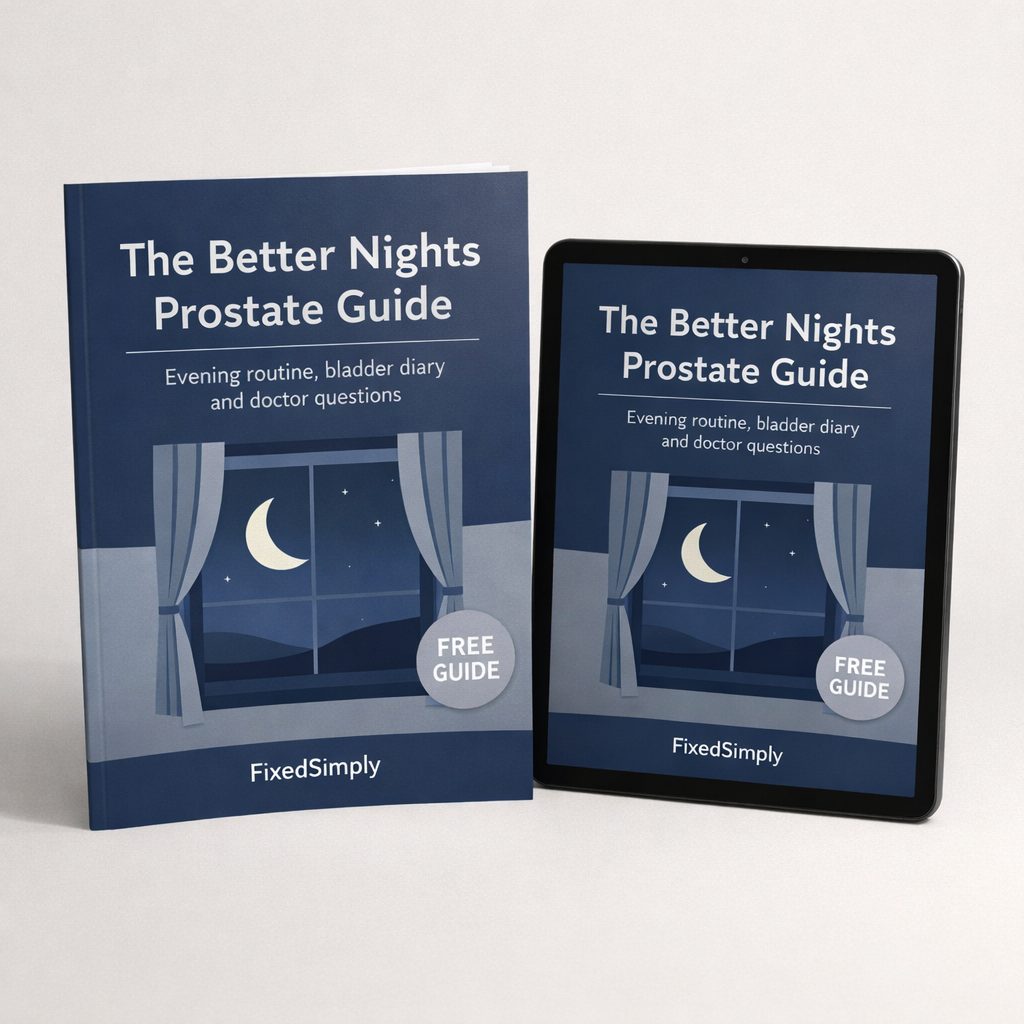
The Better Nights Prostate Guide
Fewer bathroom trips at night. Inside you get:
- An evening routine that helps you sleep through
- A printable 3-day bladder diary
- The questions to ask your doctor
100% free. No spam, unsubscribe anytime. Privacy policy.
Checklist: Habits to support prostate health
- Get regular physical activity (walking, swimming, cycling, etc.)
- Maintain a healthy waistline and avoid excess belly fat
- Monitor and control blood sugar and blood pressure
- Eat at least 5 servings of vegetables daily
- Limit red meat and processed foods
- Moderate alcohol and caffeine intake, especially in the evening
- Do not ignore urinary symptoms; get them checked early
- Discuss prostate health and screening with your doctor, especially if you have risk factors
Checkups
Regular checkups are important for early detection and management of prostate issues. Most experts recommend talking to your doctor about prostate health starting around age 50, or earlier if you have a family history of BPH or are of African descent. Your doctor may suggest a prostate exam or discuss whether PSA (prostate-specific antigen) testing is right for you.
Early discussion and screening can help catch problems before they become serious. For more on symptoms to watch for, see enlarged prostate (BPH) symptoms.
What about supplements?
There is no supplement proven to prevent BPH. Large, well-conducted studies have found that saw palmetto, a popular herbal option, performs no better than a placebo for preventing or treating BPH. For more details, see does saw palmetto work?.
Some men still try over-the-counter formulas like ProstaVive or Protoflow as an extra, but these are not a substitute for proven lifestyle changes or medical advice. Always talk to your doctor before starting any supplement, especially if you take other medications or have health conditions.

Questions to ask your doctor at your next checkup
Prostate health is easier to protect when you and your doctor are on the same page. Many men feel awkward raising urinary symptoms, but doctors hear these questions every day. Bringing a short list to your appointment helps you get clear answers and makes sure nothing important is missed.
- Based on my age and family history, should I be thinking about prostate screening, and what are the pros and cons for me?
- Are any of my current medicines, such as decongestants or some antidepressants, likely to make urinary symptoms worse?
- Which of my symptoms would be worth tracking with a bladder diary?
- Would changes to my weight, activity level or evening fluid habits make a real difference in my case?
- What signs would mean I should come back sooner rather than waiting for my next routine visit?
Write down the answers or ask a family member to come with you. Keeping notes over time makes it easier to spot changes and to decide together whether any treatment is worth considering.
Frequently asked questions
Can you prevent an enlarged prostate completely?
No. Age and genetics are the main risk factors and cannot be changed. However, healthy habits may lower your risk or help keep symptoms milder.
What are the early symptoms of an enlarged prostate?
Early symptoms include frequent urination (especially at night), difficulty starting urination, weak stream, dribbling at the end of urination and feeling that the bladder is not completely empty. If you notice these, see your doctor.
Does drinking more water help with BPH?
Drinking enough water is important for overall health. However, drinking too much, especially in the evening, can increase nighttime urination. Balance your fluid intake and avoid excess fluids before bedtime.
Are there foods that make BPH worse?
Diets high in red meat, processed foods and saturated fat may be linked to a higher risk of BPH. Spicy foods, alcohol and caffeine can worsen urinary symptoms for some men.
When should I see a doctor about prostate symptoms?
See your doctor if you notice any urinary changes, such as increased frequency, urgency, weak stream or difficulty starting. Seek immediate care if you cannot urinate, have severe pain, fever or blood in your urine.
Is BPH linked to prostate cancer?
BPH and prostate cancer are different conditions. Having BPH does not increase your risk of prostate cancer, but both can cause similar urinary symptoms. That is why regular checkups are important.
The bottom line
You cannot fully prevent an enlarged prostate, but staying active, keeping a healthy waist, eating more vegetables and managing blood sugar are linked with lower risk and milder symptoms. Get symptoms checked early.
Want this as a handy printable?
The Better Nights Prostate Guide
Fewer bathroom trips at night. Inside you get:
- An evening routine that helps you sleep through
- A printable 3-day bladder diary
- The questions to ask your doctor
100% free. No spam, unsubscribe anytime. Privacy policy.
Disclosure: links marked as sponsored are affiliate links. If you buy through them we may earn a commission at no extra cost to you. This article is for information only and is not medical advice.
Sources and further reading
This guide is for general information only and is not a substitute for professional advice. See our editorial policy.
Products mentioned in this guide
Affiliate links. Results vary. This is not medical advice.