

Getting up two or three times a night to pee, a weaker stream, or that feeling of never quite emptying your bladder: if this sounds familiar, you are in very large company. About half of men in their 50s and up to 90% of men in their 80s have some prostate enlargement.
Most of the time it is not cancer, and there is a lot you can do. Here is a plain-English guide.
- Prostate enlargement is common after age 50 and usually not cancer.
- Symptoms include night-time urination, weak stream, urgency, and incomplete emptying.
- Everyday changes like adjusting fluids, exercise, and bladder habits can help.
- See a doctor if symptoms bother you, worsen, or if you have red-flag signs.
- Prescription treatments and minimally invasive procedures are available and effective.
- Supplements are not a proven solution; always consult your doctor before trying them.
What is going on
The prostate is a walnut-sized gland that sits under the bladder and wraps around the tube that carries urine out (the urethra). With age it tends to grow, a condition called benign prostatic hyperplasia (BPH). As it grows it can squeeze the urethra, which causes the familiar symptoms.
BPH does not turn into cancer and does not raise your cancer risk, but the symptoms can overlap, which is why a check-up matters.
Understanding the prostate and why it grows
The prostate has an important role in producing some of the fluid that makes up semen. As men age, hormone changes, especially a shift in testosterone and dihydrotestosterone, stimulate prostate cells to multiply. Over time, this slow growth can narrow the urethra and affect bladder function.
While the exact cause of BPH is not fully understood, aging and family history are the main risk factors. Nearly all men experience some prostate growth as they get older, but not everyone develops bothersome symptoms.
How prostate enlargement causes urinary problems
- Urethral narrowing: The growing prostate squeezes the urethra, making it harder for urine to flow.
- Bladder changes: The bladder muscle works harder to push urine through the narrowed passage, which can make it thicker and more irritable over time.
- Incomplete emptying: Because the flow is blocked, the bladder may not empty fully, leading to frequent trips to the bathroom.

Common symptoms
- Needing to pee more often, especially at night (nocturia)
- A weak or stop-start stream
- Trouble getting started
- Dribbling at the end
- A sense that the bladder is not fully empty
- Sudden urgency
Symptoms can range from mild to severe. Some men notice only occasional inconvenience, while others find it disrupts their sleep and daily life.
When to see a doctor (and when to go quickly)
Book an appointment if symptoms bother you, wake you more than once a night, or are getting worse. Your doctor may examine the prostate, test your urine and discuss a PSA blood test. Get urgent help if you suddenly cannot pee at all, see blood in your urine, have pain or fever with urinary symptoms, or notice bone pain or unexplained weight loss.
- Sudden inability to urinate: This is called acute urinary retention and is a medical emergency.
- Blood in urine: This could signal infection, stones, or rarely, cancer.
- Pain or fever: May indicate infection or prostatitis, which needs prompt treatment.
- Bone pain or unexplained weight loss: Rare, but could be a sign of advanced prostate cancer.
It is always better to get checked if you are unsure. Early evaluation can rule out serious problems and help find solutions that improve your quality of life.
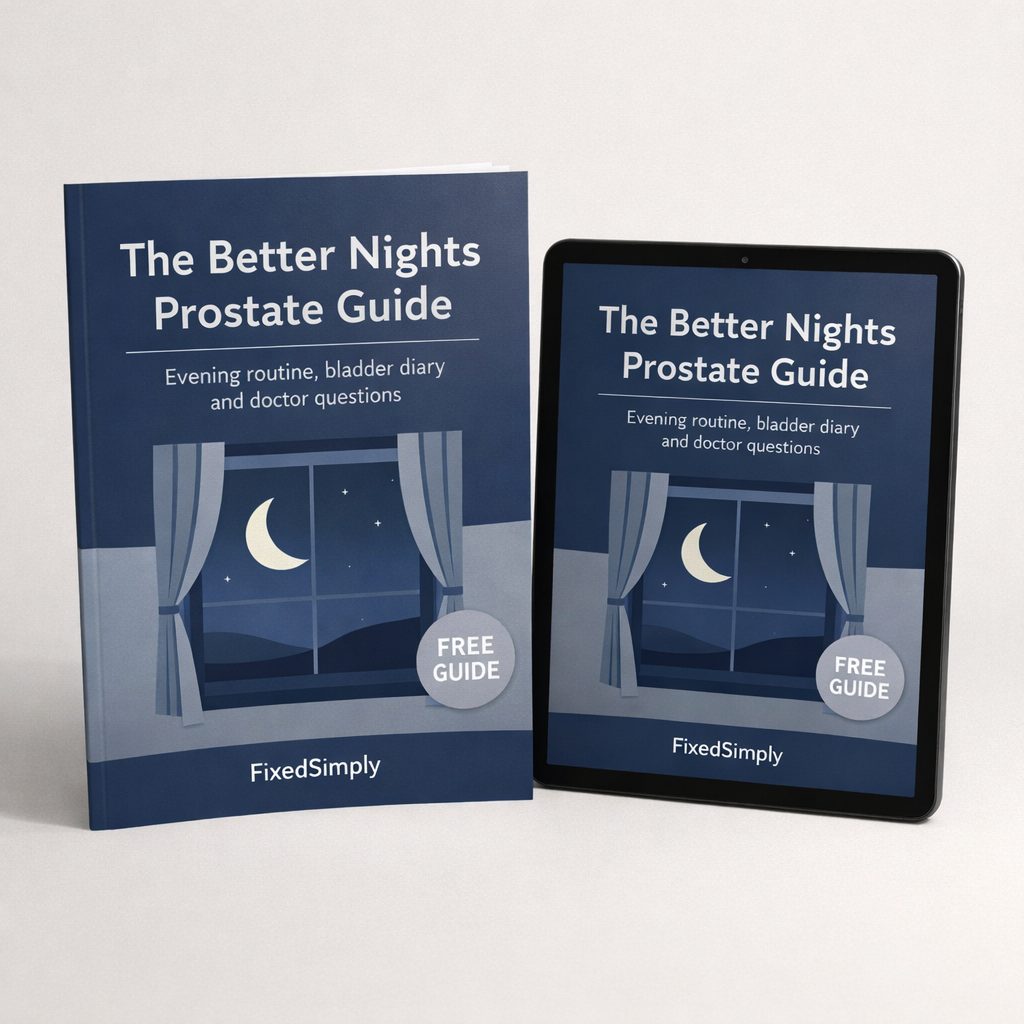
The Better Nights Prostate Guide
Fewer bathroom trips at night. Inside you get:
- An evening routine that helps you sleep through
- A printable 3-day bladder diary
- The questions to ask your doctor
100% free. No spam, unsubscribe anytime. Privacy policy.
Everyday habits that help
While prostate growth cannot be reversed by lifestyle alone, certain habits can make symptoms less bothersome and help you sleep better at night.
1. Time your drinks
Keep drinking enough during the day, but cut back in the two hours before bed. Empty your bladder just before you lie down.
- Spread out fluid intake during the day instead of drinking large amounts at once.
- Avoid “catching up” on fluids in the evening.
2. Ease off caffeine and alcohol, especially in the evening
Both irritate the bladder and make you produce more urine.
- Coffee, tea, cola, and energy drinks can worsen urgency and frequency.
- Alcohol acts as a diuretic and can increase night-time urination.
3. Try double voiding
After you finish, wait 30 seconds and try again. It helps empty the bladder more completely.
- Relax, wait, and gently try to urinate again before leaving the bathroom.
- This can reduce the feeling of incomplete emptying and lower the risk of leaks.
4. Stay active and keep weight in check
Studies link regular exercise and a healthy waist size with fewer urinary symptoms.
- Walking, swimming, or light aerobic exercise can help bladder function.
- Carrying extra weight, especially around the belly, puts pressure on the bladder.
5. Review your medications
Some decongestants and antihistamines can make it harder to pee, and diuretics taken late in the day add night-time trips. Ask your doctor whether timing can change.
- Check with your doctor or pharmacist before stopping or changing any medication.
- Mention all prescription and over-the-counter drugs you use at your appointments.
6. Pelvic floor exercises
They are not just for women. Squeezing the muscles you would use to stop the flow, a few sets a day, can help with dribbling and urgency.
- Try three sets of 10 squeezes, holding each for a few seconds.
- Consistency matters; improvement may take several weeks.
Checklist: Steps to manage prostate symptoms at home
- Limit evening fluids and empty your bladder before bed.
- Avoid caffeine and alcohol late in the day.
- Practice double voiding each time you use the bathroom.
- Get regular physical activity and aim for a healthy waist size.
- Discuss all medications with your doctor, especially if symptoms change.
- Do pelvic floor exercises daily.
- Track your symptoms and bring notes to your doctor visits.
Medical treatment works
If habits are not enough, there are effective prescription medicines. Some relax the muscles around the prostate within days, and others slowly shrink it. There are also several minimally invasive procedures. You do not have to just put up with it.
Types of medical treatment
- Alpha-blockers: These relax the muscles in the prostate and bladder neck, improving urine flow and reducing symptoms quickly.
- 5-alpha reductase inhibitors: These shrink the prostate over months, best for larger glands.
- Combination therapy: Sometimes both types are used together for better results.
- Minimally invasive procedures: Options like UroLift, Rezum, and laser therapy can relieve blockage with less recovery time than traditional surgery.
- Surgery: Reserved for severe cases or when other treatments fail. The most common is TURP (transurethral resection of the prostate).
Your doctor will help you choose the best option based on your symptoms, prostate size, and overall health.
What about prostate supplements?
The best-known ingredient is saw palmetto. Large, well-run trials, including a major study published in JAMA, found it worked no better than a placebo for BPH symptoms. Other common ingredients include beta-sitosterol, pygeum, pumpkin seed oil, lycopene and zinc. A few small studies on beta-sitosterol and pygeum suggest modest symptom relief, but the evidence is limited.
Some men still choose to try a supplement, often because it comes with a money-back guarantee. If you do:
- See your doctor first so a supplement never masks something that needs checking.
- Tell your doctor what you are taking, as some ingredients can affect PSA results.
- Avoid any product that promises to “shrink” or “cure” the prostate.
Options readers ask about include ProstaVive, Protoflow and TitanFlow. These are dietary supplements whose claims have not been evaluated by the FDA.

What to know before trying supplements
- Supplements are not regulated or tested like prescription medicines.
- Claims about “shrinking” or “curing” the prostate are not supported by solid science.
- Some ingredients may interact with other medications or affect lab results.
- Always let your doctor know about any supplement you take.
Key takeaways
- Prostate enlargement is common and usually not dangerous, but symptoms can affect quality of life.
- Lifestyle changes can help manage mild symptoms, but do not hesitate to seek medical advice if they persist or worsen.
- Effective medical treatments are available, from medicines to minimally invasive procedures.
- Supplements have not been proven effective and should not replace medical care.
- See your doctor promptly for red-flag symptoms like blood in urine, pain, fever, or inability to urinate.
Frequently asked questions
How do I know if my symptoms are just BPH or something more serious?
BPH symptoms overlap with other conditions, including prostate cancer and infections. If you notice blood in your urine, pain, fever, bone pain, or unintended weight loss, see a doctor right away. Otherwise, regular check-ups and tests can help rule out serious causes.
Will prostate enlargement keep getting worse?
BPH tends to progress slowly. For some men, symptoms stay mild. For others, they may gradually worsen over years. Early lifestyle changes, regular monitoring, and timely treatment can help manage symptoms and prevent complications.
Can lifestyle changes alone control my symptoms?
For many men with mild symptoms, habits like adjusting fluid intake, reducing caffeine and alcohol, staying active, and practicing double voiding can make a real difference. If symptoms are moderate or severe, medical treatment may be needed.
Are prescription medicines safe for long-term use?
Most BPH medicines are considered safe for long-term use, but all have potential side effects. Alpha-blockers can cause dizziness or low blood pressure, while 5-alpha reductase inhibitors may affect sexual function. Discuss benefits and risks with your doctor.
Do prostate supplements really work?
Large, high-quality studies have not shown that popular supplements like saw palmetto work better than a placebo. Some other ingredients have limited evidence for modest benefit. Supplements should never replace proven medical treatments, and you should always discuss them with your doctor.
Can BPH lead to other health problems?
If left untreated, severe BPH can lead to complications like urinary retention, bladder stones, or kidney damage. Most men do not develop these problems, but prompt attention to symptoms and regular check-ups help prevent them.
The bottom line
An enlarging prostate is a normal part of getting older, and it is very treatable. Get checked, adjust the timing of drinks, cut evening caffeine and alcohol, stay active, and know that effective medicines exist if you need them. Supplements are an optional extra, not the main plan.
Want this as a handy printable?
The Better Nights Prostate Guide
Fewer bathroom trips at night. Inside you get:
- An evening routine that helps you sleep through
- A printable 3-day bladder diary
- The questions to ask your doctor
100% free. No spam, unsubscribe anytime. Privacy policy.
Disclosure: links marked as sponsored are affiliate links. If you buy through them we may earn a commission at no extra cost to you. This article is for information only and is not medical advice.
Sources and further reading
This guide is for general information only and is not a substitute for professional advice. See our editorial policy.
Products mentioned in this guide
Affiliate links. Results vary. This is not medical advice.
1 thought on “Up at Night to Pee? A Plain-English Guide to Prostate Health After 50”
Comments are closed.