
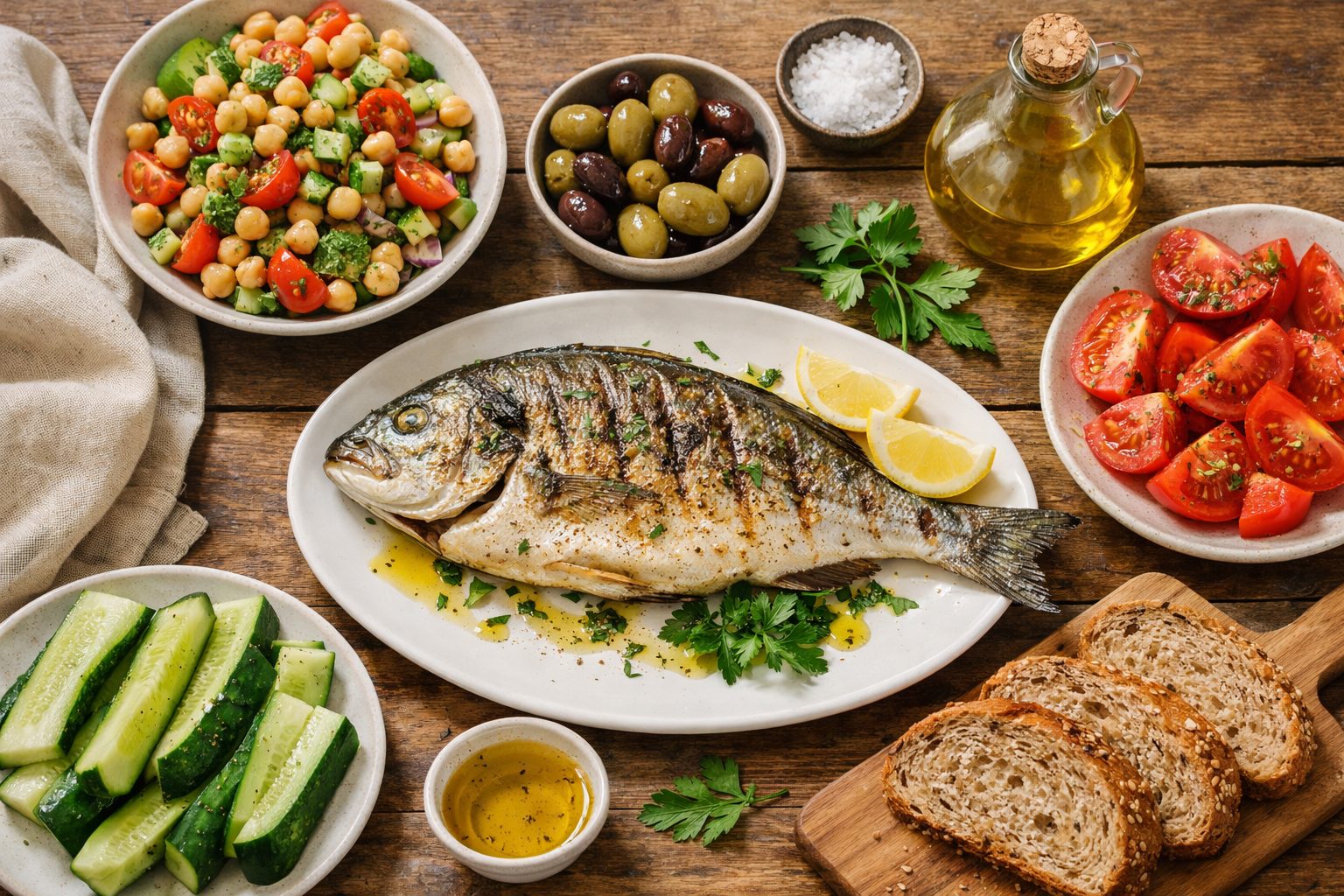
If you have prediabetes and dislike strict diets, the Mediterranean diet is one of the most flexible, enjoyable and well-researched ways to eat. Here is how to start.
- Key takeaways:
- The Mediterranean diet focuses on whole, minimally processed foods that help stabilize blood sugar.
- It is linked to a lower risk of type 2 diabetes and heart disease in large studies.
- It is not a strict or restrictive diet, making it more sustainable for most people.
- Practical food swaps and small daily changes can make a big difference.
- Pairing this way of eating with regular movement and good sleep supports better blood sugar control.
- Always consult your doctor before making major diet changes, especially if you take diabetes medication.
Why it suits prediabetes
The Mediterranean diet is built on vegetables, legumes, whole grains, fish and olive oil. Large studies, including the Spanish PREDIMED trial, have linked it with a lower risk of type 2 diabetes and heart disease. It is high in fiber, which slows the rise in blood sugar after meals, and low in sugary and highly processed foods.
Prediabetes means your blood sugar is higher than normal but not high enough for a diabetes diagnosis. Managing this early can help prevent complications and delay or avoid type 2 diabetes. The Mediterranean diet works well because it emphasizes foods that are digested slowly, keeping blood sugar steadier. Its healthy fats, fiber and antioxidants also support heart health, which is important since prediabetes raises your risk of heart disease.
What to eat more of
- Vegetables at most meals
- Legumes: lentils, chickpeas and beans several times a week
- Whole grains: oats, barley, bulgur, brown rice, whole-grain bread
- Fish, especially oily fish, at least twice a week
- Extra virgin olive oil as the main fat
- Nuts and seeds, a small handful a day
- Fruit as dessert, whole rather than juiced
- Moderate amounts of yogurt, cheese, eggs and poultry
These foods are nutrient-dense and provide vitamins, minerals, and fiber. Fiber is especially important for blood sugar control because it slows digestion and helps prevent spikes after eating. Oily fish like salmon, sardines and mackerel provide omega-3 fats, which are linked to lower inflammation and better heart health.
Try to fill half your plate with non-starchy vegetables (like leafy greens, broccoli, tomatoes, zucchini, peppers) at lunch and dinner. Legumes and whole grains add plant-based protein and slow-burning carbohydrates. Using olive oil instead of butter or margarine gives you heart-healthy fats that do not raise blood sugar.

What to limit
- Sugary drinks and sweets
- White bread, pastries and refined grains
- Red and processed meat
- Fried and ultra-processed foods
These foods can cause rapid spikes in blood sugar and, over time, increase the risk of type 2 diabetes and heart disease. Sugary drinks (like soda, sweet tea, energy drinks and even some fruit juices) are absorbed quickly and offer little nutrition. Processed meats and fried foods are linked to inflammation and higher heart risk.
Instead, choose water, unsweetened tea or coffee, and limit treats to special occasions. When you want something sweet, try fruit first.
A sample day
Breakfast: plain Greek yogurt with berries and walnuts.
Lunch: lentil and vegetable soup with a slice of whole-grain bread.
Snack: an orange and a few almonds.
Dinner: baked salmon with roasted vegetables, a chickpea salad and olive oil dressing.
This sample menu shows how simple and satisfying Mediterranean meals can be. Each meal includes fiber, healthy fats and protein, all of which help keep you full and your blood sugar steady. Notice that fruit is eaten whole, not juiced, to keep the fiber and slow sugar absorption.
Easy swaps
- Butter to olive oil
- Chips to nuts or olives
- Steak night to fish or bean night
- White pasta to whole-grain pasta with plenty of vegetables
Making these swaps gradually can help you adjust your palate and habits without feeling deprived. For example, drizzle olive oil on vegetables or salads instead of using creamy dressings. Keep a small bowl of nuts or olives for snacks instead of chips or crackers. Try a new fish recipe once a week, or add a bean-based dish to your menu.

The Steady Blood Sugar Cheat Sheet
Fewer spikes, more energy. Inside you get:
- The simple plate method on one page
- 25 smart food swaps you will actually enjoy
- A printable reading and meal log
100% free. No spam, unsubscribe anytime. Privacy policy.
How the Mediterranean diet helps blood sugar
The Mediterranean diet helps manage prediabetes in several ways:
- Fiber: Slows digestion and sugar absorption, reducing blood sugar spikes.
- Healthy fats: Olive oil, nuts, and fish fats do not raise blood sugar and may improve insulin sensitivity.
- Antioxidants: Found in vegetables, fruits and olive oil, they may reduce inflammation linked to insulin resistance.
- Low glycemic load: Most foods are digested slowly, helping keep blood sugar stable.
- Satiety: Meals are filling, which may help you avoid overeating and manage weight, another key factor in prediabetes.
Common mistakes to avoid
- Overeating healthy fats: Olive oil, nuts and seeds are healthy but calorie-dense. Large portions can lead to weight gain, which may worsen blood sugar control.
- Too much bread or pasta: Even whole-grain versions should be eaten in moderation. Balance grains with plenty of vegetables and protein.
- Relying on cheese and processed meats: The Mediterranean diet uses cheese and cured meats sparingly, not as staples.
- Skipping movement: Diet works best alongside regular physical activity.
- Ignoring portion sizes: Even healthy foods can add up in calories. Use smaller plates and pay attention to hunger cues.
Checklist for getting started
- Stock up on fresh and frozen vegetables and fruits.
- Buy canned beans, lentils and chickpeas for quick meals.
- Choose whole-grain bread, pasta, rice and cereals.
- Switch to extra virgin olive oil as your main cooking and salad oil.
- Keep nuts and seeds on hand for snacks (watch portions: a small handful).
- Plan fish meals twice a week. Try canned salmon or sardines for convenience.
- Limit red meat to a few times a month, if at all.
- Read labels to avoid added sugars and highly processed ingredients.
- Enjoy fruit for dessert instead of cakes or cookies.
- Take a short walk after meals if possible.
Make it work harder
Pair it with a short walk after meals and good sleep. See healthy diet for prediabetes and signs of blood sugar spikes. Keep portions sensible, since olive oil and nuts are healthy but calorie-dense.
Physical activity helps your body use insulin more effectively and can lower blood sugar after eating. Even a 10-minute walk after meals makes a difference. Good sleep is also linked to better blood sugar control. Try to get 7 to 8 hours of quality sleep per night.
If you are new to this way of eating, start with small changes. Add an extra serving of vegetables, swap white bread for whole-grain, or cook a new bean dish. Over time, these habits add up.
Supplements
Food comes first. Some readers add a blood sugar supplement; see our honest Sugar Defender review. Options readers ask about include Gluco6. Check with your doctor if you take diabetes medication.


Supplements should not replace a healthy diet or lifestyle changes. If you use supplements, let your doctor know, especially if you take medication for blood sugar, as some supplements may interact with your treatment or affect your blood sugar levels.
When to see a doctor
If you have prediabetes, regular checkups with your doctor are important to monitor your blood sugar and overall health. See your doctor if you notice:
- Unexplained weight loss
- Increased thirst or urination
- Fatigue that does not improve
- Blurred vision
- Any symptoms of high or low blood sugar
Your doctor can help you understand your lab results, set realistic goals and adjust medications if needed. Do not make major changes to your diet or supplements without medical advice, especially if you are on medication for blood sugar or other conditions.
Frequently asked questions
Is the Mediterranean diet safe for everyone with prediabetes?
For most people, yes. The Mediterranean diet is based on whole foods and balanced meals. However, if you have food allergies, kidney problems or other health issues, talk to your doctor or a registered dietitian before making changes.
Do I need to count carbs or calories on the Mediterranean diet?
Counting is not required, but being aware of portions and choosing whole, minimally processed foods is important. If you want more structure, a dietitian can help you set targets based on your needs.
Can I eat pasta and bread?
Yes, but choose whole-grain versions and eat them in moderation. Balance them with plenty of vegetables and protein. Avoid white bread and refined pasta, which cause blood sugar spikes.
How soon will I see results in my blood sugar?
Some people notice improvements in blood sugar and energy within a few weeks, especially if they also increase activity and manage weight. However, results vary. Always follow up with your doctor to track your progress.
What if I do not like fish?
You can still follow the Mediterranean diet by focusing on legumes, nuts, seeds, and plant-based proteins. If you eat poultry, include it in moderation. Try different recipes or use canned fish for convenience if you are open to it.
Is wine part of the Mediterranean diet for prediabetes?
Some traditional Mediterranean diets include moderate wine with meals, but alcohol is not necessary and can affect blood sugar. If you drink, do so only in moderation and check with your doctor, especially if you take medication.
The bottom line
The Mediterranean diet is a proven, enjoyable way to eat with prediabetes: plenty of vegetables, legumes, whole grains, fish and olive oil, and far fewer sugary and processed foods.
Want this as a handy printable?
The Steady Blood Sugar Cheat Sheet
Fewer spikes, more energy. Inside you get:
- The simple plate method on one page
- 25 smart food swaps you will actually enjoy
- A printable reading and meal log
100% free. No spam, unsubscribe anytime. Privacy policy.
Disclosure: links marked as sponsored are affiliate links. If you buy through them we may earn a commission at no extra cost to you. This article is for information only and is not medical advice.
Sources and further reading
This guide is for general information only and is not a substitute for professional advice. See our editorial policy.
Products mentioned in this guide
Affiliate links. Results vary. This is not medical advice.