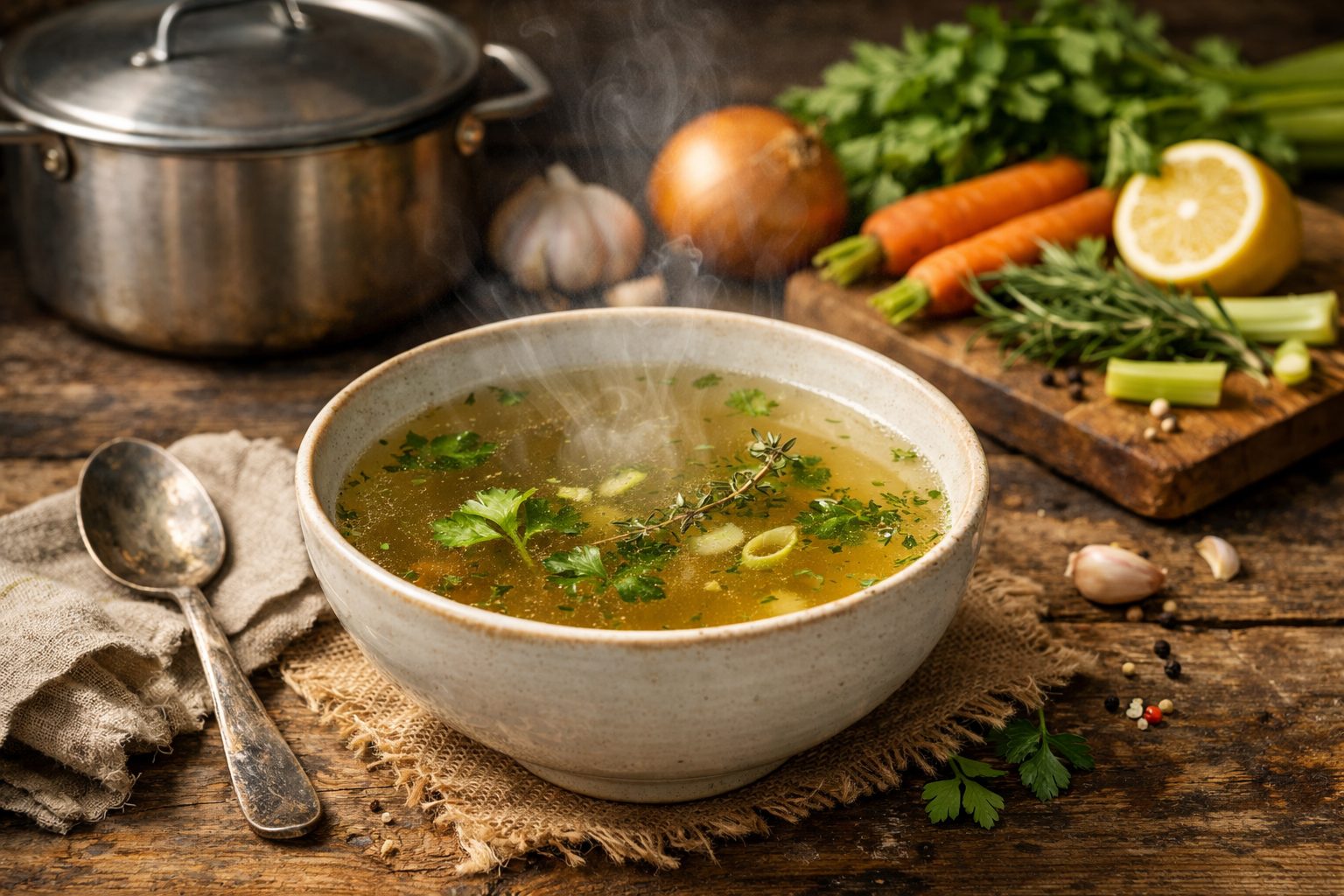
Bone broth has become a wellness favorite, with claims that it “heals the gut”. It is a comforting, nourishing food, but some claims run ahead of the evidence. Here is an honest look at bone broth for gut health.
- Key takeaways:
- Bone broth is rich in gelatin, amino acids and minerals, but its composition varies by recipe.
- There is no strong scientific evidence that bone broth heals the gut or treats gut conditions in people.
- It can be soothing and hydrating, especially when you are unwell.
- Better-proven gut health habits include eating more fiber, fermented foods and a variety of plants.
- Persistent digestive symptoms need medical attention, not just home remedies.
What is in bone broth?
Bone broth is made by simmering animal bones and connective tissue for many hours. It contains water, protein (mostly collagen-derived gelatin), amino acids such as glycine and glutamine, and small amounts of minerals. The exact amounts vary widely by recipe.
When bones and connective tissue are simmered, the collagen breaks down into gelatin, which gives bone broth its characteristic texture when cooled. The process also releases amino acids and minerals like calcium, magnesium, phosphorus and potassium into the broth. However, the actual nutrient content can differ greatly depending on the type of bones, how long you simmer the broth and whether you add vegetables or vinegar.
Some people add apple cider vinegar to help extract minerals from the bones, but research shows the increase in mineral content is modest. The resulting broth is usually low in calories and fat (if skimmed), but can be high in sodium, especially if store-bought or if you add salt during cooking.
What the evidence says
- Hydration and comfort: warm broth is easy to digest and helpful when you are unwell.
- Gelatin and glutamine: lab and animal studies suggest these may support the gut lining, but good-quality human trials of bone broth for gut problems are lacking.
- “Leaky gut” claims: not proven in people.
So bone broth can be part of a healthy diet, but it is not a proven treatment for gut conditions.
Understanding the claims
Bone broth is often promoted for its supposed ability to “heal” the gut, especially for conditions like leaky gut syndrome. The theory is that gelatin and the amino acid glutamine in bone broth help maintain or repair the intestinal lining. While these nutrients are important for gut health, most of the evidence comes from animal studies or basic lab research, not large, high-quality human trials.
For example, glutamine is a fuel source for cells lining the gut and may help maintain their integrity. Gelatin may support the mucus layer that protects the gut wall. But when you eat these proteins, your digestive system breaks them down into their building blocks (amino acids), which your body then uses as needed. It is not clear that eating bone broth delivers these nutrients in a way that directly benefits your gut lining.
Some websites claim bone broth “seals” or “repairs” a leaky gut, but this is not supported by human studies. The term “leaky gut” is not a formal medical diagnosis, and while increased intestinal permeability can occur in some illnesses, there is no proof that bone broth corrects this in people.
Comfort, hydration and nutrition
Where bone broth shines is as a source of hydration and gentle nutrition, especially if you are recovering from illness or have trouble eating solid foods. The warm liquid can be soothing, and the protein and minerals provide some nourishment. However, bone broth should not replace balanced meals or medical treatment for digestive problems.
Common mistakes and myths
- Believing bone broth cures gut disease: There is no evidence it treats or cures digestive illnesses like IBS, Crohn’s disease or ulcerative colitis.
- Thinking more is better: Drinking large amounts of bone broth will not “supercharge” gut health. Moderation is best.
- Relying on bone broth for nutrition: It is not nutritionally complete and should not be your main source of protein or minerals.
- Assuming all broths are equal: Store-bought broths may be high in sodium and low in gelatin or nutrients compared to homemade versions.

How to make simple bone broth
- Roast chicken or beef bones for 30 minutes if you like a deeper flavor.
- Put them in a large pot with onion, carrot, celery, a bay leaf and a splash of vinegar.
- Cover with water, bring to a gentle simmer and cook 8 to 12 hours (or 2 to 3 hours in a pressure cooker).
- Strain, cool quickly and refrigerate; skim off fat if you prefer. Use within 4 days or freeze.
Watch salt if you have high blood pressure, especially with store-bought broth.
Step-by-step tips for best results
- Choose high-quality bones: Use a mix of marrow bones, knuckles and joints for more gelatin.
- Add a splash of vinegar: This may help release more minerals, but do not overdo it (1 to 2 tablespoons per pot is enough).
- Simmer gently: Keep the heat low to avoid boiling, which can make the broth cloudy and greasy.
- Skim off foam: During the first hour, skim off any foam or impurities for a clearer broth.
- Cool safely: After straining, cool the broth quickly in shallow containers to prevent bacterial growth.
- Store properly: Refrigerate and use within 4 days, or freeze for longer storage.
- Avoid over-salting: Add salt at the end, if needed, especially if you are watching your sodium intake.
Bone broth vs. stock vs. regular broth: What is the difference?
- Bone broth: Simmered for 8 to 24 hours with bones and connective tissues for maximum gelatin and nutrients.
- Stock: Simmered for 2 to 4 hours, usually with bones and some meat, less gelatinous than bone broth.
- Broth: Simmered for less than 2 hours, mainly with meat, less rich and less gelatinous.
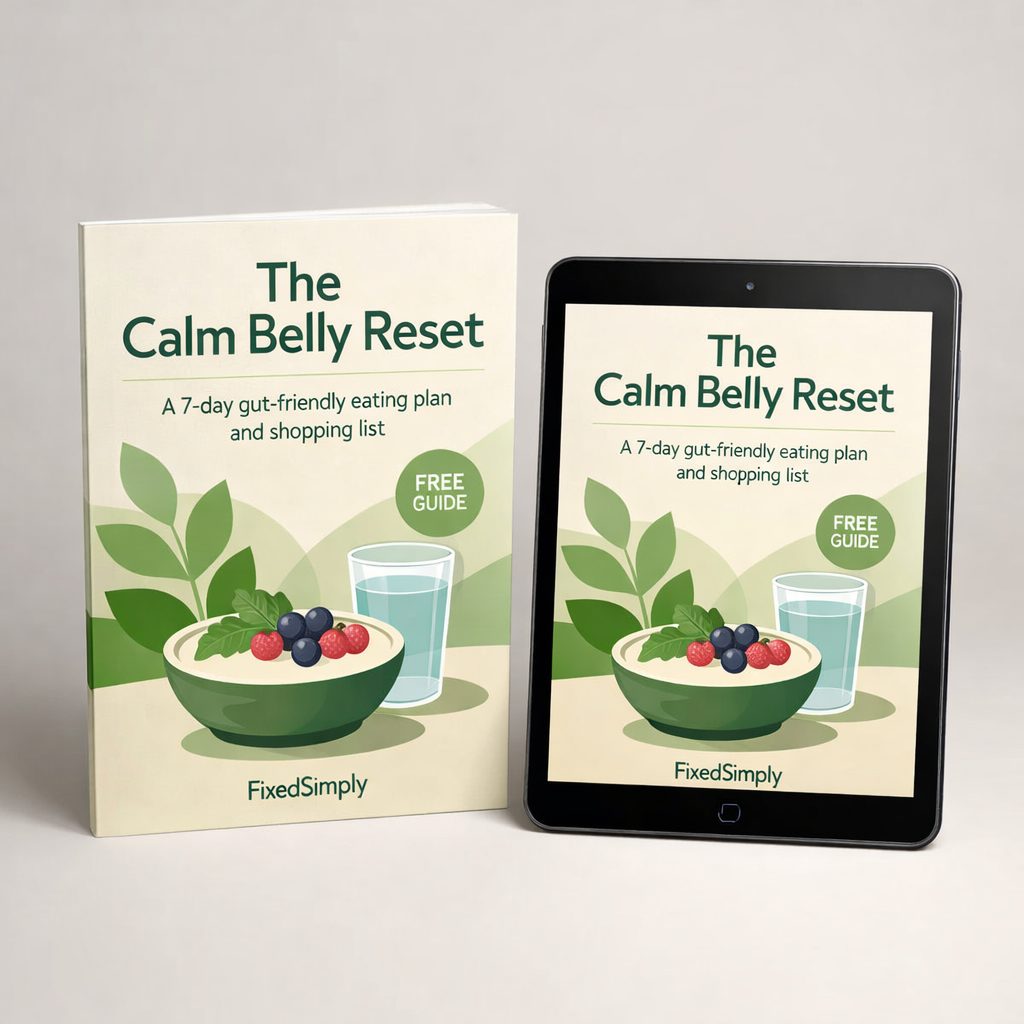
The Calm Belly Reset
A happier gut in 7 days. Inside you get:
- A 7-day gut-friendly meal plan
- A ready-to-print shopping list
- Easy habits that ease bloating
100% free. No spam, unsubscribe anytime. Privacy policy.
Better-proven gut habits
- Eat more fiber, especially prebiotic foods; see prebiotic fiber for gut health
- Include fermented foods like yogurt and kefir
- Eat a wide variety of plants each week
- Move daily, sleep well and manage stress
For bloating, see herbal teas for bloating and using a food diary.
Checklist: Daily habits for gut health
- Eat at least 25 to 30 grams of fiber per day from whole grains, beans, fruits and vegetables.
- Include a serving of fermented food (like yogurt, kefir, sauerkraut or kimchi) most days.
- Try to eat 20 to 30 different plant foods each week for a diverse gut microbiome.
- Drink enough water for hydration.
- Exercise regularly, aiming for at least 30 minutes most days.
- Prioritize sleep and manage stress through relaxation techniques or hobbies.
- Limit ultra-processed foods, excess alcohol and added sugars.
When to see a doctor
Persistent bloating, pain, diarrhea, constipation, weight loss or blood in the stool need medical assessment rather than home remedies.
If you have ongoing digestive symptoms that do not improve or if you notice blood in your stool, unexplained weight loss, severe pain or signs of dehydration, see your healthcare provider. Bone broth and other home remedies are not substitutes for proper diagnosis and treatment.
People with certain health conditions, such as kidney disease or gout, may need to limit high-protein broths. Those on a low-sodium diet should be cautious with store-bought or salted homemade broths.
Supplements
Some readers try gut and metabolism products such as Liv Pure or Ikaria Lean Belly Juice as part of a wider routine; evidence varies.
Supplements may provide certain nutrients, but they are not a replacement for a balanced diet or medical care. Always check with your doctor before starting any new supplement, especially if you have a health condition or take medication.
Frequently asked questions
Does bone broth heal leaky gut?
No human studies have proven that bone broth heals or “seals” a leaky gut. While some nutrients in bone broth, like glutamine, are important for gut lining health, there is no clinical evidence that drinking bone broth repairs increased intestinal permeability in people.
Is bone broth safe for everyone?
Bone broth is generally safe for most people when consumed in moderation. However, those with kidney problems, gout or who need to limit sodium should use caution. Always consult your doctor if you have a medical condition or are on a restricted diet.
How often should I drink bone broth for gut health?
There is no established guideline for how often to drink bone broth. For most people, enjoying a cup a few times a week as part of a balanced diet is safe. Do not rely on bone broth as your main source of nutrition.
What is the best way to make bone broth for gut health?
Use a mix of bones (including joints and knuckles for more gelatin), add vegetables and a splash of vinegar, and simmer gently for 8 to 12 hours. Skim off impurities, cool quickly and store safely. Limit salt if you have high blood pressure.
Can I use store-bought bone broth?
Store-bought bone broth can be convenient, but check the label for sodium content and added ingredients. Homemade broths often contain more gelatin and fewer additives. If using store-bought, choose low-sodium options when possible.
Are there any risks to drinking bone broth?
For most people, bone broth is safe in moderation. Some homemade broths may contain higher levels of lead, especially if made from older animal bones, but this risk is considered low. If you have concerns, vary your sources and avoid excessive intake.
The bottom line
Bone broth is nourishing and comforting, but it is not a proven gut cure. Fiber, fermented foods and plant variety have stronger evidence.
Want this as a handy printable?
The Calm Belly Reset
A happier gut in 7 days. Inside you get:
- A 7-day gut-friendly meal plan
- A ready-to-print shopping list
- Easy habits that ease bloating
100% free. No spam, unsubscribe anytime. Privacy policy.
Disclosure: links marked as sponsored are affiliate links. If you buy through them we may earn a commission at no extra cost to you. This article is for information only and is not medical advice.
Sources and further reading
This guide is for general information only and is not a substitute for professional advice. See our editorial policy.
Products mentioned in this guide
 Metabo DropsSee official siteLiv PureLiv PureSee official site
 Ikaria Lean Belly JuiceSee official site
 Java BurnSee official site
Affiliate links. Results vary. This is not medical advice.