
Bloating often feels random, but it usually is not. A simple food diary for bloating is one of the best ways to find your personal triggers. Dietitians use this method all the time. Here is how to do it yourself.
- Key takeaways:
- A food diary can help you discover which foods or habits trigger your bloating.
- Track not just food, but also symptoms, lifestyle factors, and timing for best results.
- Spotting patterns takes at least two weeks of honest, detailed records.
- Test one suspected trigger at a time for clear results.
- See a doctor for red-flag symptoms like weight loss, blood in stool, or persistent pain.
What to record
For two weeks, write down:
- Everything you eat and drink, with rough amounts and times. Include sauces, snacks, gum and drinks. Even small amounts can matter because some people react to trace ingredients.
- Symptoms: bloating, gas, pain or bowel changes, with the time and a severity score from 0 to 10. Noting severity helps you spot trends and see if changes are working.
- Other factors: stress, sleep, exercise, your menstrual cycle and any medicines. These can all affect digestion and symptoms, so they are important to track alongside food.
A notebook works perfectly, or use a notes app or a simple spreadsheet. The key is consistency and honesty. If you forget something, jot it down as soon as you remember.
A simple diary layout
Use five columns: Time | Food and drink | Symptoms (0-10) | Bowel movements | Notes (stress, sleep, exercise). Fill it in as you go rather than at the end of the day, when details are easy to forget.
- Time: Write the time of each meal, snack, drink or event.
- Food and drink: List everything, including condiments, supplements, and even water.
- Symptoms (0-10): Record if and when you feel bloated, gassy, or have stomach pain. Rate how bad it is.
- Bowel movements: Note time, consistency, and any unusual features (such as urgency or discomfort).
- Notes: Add information on sleep quality, stress level, exercise, your menstrual cycle, or any medication changes.
Here is a sample entry:
- 8:00 am | Oatmeal with milk, coffee | 0 | BM: normal | Slept well
- 12:30 pm | Turkey sandwich, apple, chips | 2 | | Stressful meeting before lunch
- 3:00 pm | Diet soda, gum | 6 (bloating, gas) | | Felt anxious, sitting long time
Writing things down as they happen leads to more accurate records. Try setting reminders if you tend to forget.

Common bloating culprits to watch for
Bloating can have many causes. Some foods and habits are known to trigger symptoms in many people. Here are some of the top culprits:
- FODMAPs: fermentable carbohydrates found in onions, garlic, wheat, beans, apples, pears and some sweeteners. These are not unhealthy, but some people’s guts have trouble digesting them, causing gas and bloating.
- Lactose in milk, soft cheese and ice cream. Many adults lose the ability to digest lactose, leading to symptoms after dairy.
- Sugar alcohols such as sorbitol and xylitol in sugar-free gum and sweets. These can cause bloating even in small amounts.
- Fizzy drinks and drinking through straws. Both can introduce extra air into your digestive system.
- Large, fatty meals that slow digestion. Fat takes longer to break down, which can worsen bloating.
- A sudden jump in fiber without enough water. Fiber is good for you, but too much, too fast can overwhelm your gut.
- Eating fast and swallowing air. Rushed meals make it easier to gulp down air, which leads to bloating.
Other possible triggers include spicy foods, artificial sweeteners, and certain vegetables like broccoli or cabbage. Record everything, even if you do not suspect it yet. Patterns often appear in unexpected places.
How to spot patterns
- After two weeks, highlight every time your symptom score was 5 or higher. This helps you focus on your worst days.
- Look at what you ate in the 1 to 6 hours before each flare. Most food-related bloating happens within this window, though some triggers may take longer.
- Note foods that appear repeatedly before bad days, and foods on your good days. This helps you spot both triggers and safe foods.
- Check non-food factors: poor sleep, stress and hormones often play a role. For example, you may notice more bloating during stressful weeks or certain parts of your menstrual cycle.
It can help to use highlighters or colored pens to mark suspected triggers, or to make a list of foods and symptoms side by side. If you use a spreadsheet, simple filters can quickly show patterns.
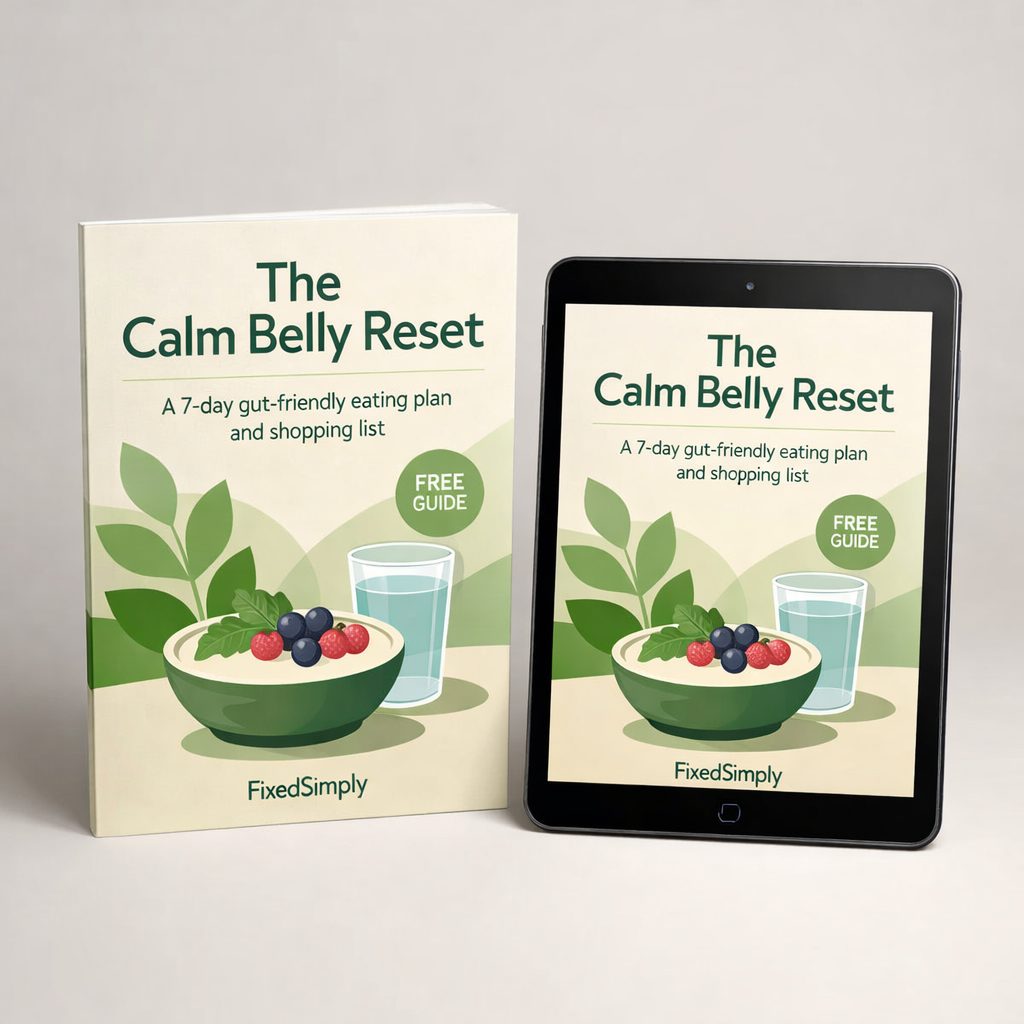
The Calm Belly Reset
A happier gut in 7 days. Inside you get:
- A 7-day gut-friendly meal plan
- A ready-to-print shopping list
- Easy habits that ease bloating
100% free. No spam, unsubscribe anytime. Privacy policy.
Testing a suspected trigger
Once you spot a likely culprit, test it carefully:
- Remove one suspected food for two weeks. Keep the diary going so you can see if symptoms improve.
- Reintroduce the food after two weeks, in a normal portion. Watch for symptoms in the next 6-24 hours.
- Change one thing at a time so the results are clear. If you remove several foods, you will not know which one was the problem.
If you suspect several triggers, a registered dietitian can guide you through a structured low-FODMAP plan without cutting out more than necessary. This can help you avoid an overly restrictive diet and make sure you are still getting enough nutrients.
Be patient: sometimes it takes more than one cycle to confirm a trigger. Some foods may only cause symptoms when eaten in large amounts or with other triggers.
Checklist: Getting the most from your food diary
- Record every meal, snack, drink and supplement, with times.
- Note symptoms as soon as they appear, with a severity score.
- Include lifestyle factors like stress, sleep, exercise and hormonal changes.
- Be honest, even on “bad” days or when you eat something unusual.
- Review your diary after two weeks for patterns.
- Test one suspected trigger at a time for clear results.
- Ask for professional help if you are unsure, or if symptoms are severe or persistent.
Common mistakes to avoid
- Forgetting to record small items: Condiments, gum, supplements and even a splash of milk can affect symptoms.
- Filling in the diary at the end of the day: Details are easy to forget, so write things down as you go.
- Changing too many things at once: You will not know which change made a difference.
- Ignoring lifestyle factors: Stress, poor sleep and lack of exercise can all worsen bloating.
- Giving up too soon: It takes time and patience to spot clear patterns.
When to see a doctor
Talk to your doctor before making big diet changes if you have:
- Unintentional weight loss
- Blood in your stool
- Persistent diarrhea or constipation
- Vomiting
- Anemia (low iron)
- Symptoms that wake you at night
These may be signs of conditions such as celiac disease, IBS or inflammatory bowel disease, which need proper diagnosis and treatment. Do not self-diagnose or delay medical care if you have these warning signs.
Teas and supplements
While you track, a cup of peppermint, ginger or fennel tea can ease symptoms (see best herbal teas for bloating). Some readers also try a gut or metabolism supplement as part of a healthy routine; options readers ask about include Ikaria Lean Belly Juice and Liv Pure. Evidence varies, so record any supplement in your diary too.
See also: stubborn belly fat after 40.
Frequently asked questions
How long should I keep a food diary for bloating?
Most experts recommend at least two weeks of detailed tracking. This gives you enough data to spot patterns, including foods or habits that may only cause symptoms occasionally. If you have a complicated history or symptoms that come and go, a longer diary may help.
Can I use a food tracking app instead of paper?
Yes, many people use notes apps or spreadsheets. Some food tracking apps allow you to log symptoms and other factors. The important part is to include all foods, drinks, symptoms, and lifestyle notes, not just calories or nutrients.
What if I cannot find a clear pattern?
Some triggers are hard to spot, especially if symptoms are affected by stress or hormones. If you do not see a pattern after two to four weeks, consider consulting a registered dietitian or your doctor. They can help you review your diary and may suggest more structured elimination diets or medical tests.
Should I stop eating foods that cause mild bloating?
Not always. Some bloating is normal, especially after large meals, high-fiber foods or beans. If mild symptoms do not bother you or affect your quality of life, there may be no need to avoid those foods. Only consider changes if symptoms are frequent, severe, or distressing.
Can stress or lack of sleep really cause bloating?
Yes. Stress and poor sleep can disrupt digestion, slow gut movement, and make you more sensitive to normal amounts of gas. That is why it is important to track these factors in your diary along with food.
What if my symptoms get worse while keeping a diary?
If you develop new or worsening symptoms, especially red-flag signs like weight loss, blood in stool, or severe pain, see your doctor promptly. A diary can be a helpful tool to show your doctor exactly what is happening.
The bottom line
Two weeks of honest notes can reveal patterns that guesswork never will. Track food, symptoms and lifestyle, test one trigger at a time, and get professional help if symptoms are severe or persistent.
Want this as a handy printable?
The Calm Belly Reset
A happier gut in 7 days. Inside you get:
- A 7-day gut-friendly meal plan
- A ready-to-print shopping list
- Easy habits that ease bloating
100% free. No spam, unsubscribe anytime. Privacy policy.
Disclosure: links marked as sponsored are affiliate links. If you buy through them we may earn a commission at no extra cost to you. This article is for information only and is not medical advice.
Sources and further reading
This guide is for general information only and is not a substitute for professional advice. See our editorial policy.
Products mentioned in this guide
 Metabo DropsSee official siteLiv PureLiv PureSee official site
 Ikaria Lean Belly JuiceSee official site
 Java BurnSee official site
Affiliate links. Results vary. This is not medical advice.