Quick verdict
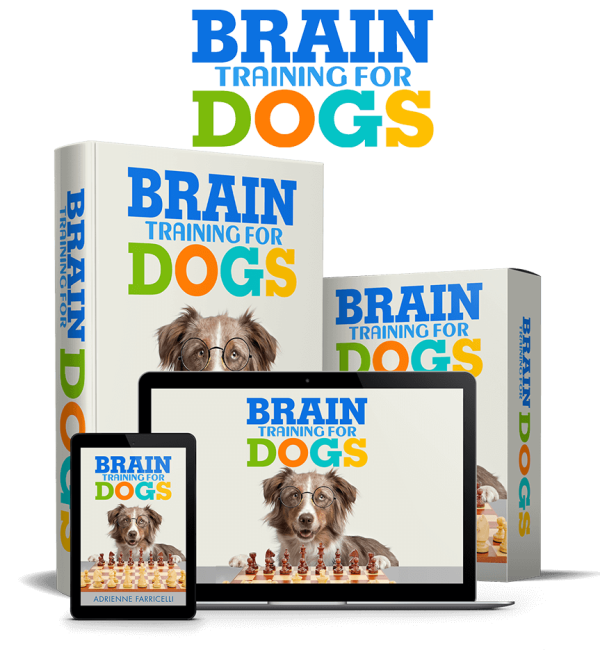
Brain Training for Dogs is an online course of reward-based brain games created by a certified dog trainer. Its approach, mental enrichment plus positive reinforcement, matches what modern trainers recommend. It suits owners of bored, energetic or mildly unruly dogs who like step-by-step lessons. It is not a substitute for professional help with serious aggression.
What we like
- Reward-based, force-free approach
- Structured lessons from beginner to advanced
- One-time purchase with a refund guarantee via ClickBank
Watch out for
- Online course: you need to do the work consistently
- Not designed for serious aggression or severe anxiety
- Some upsells at checkout
Brain Training for Dogs: A Plain-English Guide
Many dog owners want a happier, better-behaved pet, but struggle with boredom, excess energy, or mild problem behaviors. Brain Training for Dogs is a popular online program that promises to help by using positive, reward-based brain games. But what exactly do you get, how does it work, and is it right for your dog?
Key takeaways
- Brain Training for Dogs uses science-backed, force-free training methods.
- The course is structured, self-paced, and suitable for most puppies and adult dogs.
- It focuses on mental enrichment to address common issues like boredom, barking, jumping, and chewing.
- It is not a substitute for professional help with aggression or severe anxiety.
- Owners must be consistent and willing to put in daily practice for the best results.
What is Brain Training for Dogs?
Brain Training for Dogs is a digital course created by Adrienne Farricelli, a certified professional dog trainer. It is built around a series of games and exercises that work your dog’s brain, from basic obedience to more advanced tricks and problem-solving.
The course is designed for home use, so you do not need special equipment or prior dog training experience. All you need is a computer, tablet, or phone to access the lessons and a willingness to practice regularly with your dog.
What you get
- Step-by-step training games organized from easy to advanced
- Written lessons with photos and videos
- Sections on common problems such as pulling, jumping, barking, and chewing
- Online access, so you can work through it at your own pace
Each lesson is broken down into manageable steps, with clear explanations and visuals to help you understand what to do. The games start simple and gradually become more challenging, so you and your dog build skills together.
The course also includes troubleshooting tips for common training problems and solutions for specific unwanted behaviors. You get lifetime access, so you can revisit lessons as needed or progress at your own speed.
Why the approach makes sense
Many behavior problems come from boredom and a lack of mental exercise. Reward-based training is recommended by veterinary behavior organizations as effective and humane. Short daily brain games are a practical way to tire a dog out and build good habits. Our guides on common dog behavior problems and separation anxiety training follow the same principles.
Dogs are intelligent animals that need both physical and mental stimulation. When they do not get enough, they often develop nuisance behaviors like chewing, barking, or digging. Brain games tap into your dog’s natural problem-solving instincts, making training fun and rewarding for both of you.
Modern dog trainers and veterinary behaviorists agree that positive reinforcement, rewarding good behaviors rather than punishing bad ones, is the most effective and humane way to train. Brain Training for Dogs is built entirely around this philosophy.
How the course is structured
The program is organized into modules, each representing a different level of difficulty, much like grades in school. You start with the basics and gradually unlock more advanced games as your dog masters each stage. Here is a breakdown of what you can expect:
- Preschool: Foundational games to get your dog engaged and focused on you.
- Elementary: Exercises to help with impulse control and following simple commands.
- High School: Games that build patience and teach your dog to follow instructions with distractions present.
- College: More complex problem-solving and memory tasks.
- University: Advanced games for mental flexibility and independent thinking.
- Graduation: Challenges that combine multiple skills your dog has learned.
- Einstein: Brain-busting games for dogs that have mastered all previous levels.
Each module comes with detailed instructions, photos, and video demonstrations, so you always know what to do next. The step-by-step format makes it easy to track your progress and see improvements in your dog’s behavior and focus.
The Calm Dog Cheat Sheet
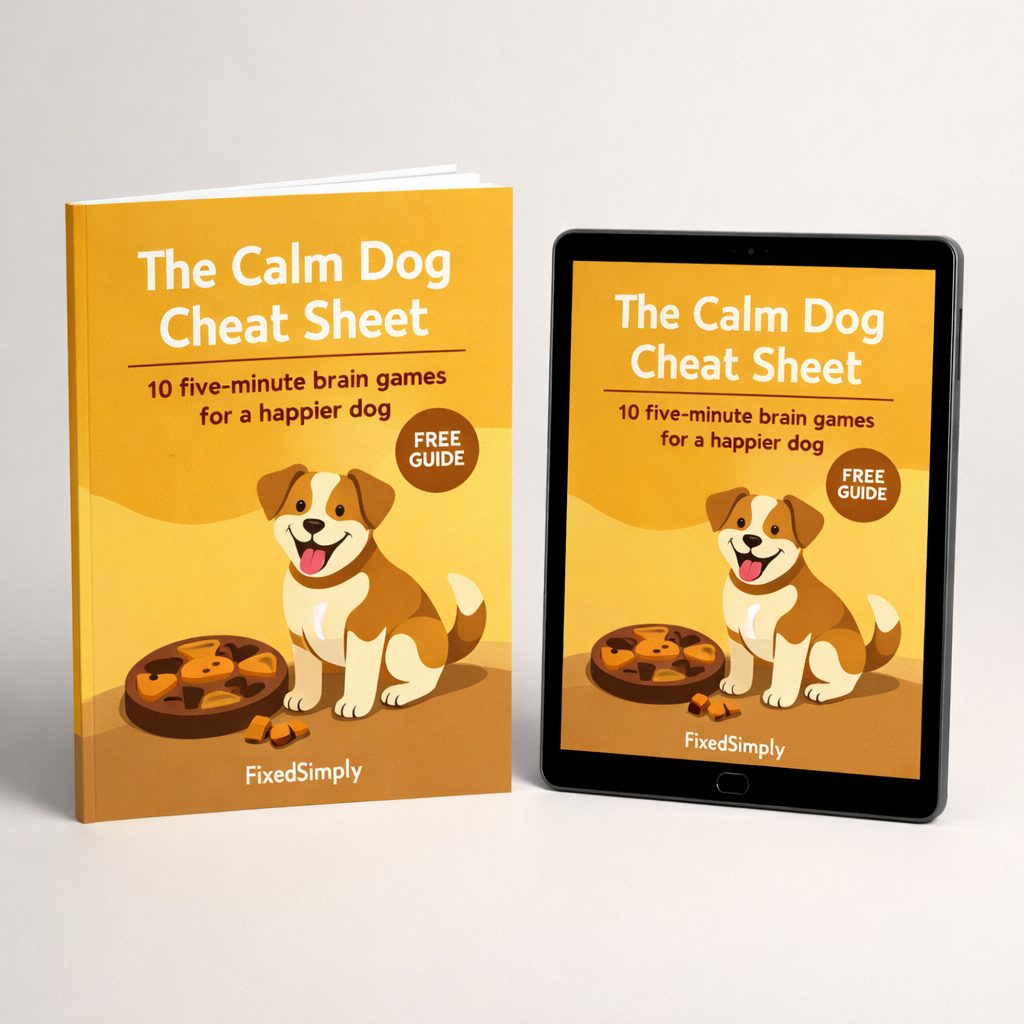
A happier, better-behaved dog. Inside you get:
- 10 five-minute brain games for any dog
- A daily routine that settles busy dogs
- Quick fixes for pulling, jumping and barking
100% free. No spam, unsubscribe anytime. Privacy policy.
What problems can it help with?
Brain Training for Dogs is designed to address a range of everyday issues that frustrate many dog owners. While it is not a fix for every problem, it can help with:
- Puppy training and socialization
- Basic obedience (sit, stay, come, leave it)
- Poor impulse control (jumping, grabbing, barking)
- Destructive chewing or digging
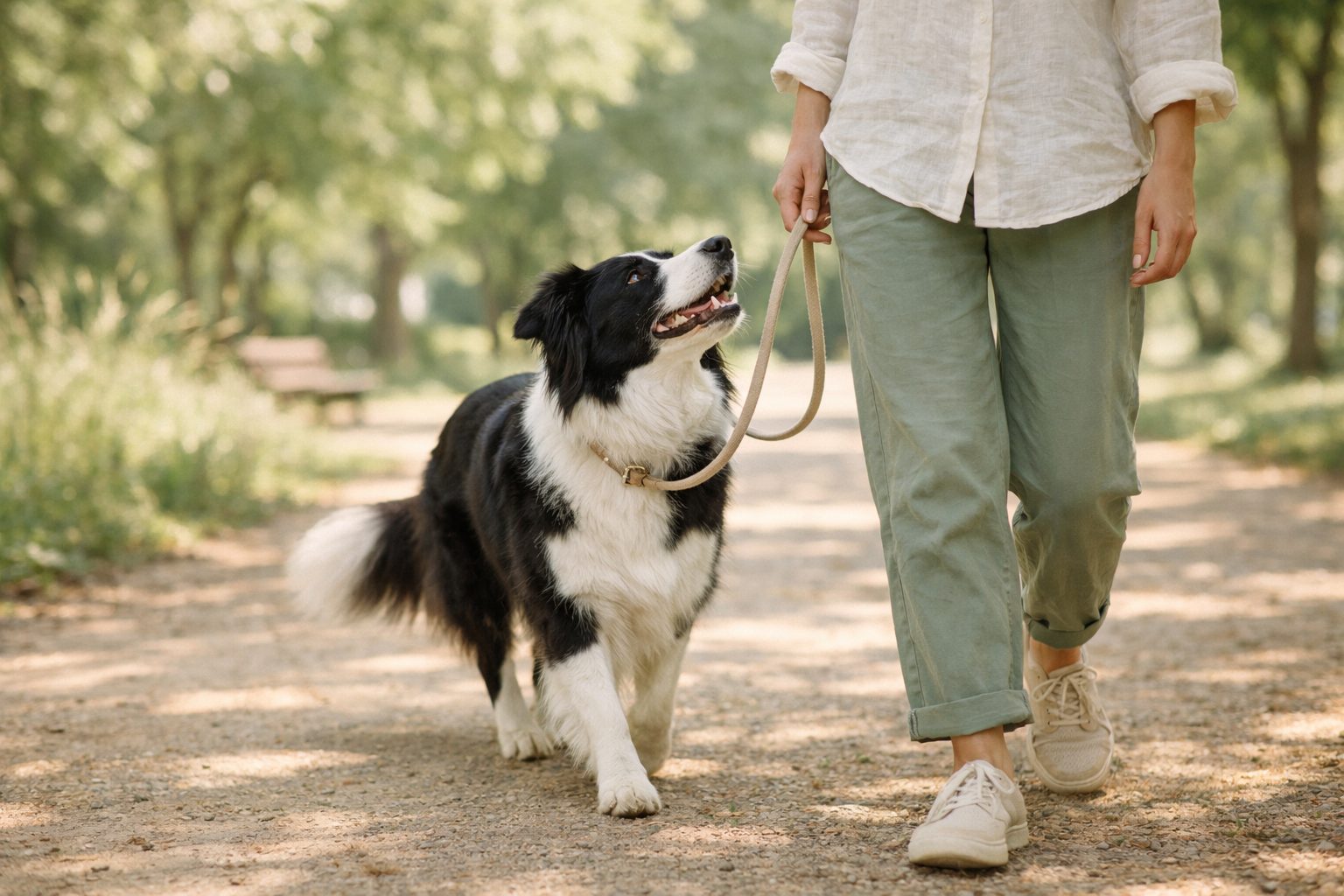
- Pulling on the leash
- Boredom and lack of focus
The course also includes troubleshooting sections for common problems, offering practical tips you can try at home. For example, if your dog jumps up on visitors, you will find step-by-step instructions for teaching polite greetings using positive reinforcement.
Who it suits
- Owners of puppies, young or energetic dogs
- Dogs with mild problems like pulling, jumping, barking, or chewing
- Owners who prefer structured, self-paced lessons
This program is a good fit if you enjoy working one-on-one with your dog and want a clear, organized path to follow. It is also ideal for busy owners since the lessons are short and can be done at home, whenever it fits your schedule.
Senior dogs can benefit too, as mental exercise is important for aging brains. The games can be adapted for dogs with limited mobility or other health concerns, just adjust the physical intensity as needed.
Who should look elsewhere
- Dogs with serious aggression or severe separation anxiety: work with your vet and a certified behavior professional
- Owners who prefer in-person classes
If your dog shows signs of aggression, fear, or anxiety that puts people or other animals at risk, online courses are not enough. These cases require a personalized plan from a certified behaviorist or your veterinarian. Likewise, if you learn best in a group setting or need hands-on feedback, local classes may be a better fit.
How to get the most out of the course
- Set aside regular time: Aim for short, daily training sessions (5 to 15 minutes) to keep your dog engaged and make steady progress.
- Start at the right level: Begin with the easiest games, even if your dog knows some basics. Building a foundation will help with later challenges.
- Use high-value rewards: Find treats or toys your dog loves, and use them to motivate and reward good behavior.
- Watch your dog’s body language: Make sure your dog is enjoying the games. If they seem stressed or confused, take a break and try again later.
- Be patient and positive: Celebrate small wins and avoid punishment. If you get stuck, revisit the lesson or consult the troubleshooting tips.
- Mix it up: Rotate games and add new challenges to keep things interesting for you and your dog.
Consistency is key. Like any skill, training takes time and repetition. Most owners see results within a few weeks if they stick with the program.
Common mistakes to avoid
- Moving too quickly: Make sure your dog has mastered each step before advancing. Rushing can lead to confusion and frustration.
- Training when your dog is tired or distracted: Choose a quiet time and place for best results.
- Using punishment or force: The program is built around positive reinforcement. Avoid scolding or physical corrections.
- Expecting instant results: All dogs learn at their own pace. Celebrate progress, even if it is gradual.
- Ignoring underlying medical issues: If your dog’s behavior changes suddenly or you suspect pain or illness, see your veterinarian first.
Price and guarantee
It is a one-time digital purchase sold through ClickBank, which offers a refund window; check the official site for the current price and terms.
Check Brain Training for Dogs price on the official site →
Checklist: Is Brain Training for Dogs right for you?
- My dog is bored, energetic, or has mild problem behaviors
- I want to use positive, reward-based training methods
- I am willing to practice with my dog for 5 to 15 minutes a day
- I prefer a self-paced, online course with step-by-step guidance
- My dog does not have severe aggression or anxiety issues
- I am looking for a one-time purchase with a refund option
If you checked most of these boxes, this program could be a good fit for you and your dog.
Frequently asked questions
Does it work for older dogs?
Yes, brain games suit dogs of any age; adjust physical activity for senior dogs. Older dogs benefit from mental stimulation, which can help keep their minds sharp. Just be mindful of any physical limitations and adapt the games as needed.
How much time does it take?
Short sessions of 5 to 15 minutes a day are enough to see progress for many dogs. The key is consistency, regular, brief sessions are more effective than occasional long ones.
Can I use it with a puppy?
Yes, the course is suitable for puppies as well as adult dogs. Early brain training helps puppies learn focus, self-control, and basic manners. Always keep sessions short and positive for young pups.
Do I need special equipment?
No special equipment is required. Most games use everyday items like treats, toys, or household objects. The course provides suggestions for simple props if needed.
What if my dog does not respond to treats?
Some dogs are more motivated by toys, praise, or play than by food. Find what your dog loves most and use that as a reward. The course covers different reward options to help you succeed.
When should I seek professional help?
If your dog shows signs of aggression (growling, biting, lunging) or severe anxiety (destructive behavior, self-harm, panic), consult your veterinarian or a certified behavior professional. These issues often need a tailored approach and in-person support.
Want this as a handy printable?
The Calm Dog Cheat Sheet
A happier, better-behaved dog. Inside you get:
- 10 five-minute brain games for any dog
- A daily routine that settles busy dogs
- Quick fixes for pulling, jumping and barking
100% free. No spam, unsubscribe anytime. Privacy policy.
Disclosure: this review contains affiliate links. If you buy through them we may earn a commission at no extra cost to you. We describe the product from its official materials, not from being paid by the seller.
Sources and further reading
This guide is for general information only and is not a substitute for professional advice. See our editorial policy.
Products mentioned in this guide
Affiliate links. Results vary. This is not medical advice.
1 thought on “Brain Training for Dogs Review: What You Get and Who It Suits”
Comments are closed.