

You love your dog, but the leash pulling, the barking at every passer-by and the chewed-up shoes are wearing you down. The good news: most everyday behavior problems come from a handful of causes, and they respond well to calm, consistent, reward-based training.
- Key takeaways:
- Most dog behavior problems are caused by boredom, confusion, accidental rewards or anxiety.
- Reward-based, consistent training works best and is safer than punishment.
- Short, frequent training sessions and plenty of mental exercise help calm and focus your dog.
- Always rule out medical causes for sudden or severe behavior changes.
- Professional help is needed for aggression or severe anxiety.
Why dogs “misbehave”
Dogs are not being stubborn or spiteful. Most problem behavior comes from one of four things:
- Boredom. A dog with energy and nothing to do will invent a job, often one you do not like. Dogs are intelligent animals bred for work and companionship, so if their needs are not met, they find their own entertainment, like chewing, digging or barking.
- Not understanding what we want. We often tell dogs what not to do, but rarely teach them what to do instead. Dogs do not come pre-programmed to know our rules, so clear communication is key.
- Accidental rewards. If pulling gets them to the park faster, pulling works. If barking makes the mail carrier leave, barking works. Dogs repeat actions that pay off for them, whether or not we intend to reward those actions.
- Fear or anxiety. This is behind a lot of barking, lunging and destruction when left alone. Dogs may act out because they are stressed, scared or unsure about a situation.
When to see a vet first
A sudden change in behavior, new aggression, house-soiling in a trained dog or excessive licking and chewing of their own body can have a medical cause such as pain, allergies or a urinary infection. Rule that out with your vet. For serious aggression or severe separation anxiety, work with a certified trainer or veterinary behaviorist.
- Red flags that need a vet visit:
- Sudden aggression or snapping
- House-soiling in a previously trained dog
- Excessive licking, chewing or scratching at their own skin
- Loss of appetite, lethargy or other signs of illness
- Destructive behavior only when left alone (could be separation anxiety)
Medical issues can sometimes look like behavior problems. Treating the underlying health problem is essential before starting a training plan.
The basics that make everything easier
Before tackling specific problems, set your dog up for success with these fundamentals:
1. Reward what you want
Catch your dog doing the right thing (sitting calmly, walking beside you, chewing their own toy) and reward it immediately with a small treat or praise. Behavior that is rewarded happens more often. Research supports reward-based training as both more effective and better for the dog’s wellbeing than punishment.
- Keep treats handy in every room or on walks so you can reward instantly.
- Use praise, petting or play if your dog is not food-motivated.
- Reward calm behavior, not just tricks, this helps teach patience and self-control.
2. Exercise the brain, not just the legs
A long walk tires the body, but mental work tires a dog out surprisingly fast. Ten to fifteen minutes of sniffing games, puzzle feeders or learning a new trick can calm an energetic dog for hours.
- Try hiding treats around the house for your dog to find (nose work).
- Stuff a food puzzle or Kong toy to keep your dog busy when you are not home.
- Teach simple tricks like “sit,” “stay,” or “touch” for mental stimulation.
- Rotate toys to keep them interesting and prevent boredom.
3. Keep sessions short and frequent
Two or three five-minute training sessions a day work better than one long session. End on a success.
- Dogs learn best in short bursts. Overlong sessions can cause frustration or boredom.
- Always finish with a win, even if it is something simple like a sit or a handshake.
- Practice in different locations so your dog learns to listen everywhere, not just at home.
4. Be consistent as a household
Agree on the same words and rules. If one person allows jumping and another does not, the dog will keep trying.
- Pick simple, clear cues for each behavior (“off” for furniture, “down” for lying down).
- Discuss rules with everyone in the home, including kids and visitors.
- Consistency speeds up training and prevents confusion for your dog.

The Calm Dog Cheat Sheet
A happier, better-behaved dog. Inside you get:
- 10 five-minute brain games for any dog
- A daily routine that settles busy dogs
- Quick fixes for pulling, jumping and barking
100% free. No spam, unsubscribe anytime. Privacy policy.
Fixes for the common problems
Now let’s look at specific solutions for the most common issues dog owners face.
Leash pulling
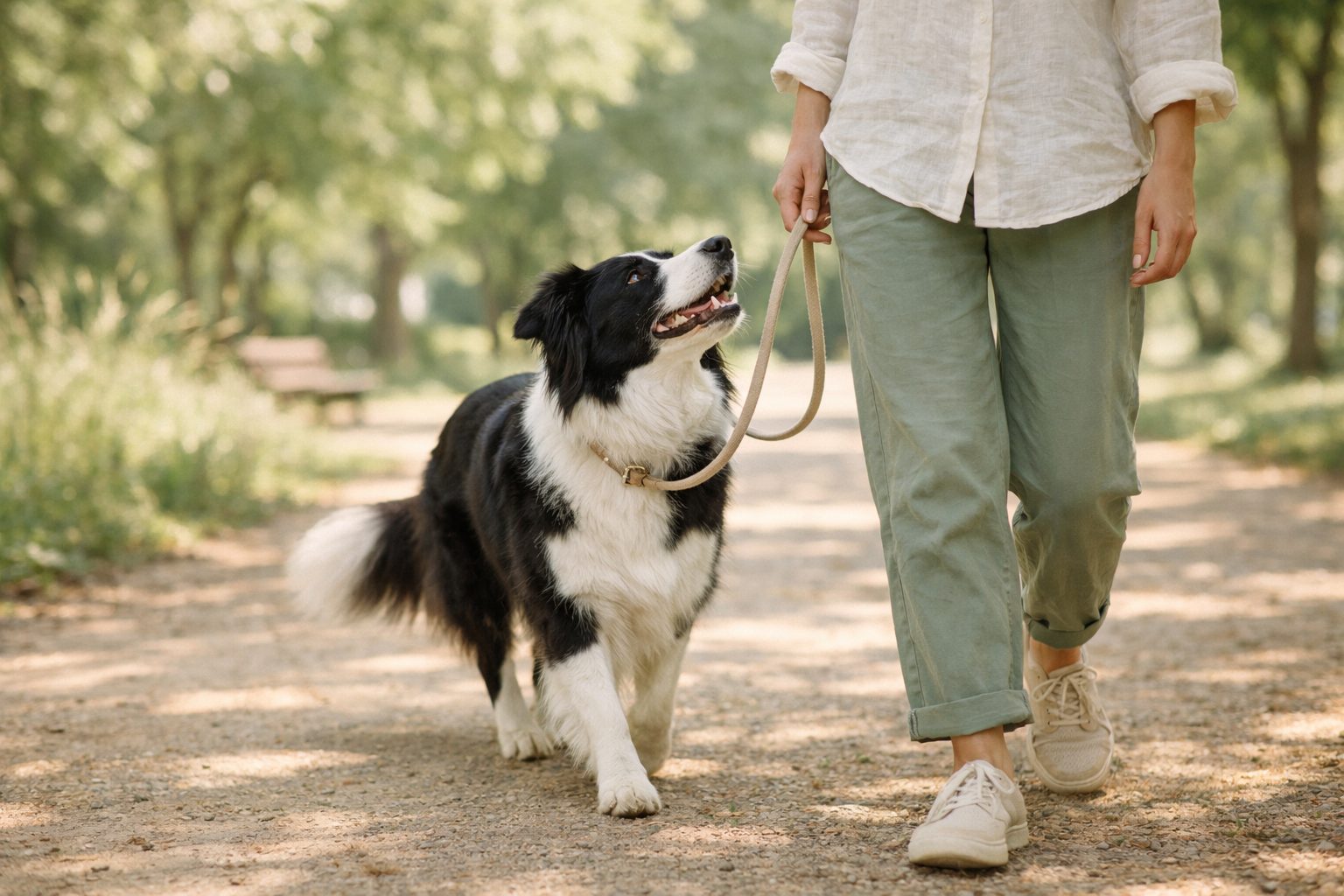
The moment the leash goes tight, stop walking. When your dog comes back and the leash loosens, praise and carry on. Reward often when your dog is at your side. A front-clip harness can help while you practice.
- Start walking. The moment your dog pulls, stop moving.
- Wait for slack in the leash or for your dog to turn toward you.
- Praise and reward, then continue walking.
- Repeat every time the leash goes tight. Patience is key; progress may be slow at first.
- Reward your dog for walking by your side, not just for stopping pulling.
- Common mistakes: Letting the dog pull sometimes, using retractable leashes (which encourage pulling), or jerking the leash. These can confuse or frighten your dog and make pulling worse.
Barking
Block the view if your dog barks at the window. Teach a “quiet” cue by rewarding the moment they pause. Give plenty of mental exercise, since bored dogs bark more. Never yell, which can sound like you are joining in.
- If barking at people or animals outside, cover windows or use frosted film.
- When your dog barks, wait for a pause, then calmly say “quiet” and reward the silence.
- Practice short “quiet” periods, gradually increasing the time before rewarding.
- Provide chew toys and puzzle feeders to keep your dog occupied.
- Ignore attention-seeking barking; do not scold or shout, as this can reinforce the behavior.
- Common mistakes: Giving attention (even negative) for barking, yelling, or punishing the dog. These can make barking worse or cause fear.
Chewing
Puppies and young dogs need to chew. Provide safe chew toys, rotate them to keep them interesting, and swap a forbidden item for an allowed one rather than just taking it away. Dog-proof the house while you train.
- Keep shoes, remote controls and other tempting items out of reach.
- Offer a variety of safe, durable chew toys.
- When your dog picks up a forbidden item, gently trade it for a favorite toy or treat.
- Praise your dog for chewing on their own toys.
- Rotate toys weekly to keep them new and exciting.
- Common mistakes: Punishing after the fact (dogs do not connect punishment with the act unless caught in the moment), or leaving tempting items around.
Jumping up
Turn away and ignore jumping, then greet your dog calmly when all four paws are on the floor. Ask visitors to do the same.
- When your dog jumps, turn your back and fold your arms. Do not talk, touch or make eye contact.
- Wait for all four paws on the floor, then calmly greet and reward your dog.
- Ask visitors to follow the same routine.
- Practice polite greetings with family and friends.
- Common mistakes: Pushing the dog down (which can be seen as play), yelling, or letting jumping sometimes “slide.” Consistency is crucial.
Checklist: Setting your dog up for success
- Daily walks and playtime for physical exercise
- At least 10 minutes of mental games or puzzle toys
- Consistent rules and cues among all family members
- Safe chew toys available, with tempting items put away
- Short, positive training sessions every day
- Observe for sudden changes that may signal medical issues
- Calm, patient attitude and rewards for good behavior
Want a structured program?
Many owners find it easier to follow a step-by-step course than to piece together tips. One option readers ask about is Brain Training for Dogs, an online program built around reward-based games that give dogs mental exercise while teaching obedience. Check what is included and the refund terms before buying, and see a professional trainer for serious aggression.
Frequently asked questions
How long does it take to change a dog’s behavior?
Most simple behavior problems improve within a few weeks of consistent, daily training. More serious issues or habits that have gone on for years may take longer. Patience and consistency are key. Celebrate small wins along the way.
Is punishment ever necessary?
Research shows that reward-based training is more effective and safer than punishment. Physical or harsh punishment can cause fear, anxiety and even aggression. Instead, focus on preventing unwanted behavior, redirecting, and rewarding good choices.
What if my dog doesn’t care about treats?
Try different rewards: some dogs prefer praise, petting, play or a favorite toy. Use whatever motivates your dog. Make sure treats are special and not always available. Also, try training before meals when your dog may be more interested in food.
Why does my dog only listen at home, not outside?
Dogs do not generalize well. Practice commands in different places, starting with quiet spots and gradually adding distractions. Reward generously in new settings, and keep sessions short and positive. Over time, your dog will learn to listen everywhere.
Can older dogs learn new behaviors?
Yes, dogs of any age can learn. Older dogs may take a little longer to pick up new habits, but with patience and positive reinforcement, they can make great progress. Adjust expectations for physical limitations if needed.
When should I call a professional trainer?
If your dog shows aggression, severe anxiety, or behavior that puts people or other animals at risk, seek help from a certified trainer or veterinary behaviorist. Also get help if you feel overwhelmed or if your training efforts are not working after a few weeks.
The bottom line
Most dog behavior problems improve with more mental exercise, rewarding the behavior you want, short daily practice and a consistent household. Rule out medical causes for sudden changes, and get professional help for aggression or severe anxiety.
Want this as a handy printable?
The Calm Dog Cheat Sheet
A happier, better-behaved dog. Inside you get:
- 10 five-minute brain games for any dog
- A daily routine that settles busy dogs
- Quick fixes for pulling, jumping and barking
100% free. No spam, unsubscribe anytime. Privacy policy.
Disclosure: links marked as sponsored are affiliate links. If you buy through them we may earn a commission at no extra cost to you.
Sources and further reading
This guide is for general information only and is not a substitute for professional advice. See our editorial policy.
Products mentioned in this guide
Affiliate links. Results vary. This is not medical advice.
1 thought on “Dog Pulling, Barking or Chewing Everything? A Plain-English Training Guide”
Comments are closed.