
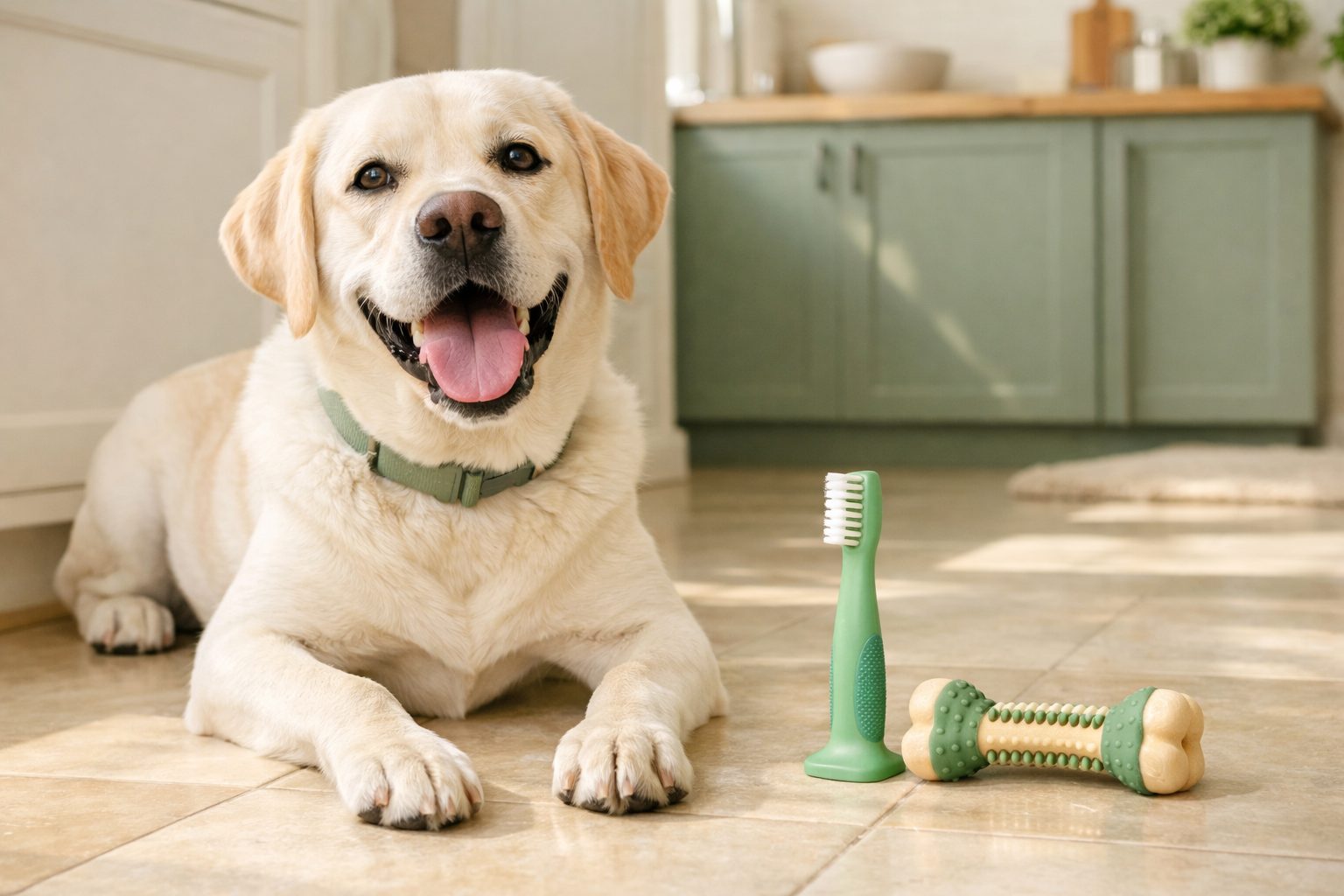
Doggy breath is common, but really bad breath is not something to ignore. In most cases it points to dental disease, which is very common in adult dogs and very treatable. Here is a guide to dog bad breath.
Key takeaways
- Most persistent bad breath in dogs comes from plaque, tartar and gum disease, not from what they ate that day.
- Very sweet, fruity or ammonia-like breath, or bad breath with drinking more, vomiting or weight loss, needs a vet visit soon.
- Daily tooth brushing with a dog toothpaste is the single most effective home habit.
- Dental chews, water additives and diet can help, but they work best alongside brushing and regular vet checks.
- Never use human toothpaste on a dog, as some contain xylitol, which is toxic to dogs.
Common causes
- Dental disease: plaque and tartar build up and cause gum inflammation and infection. Veterinary groups estimate most dogs show some dental disease by age three.
- Something stuck between teeth or in the gums, like a stick or bone fragment.
- Diet and habits: eating poop or garbage.
- Mouth growths or broken teeth.
- Medical conditions: sweet or fruity breath can signal diabetes; a urine-like smell can signal kidney disease.
When to see the vet
Book a vet visit if bad breath is strong or new, or comes with red or bleeding gums, brown tartar, loose or broken teeth, drooling, pawing at the mouth, eating on one side, weight loss, or increased thirst and urination. A professional dental cleaning under anesthesia may be needed.
How to brush your dog’s teeth
- Use a dog toothbrush or finger brush and dog toothpaste (never human toothpaste, which can contain xylitol, toxic to dogs).
- Start slowly: let your dog lick the paste, then touch the teeth for a few seconds, rewarding calm behavior.
- Brush the outer surfaces in small circles, focusing on the gumline and back teeth.
- Aim for daily brushing; even a few times a week helps.
Other helpful habits
- Dental chews and toys accepted by veterinary dental organizations
- Water additives or dental diets recommended by your vet
- Regular dental checks at annual vet visits
- Supervise chewing and avoid hard bones that can break teeth
Training tip
Teaching your dog to accept handling of its mouth makes brushing and vet checks much easier. Reward-based programs such as Brain Training for Dogs can help build that calm cooperation; see our review.
See also fixing common dog behavior problems.

The Calm Dog Cheat Sheet
A happier, better-behaved dog. Inside you get:
- 10 five-minute brain games for any dog
- A daily routine that settles busy dogs
- Quick fixes for pulling, jumping and barking
100% free. No spam, unsubscribe anytime. Privacy policy.
How dental disease develops in dogs
It helps to understand what is happening in your dog’s mouth. After every meal, a soft, sticky film of bacteria called plaque forms on the teeth. If it is not removed, minerals in saliva harden it into tartar within a few days. Tartar is the yellow or brown crust you often see near the gum line, especially on the back teeth.
Bacteria living in plaque and tartar release sulphur compounds, which is where the unpleasant smell comes from. Over time, the bacteria also irritate the gums, causing redness and bleeding (gingivitis). Left untreated, this can progress to periodontal disease, where the tissues holding the teeth in place break down. That can mean pain, loose teeth and infection. Veterinary dental groups estimate that most dogs show some signs of dental disease by the age of three, so bad breath is very often an early warning rather than a minor annoyance.
Small breeds, flat-faced breeds and older dogs tend to be most at risk because their teeth are often crowded together, which traps more plaque.
Signs that it is more than just bad breath
Check your dog’s mouth once a week in good light. Gently lift the lips and look at the front and back teeth. Watch for:
- Red, swollen or bleeding gums
- Thick yellow or brown tartar on the teeth
- Loose, broken or discoloured teeth
- Chewing on one side, dropping food or pawing at the mouth
- Drooling more than usual, sometimes with blood
- Swelling below the eye or along the jaw, which can be a sign of a tooth root abscess
Any of these signs means it is time for a vet check. A professional cleaning under anaesthesia is often the only way to remove tartar below the gum line, which is where the most damage happens.
Choosing dental products that actually help
Pet stores are full of dental products, and not all of them are equally useful. A good guide is the Veterinary Oral Health Council (VOHC) seal, which is given to products that have shown they reduce plaque or tartar in trials. Here is how the main options compare:
- Toothbrush and dog toothpaste: The gold standard. Finger brushes are easier for beginners, while a soft, long-handled brush reaches the back teeth better. Choose a flavour your dog enjoys, such as poultry.
- Dental chews: Helpful as an extra when they carry the VOHC seal. Choose the right size for your dog and count them as part of the daily calorie allowance.
- Water additives and gels: Easy to use and can help a little, but they are not a substitute for brushing.
- Dental diets: Some prescription and over-the-counter kibbles are designed to scrub the teeth as your dog chews. Ask your vet whether one suits your dog.
Avoid very hard chews such as antlers, real bones and hard nylon toys. They are a common cause of broken teeth. A simple rule many vets use: if you cannot dent it with your thumbnail, it is too hard for your dog’s teeth.
Common mistakes to avoid
- Using human toothpaste. Many contain fluoride and some contain xylitol, which can be life-threatening for dogs. Always use a toothpaste made for dogs.
- Rushing the start. Forcing a brush into your dog’s mouth on day one can make them fearful. Build up over a week or two with plenty of praise and treats.
- Brushing only once in a while. Plaque starts to harden within days, so brushing once a week does far less than a quick daily brush.
- Masking the smell. Breath mints and sprays may hide the odour but do nothing about the cause.
- Skipping vet dental checks. Even with great home care, many dogs need a professional cleaning every year or two.
A simple weekly dental routine
- Every day: Brush for 30 to 60 seconds, focusing on the outer surfaces of the back teeth, where tartar builds up fastest.
- Most days: Offer one VOHC-approved dental chew of the right size.
- Once a week: Lift the lips and check the gums and teeth for changes. Sniff the breath too; you will quickly learn what is normal for your dog.
- Once a year: Ask for a dental check at your dog’s annual vet visit, and follow advice on professional cleaning.
Does food make a difference?
Diet plays a supporting role in your dog’s breath. Dry kibble is sometimes said to clean the teeth, but ordinary kibble breaks apart too quickly to scrub much plaque away. Specially designed dental diets work differently, with larger, fibrous pieces that wipe the tooth surface as your dog bites down, and some carry the VOHC seal.
A few everyday habits help too. Keep fresh water available at all times, since a dry mouth lets bacteria thrive. Limit table scraps and sugary or starchy treats, which feed plaque bacteria. Crunchy vegetables such as carrot sticks make a low-calorie treat that many dogs enjoy, although they are not a replacement for brushing. If your dog eats poop or gets into the trash, breath will suffer however well you brush, so management and training matter as much as dental care.
If you change your dog’s food, do it gradually over about a week to avoid an upset stomach, and check with your vet first if your dog has kidney, liver or digestive problems.
Frequently asked questions
Is bad breath normal in dogs?
A mild “doggy” smell can be normal, especially right after eating. Strong, lasting bad breath is not normal and is most often a sign of plaque, tartar or gum disease that needs attention.
Can I fix my dog’s bad breath without brushing?
Chews, water additives and dental diets can help a little, but none of them work as well as brushing. If your dog truly will not accept a brush, talk to your vet about the best combination of alternatives and how often professional cleanings are needed.
Why does my dog’s breath smell like fish?
A fishy smell is often linked to dental disease, but it can also come from anal gland problems if your dog licks that area. Fish-based foods can cause it too. If the smell is strong or new, ask your vet to check both.
How often should my dog have a professional dental cleaning?
It depends on the dog. Many need one every one to two years, while small breeds and dogs with crowded teeth may need them more often. Your vet will advise based on what they see at each checkup.
Is anaesthesia safe for dental cleaning in older dogs?
Age alone is not a reason to avoid dental care. Vets usually run blood tests first and tailor the anaesthesia plan to your dog. Leaving painful dental disease untreated often carries its own risks, so discuss the pros and cons with your vet.
The bottom line
Bad breath in dogs usually means dental disease. Get a vet check, start gentle tooth brushing with dog toothpaste, and add vet-approved dental chews.
Want this as a handy printable?
The Calm Dog Cheat Sheet
A happier, better-behaved dog. Inside you get:
- 10 five-minute brain games for any dog
- A daily routine that settles busy dogs
- Quick fixes for pulling, jumping and barking
100% free. No spam, unsubscribe anytime. Privacy policy.
Disclosure: links marked as sponsored are affiliate links. If you buy through them we may earn a commission at no extra cost to you.
Sources and further reading
This guide is for general information only and is not a substitute for professional advice. See our editorial policy.
Products mentioned in this guide
Affiliate links. Results vary. This is not medical advice.