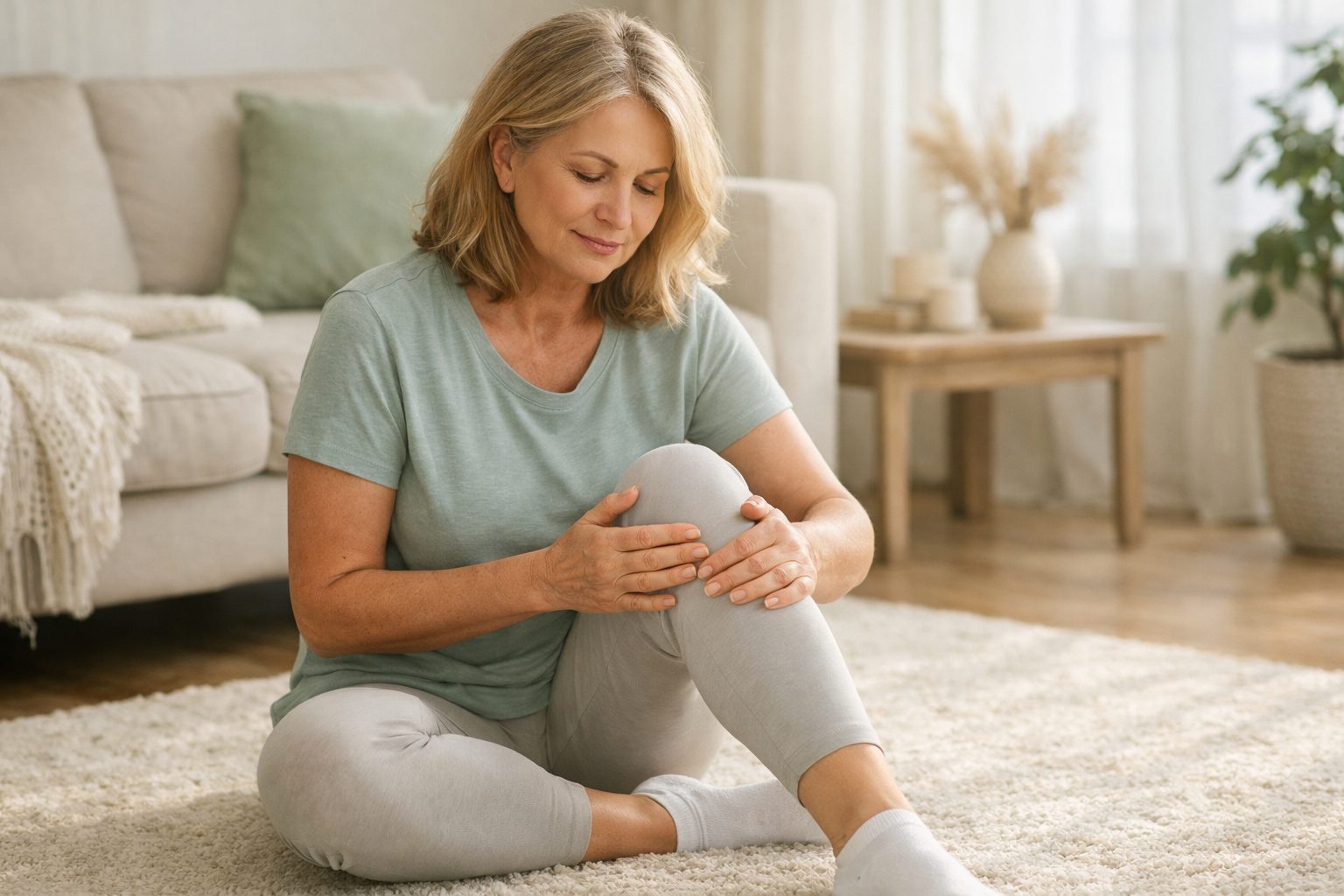
Pain on the inner side of the knee (doctors call it the medial knee) is one of the most common knee complaints, especially after 40. It can come on suddenly after a twist, or build up slowly over months. Here is what usually causes it and what helps.
- Key takeaways:
- Inner knee pain often results from arthritis, meniscus tears, ligament injuries, or bursitis.
- Symptoms can include aching, stiffness, swelling, and instability.
- Most cases improve with gentle movement, strengthening, and weight management.
- See a doctor if pain lasts more than two weeks, the knee locks, gives way, or is severely swollen or red.
- Home care focuses on activity modification, ice or heat, and safe pain relief.
Common causes of inner knee pain
Understanding what is causing your inner knee pain is the first step to effective relief. The medial side of the knee is subjected to significant stress during daily activities, making it especially vulnerable to certain conditions. Here are the most common reasons for pain on the inside of the knee:
Knee osteoarthritis
The inner part of the knee carries more of your body weight, so it is often the first area to wear. Typical signs are stiffness in the morning or after sitting, aching with walking or stairs, and occasional swelling.
- How it happens: Over time, the cartilage that cushions the joint wears down, especially on the inner (medial) side. This leads to bone rubbing on bone, causing pain and inflammation.
- Who is at risk: Most common in people over 40, especially if you are overweight, have a family history of arthritis, or have had previous knee injuries.
- What to watch for: Gradual onset of pain, morning stiffness lasting less than 30 minutes, and pain that worsens with activity.
Medial meniscus tear
The meniscus is a rubbery cushion inside the knee. In younger people it usually tears with a twisting injury; after 40 it can tear with everyday movements like squatting. Signs include pain along the inner joint line, swelling, and catching or locking.
- How it happens: The meniscus helps absorb shock and stabilize the knee. As we age, it becomes more brittle and prone to tearing, even with simple movements.
- Who is at risk: Common in athletes, but also in people over 40 due to degeneration of the meniscus tissue.
- What to watch for: Pain with twisting or squatting, swelling within a day of injury, and a sensation that the knee is catching or locking.
MCL sprain
The medial collateral ligament runs along the inner knee. It is often injured when the knee is pushed inward, for example in sports or a fall. You may feel pain and tenderness on the inside of the knee and a sense of instability.
- How it happens: The MCL stabilizes the inner knee. A direct blow to the outer knee or a sudden twist can overstretch or tear this ligament.
- Who is at risk: Athletes in contact sports, but also anyone who falls or twists the knee awkwardly.
- What to watch for: Immediate pain and swelling on the inner knee, sometimes bruising, and a feeling of looseness or instability.
Pes anserine bursitis
A small fluid-filled sac just below the inner knee can become irritated, causing tenderness a few centimeters below the joint. It is common in runners, people with knee arthritis and people carrying extra weight.
- How it happens: Repetitive movement or pressure irritates the bursa, a lubricating sac, causing it to swell and become painful.
- Who is at risk: Runners, people with osteoarthritis, and those with obesity or tight hamstring muscles.
- What to watch for: Localized tenderness below the joint, pain climbing stairs, and sometimes mild swelling.
Other possible causes
- Plica syndrome: A fold in the joint lining can get irritated, causing pain and a snapping sensation inside the knee.
- Medial plica irritation: Similar to plica syndrome, this can mimic meniscus or bursitis pain.
- Referred pain: Hip or lower back problems can sometimes send pain signals to the inner knee.
- Stress fractures: Rare, but overuse or osteoporosis can cause tiny cracks in the upper tibia (shin bone) near the inner knee.
When to see a doctor
Book an appointment if pain lasts more than a couple of weeks, your knee locks or gives way, or swelling keeps returning. Get prompt care if you cannot bear weight, the knee looks deformed, or it becomes hot, red and swollen with a fever, which can signal infection.
- Red flag symptoms:
- Inability to walk or bear weight
- Knee looks crooked or deformed after injury
- Severe, sudden swelling
- Fever with hot, red, swollen knee (possible infection)
- History of cancer or unexplained weight loss with new knee pain
These signs need urgent evaluation to rule out fractures, infections, or other serious problems.
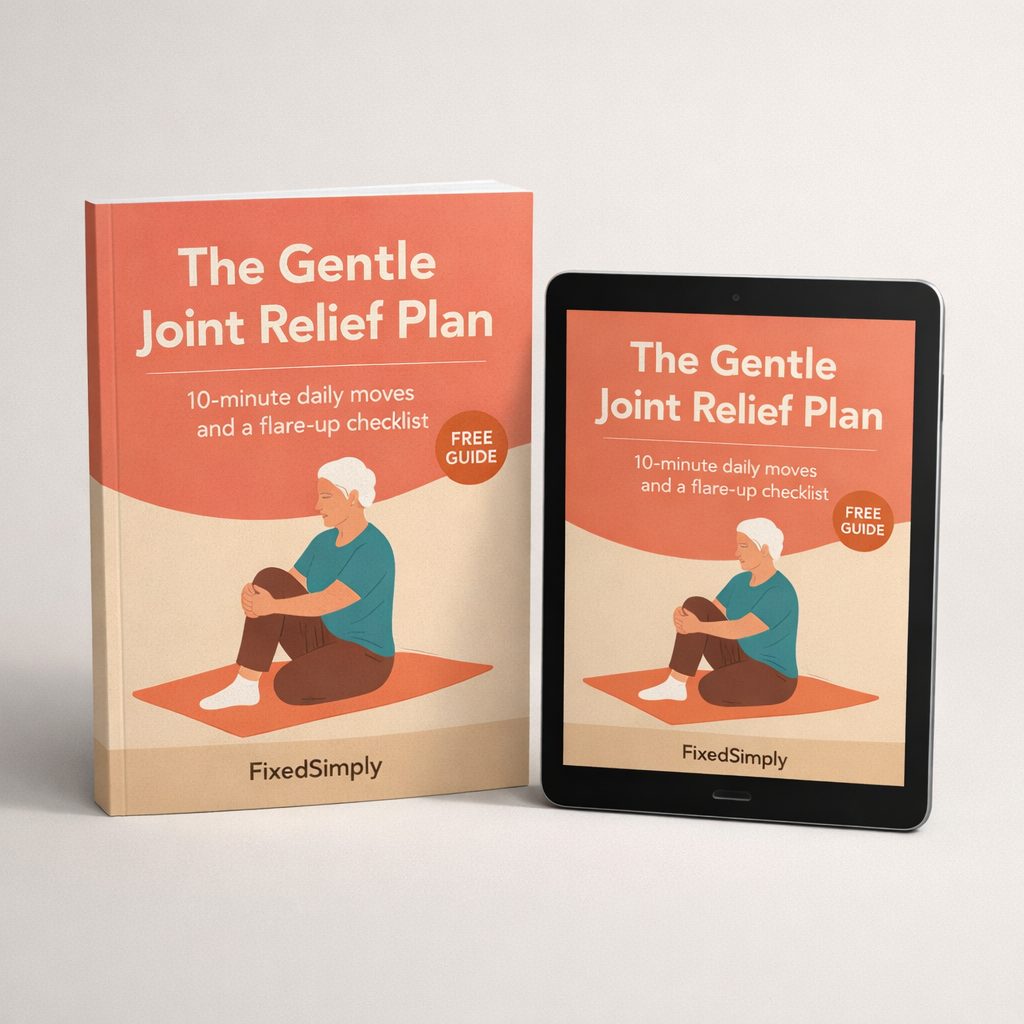
The Gentle Joint Relief Plan
Move easier, starting this week. Inside you get:
- A 10-minute daily routine of gentle moves
- A flare-up checklist for bad days
- Red flags that mean see a doctor
100% free. No spam, unsubscribe anytime. Privacy policy.
What helps at home
- Relative rest. Ease off activities that clearly aggravate the pain, but keep gently moving. Complete rest stiffens the joint.
- Ice or heat. Ice for 15 minutes helps after activity or a flare; heat helps morning stiffness.
- Strengthen the thigh and hip muscles. Straight-leg raises, sit-to-stands from a chair and side-lying leg lifts take load off the inner knee. Strong evidence supports exercise for knee arthritis.
- Low-impact cardio. Cycling, swimming and walking on flat ground keep the joint healthy without pounding it.
- Weight management. Each pound of body weight adds several pounds of force through the knee with every step.
- Supportive shoes. Cushioned, stable footwear can reduce strain. A physical therapist can advise on insoles or braces.
- Over-the-counter pain relief such as acetaminophen or anti-inflammatory gels, if safe for you. Ask your pharmacist.
Step-by-step home care checklist
- Assess your symptoms: Note when pain started, what makes it worse or better, and any swelling or locking.
- Modify activities: Avoid kneeling, deep squats, or twisting motions for now. Use a cane or walking stick if you limp.
- Apply ice or heat: Use ice packs after activity or for swelling, and heat for morning stiffness.
- Begin gentle exercises: Try straight-leg raises and gentle stretching unless your doctor advises otherwise.
- Monitor progress: If pain improves, gradually return to normal activities. If not, or if it worsens, see your doctor.
- Review your footwear: Replace worn-out shoes with well-cushioned, supportive options.
- Consider a knee sleeve: Some find mild compression sleeves help with confidence and comfort.
Common mistakes to avoid
- Ignoring persistent pain: If pain does not improve after a few weeks, get checked.
- Over-resting: Complete inactivity can lead to more stiffness and muscle weakness.
- Pushing through severe pain: Continuing high-impact activities can worsen injuries.
- Using heat on a hot, swollen knee: Heat can make acute inflammation worse; use ice instead.
- Self-diagnosing complex injuries: Some knee problems require imaging or expert assessment.
Programs and supplements
A guided exercise program can make it easier to stay consistent. Readers ask about Ageless Knees, an at-home movement program. Some also try joint supplements such as Joint Genesis, or topical products like ArcticBlast; evidence for supplements is mixed, so treat them as optional extras and check with your pharmacist.
For a wider look at joint pain, see stiff, aching knees and joints after 50.
How doctors diagnose inner knee pain
If you visit your doctor, they will start with a careful history and physical exam. They may:
- Ask about your symptoms, recent injuries, and activity level
- Check for tenderness, swelling, or instability
- Test your range of motion and strength
- Order X-rays (to check for arthritis or fractures)
- Order an MRI (to look for meniscus tears, ligament injuries, or bursitis)
In some cases, blood tests may be ordered to rule out infection or inflammatory conditions.
Medical treatments for inner knee pain
- Physical therapy: A physical therapist can design a program to strengthen muscles and improve flexibility, which often reduces pain.
- Corticosteroid injections: Sometimes used for severe arthritis or bursitis flares, but benefits are usually temporary.
- Bracing: Special knee braces may help stabilize the joint, especially after ligament injuries.
- Viscosupplementation: In some cases, doctors may inject a lubricant into the knee to ease arthritis symptoms.
- Surgery: Rarely needed, but may be considered for severe meniscus tears, advanced arthritis, or persistent instability.
Most people improve without surgery. Surgery is considered if symptoms do not respond to other treatments or if the knee is unstable or locked.
Frequently asked questions
What is the most common cause of inner knee pain after 40?
Knee osteoarthritis is the most common cause, due to gradual wear and tear of the cartilage, especially on the inner (medial) side of the knee.
How can I tell if my inner knee pain is serious?
Red flags include inability to walk, severe swelling, knee deformity, locking, or fever with a hot, swollen knee. If you have these symptoms, seek medical attention promptly.
Can I exercise with inner knee pain?
Yes, gentle movement is usually safe and beneficial. Focus on low-impact activities like cycling, swimming, or walking on flat ground. Avoid high-impact or twisting movements until pain improves.
How long does it take for inner knee pain to get better?
Mild injuries or flares often improve within a few weeks with home care. More severe cases, like meniscus tears or advanced arthritis, may take longer and sometimes need medical treatment.
Should I use ice or heat for inner knee pain?
Use ice for swelling or after activity, and heat for stiffness or chronic aches. Do not use heat on a knee that is hot, red, and swollen.
Are supplements or topical products effective for knee pain?
Some people find relief with joint supplements or topical creams, but research results are mixed. They are considered optional extras. Always check with your pharmacist before starting new supplements.
The bottom line
Inner knee pain is most often due to arthritis, a meniscus tear, an MCL sprain or bursitis. Most cases improve with strengthening exercises, activity changes and weight management. Get checked if the knee locks, gives way or will not take your weight.
Want this as a handy printable?
The Gentle Joint Relief Plan
Move easier, starting this week. Inside you get:
- A 10-minute daily routine of gentle moves
- A flare-up checklist for bad days
- Red flags that mean see a doctor
100% free. No spam, unsubscribe anytime. Privacy policy.
Disclosure: links marked as sponsored are affiliate links. If you buy through them we may earn a commission at no extra cost to you. This article is for information only and is not medical advice.
Sources and further reading
This guide is for general information only and is not a substitute for professional advice. See our editorial policy.
Products mentioned in this guide
 Joint GenesisSee official site
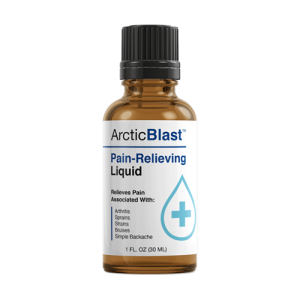 ArcticBlastSee official site
 Ageless KneesSee official site
 Nerve FreshSee official site
Affiliate links. Results vary. This is not medical advice.
3 thoughts on “Pain on the Inner Side of the Knee: Common Causes and What Helps”
Comments are closed.