Pain behind the knee can feel worrying because it is hard to pinpoint. Most of the time it comes from muscles, tendons or a fluid-filled cyst, but occasionally it signals something that needs urgent care. Here is how to tell the difference.
- Pain behind the knee is often caused by muscle or tendon strain, arthritis, or a Baker’s cyst.
- Deep vein thrombosis (DVT) is a rare but serious cause and needs urgent medical attention.
- Home care includes rest, ice, gentle stretching, and strengthening exercises.
- See a doctor if pain lasts more than two weeks, you notice a lump, or if your knee gives way or locks.
- Sudden swelling, redness, or warmth in one leg, especially after travel or surgery, needs prompt evaluation.
Common causes
Baker’s cyst
A Baker’s cyst is a pocket of joint fluid that bulges at the back of the knee, often in people with arthritis or a meniscus tear. You may feel tightness or a soft lump, especially when straightening the leg. It often settles when the underlying knee problem is treated.
- Why it happens: The knee produces extra fluid in response to irritation or injury. This fluid can collect and form a cyst behind the knee.
- What it feels like: A feeling of tightness or fullness, sometimes a visible bulge. It may ache with activity and feel better with rest.
- Who gets it: Most common in adults over 40, especially those with osteoarthritis, rheumatoid arthritis, or a meniscal tear.
Hamstring or calf strain
The hamstring tendons and the top of the calf muscle attach behind the knee. Overdoing exercise, sprinting or sudden stretching can strain them, causing pain when you bend the knee against resistance or walk uphill.
- Why it happens: Sudden increase in activity, inadequate warm-up, or overstretching the muscles and tendons at the back of the knee.
- What it feels like: Sharp or aching pain, especially with movement. May be tender to the touch and sometimes bruised or swollen.
- Who gets it: Active adults, weekend warriors, and those starting a new exercise routine.
Knee arthritis
Osteoarthritis can cause a deep ache that is felt at the back of the knee, along with stiffness after rest.
- Why it happens: Cartilage in the knee wears down with age, causing the bones to rub and the joint to become inflamed.
- What it feels like: Aching pain, stiffness, and sometimes swelling. Pain is often worse after sitting for a while or at the end of the day.
- Who gets it: Most common in adults over 50, or those with previous knee injuries.
Meniscus tear
Tears at the back part of the meniscus may cause pain behind the knee when squatting or twisting, plus swelling or catching.
- Why it happens: Twisting injuries or degeneration over time can cause the meniscus (a cartilage pad) to tear.
- What it feels like: Sharp or catching pain, swelling, and sometimes a feeling the knee is “locking” or giving way.
- Who gets it: Both younger adults (sports injuries) and older adults (degenerative tears).
Other possible causes
- Popliteal artery aneurysm: A rare bulge in the artery behind the knee, more common in older men. May feel like a pulsating lump. Needs medical evaluation.
- Nerve irritation: Compression of nerves running behind the knee can cause pain, tingling, or numbness.
- Posterior cruciate ligament (PCL) injury: Less common, usually from a blow to the front of the knee or a car accident.
- Referred pain: Sometimes pain from the lower back or hip is felt behind the knee.

When pain behind the knee is an emergency
A deep vein thrombosis (DVT), or blood clot, can cause pain behind the knee or in the calf. Seek urgent medical help if you have calf or back-of-knee pain with swelling, warmth or redness in one leg, especially after a long flight, surgery, illness, or if you take hormones. Call emergency services if you also feel short of breath or have chest pain, as a clot may have traveled to the lungs.
A Baker’s cyst that bursts can mimic a clot, which is another reason to get sudden swelling checked.
- Red flags for emergency care:
- Sudden swelling, redness, or warmth in one leg
- Shortness of breath or chest pain
- Severe pain after injury, especially if you cannot move the knee or bear weight
- Sudden loss of sensation or movement in the leg
The Gentle Joint Relief Plan
Move easier, starting this week. Inside you get:
- A 10-minute daily routine of gentle moves
- A flare-up checklist for bad days
- Red flags that mean see a doctor
100% free. No spam, unsubscribe anytime. Privacy policy.
What helps at home
- Rest from aggravating activities for a few days, but keep gently moving.
- Ice for 15 minutes a few times a day for new pain and swelling.
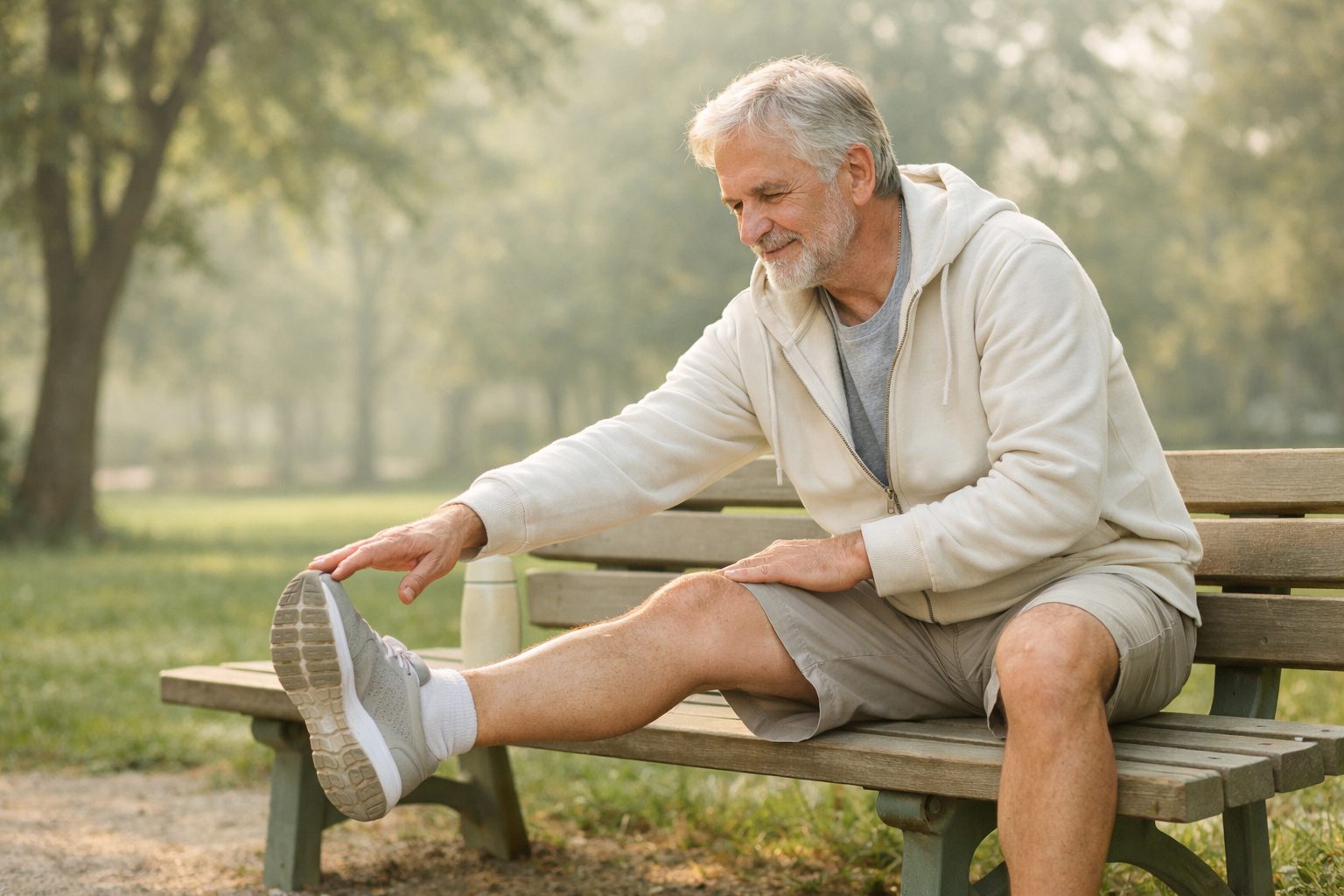
- Gentle stretching of the hamstrings and calves once acute pain settles. Hold each stretch for 20 to 30 seconds without bouncing.
- Strengthening of the thighs and hips to support the knee. Bridges, sit-to-stands and step-ups are good starting points.
- Elevate the leg if there is swelling.
How to stretch and strengthen safely
- Warm up with a few minutes of walking or gentle cycling before stretching.
- Do not force any movement that causes sharp or worsening pain.
- Try simple stretches: hamstring stretch (seated or standing), calf stretch (against a wall), and gentle knee bends.
- Build strength with easy exercises: glute bridges, side-lying leg lifts, and step-ups onto a low step.
- Progress slowly. Increase repetitions or resistance only when pain is controlled.
Common mistakes to avoid
- Ignoring pain that lasts more than two weeks or worsens with activity.
- Returning to sports or heavy labor too soon after injury.
- Using heat too early on a new injury (can increase swelling).
- Trying to “walk off” severe pain or swelling.
- Relying only on over-the-counter creams or supplements for persistent pain.
When to see a doctor
See your doctor if pain lasts more than two weeks, you notice a lump behind the knee, the knee locks or gives way, or pain wakes you at night. A physical therapist can design a program to strengthen and stretch the right muscles.
- Pain is severe, persistent, or getting worse
- There is a new lump or bulge behind the knee
- The knee feels unstable, locks, or gives way
- You have a history of cancer or unexplained weight loss
- You cannot fully straighten or bend the knee
- Pain is accompanied by fever or redness elsewhere in the body
Checklist: Is my pain behind the knee serious?
- Is the pain sudden and severe?
- Is there swelling, redness, or warmth in one leg?
- Do you feel short of breath or have chest pain?
- Did you recently travel, have surgery, or start hormone medication?
- Is there a visible lump or bulge behind the knee?
- Does the knee lock, catch, or give way?
- Is the pain waking you at night?
- Have you had unexplained weight loss or a history of cancer?
If you answer yes to any of the first four questions, seek urgent medical attention. For the others, schedule a routine visit with your doctor or a physical therapist.
Programs and supplements
Many readers find a structured routine easier to stick to. Ageless Knees is an at-home movement program readers ask about. Others look at topical relief such as ArcticBlast or joint supplements such as Joint Genesis. Evidence for these varies; never use them to delay checking a swollen, painful calf.
Also see our guide to pain on the inner side of the knee.
Frequently asked questions
Can I exercise with pain behind the knee?
If the pain is mild and not worsening, gentle movement and low-impact activities (like walking or cycling) are usually safe. Avoid high-impact exercises or anything that causes sharp pain. If in doubt, consult a physical therapist.
How do I know if my pain is from a Baker’s cyst or something more serious?
A Baker’s cyst usually feels like a soft, sometimes visible bulge behind the knee and may cause tightness. If you have sudden swelling, redness, warmth, or severe pain, especially after travel or surgery, seek medical care to rule out a blood clot.
What home remedies actually help?
Resting from aggravating activities, icing the area, gentle stretching, and strengthening exercises can help most mild cases. Elevating the leg if swollen and using over-the-counter pain relievers may also help. If symptoms persist, see your doctor.
Should I wear a knee brace?
A soft knee sleeve may provide comfort and mild support for some people, but braces are not a cure. Only use a brace if recommended by your doctor or physical therapist, as improper use can sometimes worsen symptoms.
How long does it take for pain behind the knee to get better?
Minor strains may improve in a few days to a week with rest and self-care. More significant injuries, arthritis, or cysts may take several weeks to months. Persistent or worsening pain needs medical evaluation.
Is pain behind the knee common as we age?
Yes, it becomes more common with age due to wear and tear on the knee joint, arthritis, and decreased flexibility. Staying active, maintaining a healthy weight, and regular stretching can help reduce risk.
The bottom line
Pain behind the knee is usually caused by a Baker’s cyst, a muscle strain, arthritis or a meniscus tear, and it often improves with rest, stretching and strengthening. Get urgent help for one-sided calf swelling, warmth or redness.
Want this as a handy printable?
The Gentle Joint Relief Plan
Move easier, starting this week. Inside you get:
- A 10-minute daily routine of gentle moves
- A flare-up checklist for bad days
- Red flags that mean see a doctor
100% free. No spam, unsubscribe anytime. Privacy policy.
Disclosure: links marked as sponsored are affiliate links. If you buy through them we may earn a commission at no extra cost to you. This article is for information only and is not medical advice.
Sources and further reading
This guide is for general information only and is not a substitute for professional advice. See our editorial policy.
Products mentioned in this guide
 Joint GenesisSee official site
 ArcticBlastSee official site
 Ageless KneesSee official site
 Nerve FreshSee official site
Affiliate links. Results vary. This is not medical advice.