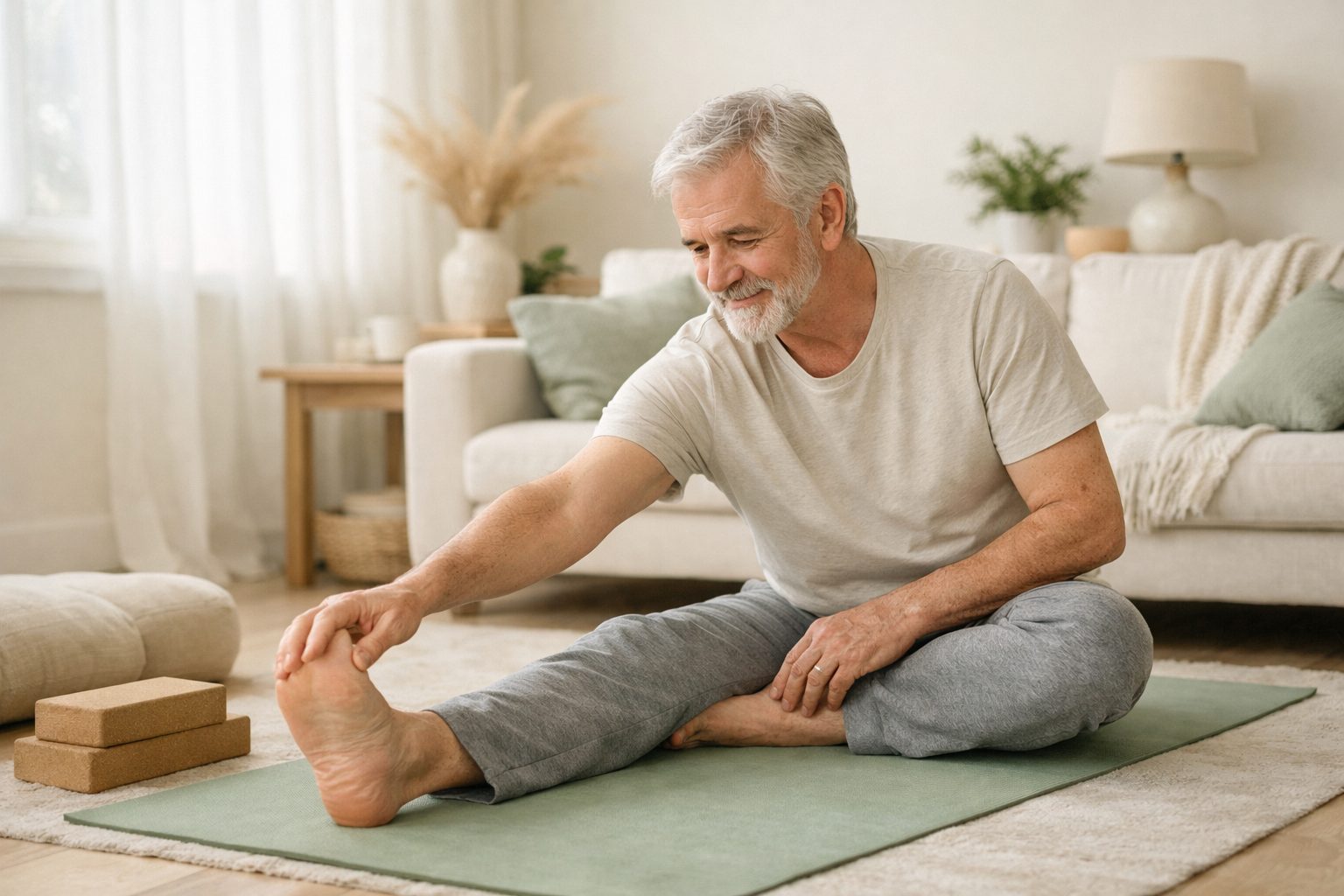
Tight muscles around the knee can add strain to the joint. These gentle stretches for knee pain are suitable for most adults and need no equipment. Pair them with strengthening exercises for the best results.
- Key takeaways:
- Gentle stretching can help relieve knee stiffness and discomfort.
- Always warm up before stretching and avoid pushing through pain.
- Consistency and proper form are more important than intensity.
- Strengthening exercises complement stretching for better knee health.
- See a healthcare professional if you have severe, persistent, or worsening knee symptoms.
Before you start
- Warm up with 5 minutes of easy walking or marching on the spot. This increases blood flow and prepares your muscles for stretching.
- Stretch to a gentle pull, never sharp pain. Mild tension is normal, but pain is a signal to stop.
- Hold each stretch for 20 to 30 seconds, breathe slowly, and repeat 2 to 3 times per side. Controlled breathing helps your muscles relax.
- Stop and see a professional if a stretch causes pain, swelling or clicking with pain.
Why stretching helps knee pain
The knee is a hinge joint that relies on the flexibility and strength of muscles around it. Tightness in the hamstrings, quadriceps, calves, or hips can pull on the knee and cause discomfort. Gentle stretching targets these areas, easing tension and improving your knee’s range of motion. This can make daily movements like walking, climbing stairs, or getting up from a chair feel easier.
However, stretching alone is rarely a cure. It works best as part of a routine that also includes strengthening exercises. This combination helps support the knee joint, improve balance, and reduce the risk of further injury.
Common causes of knee stiffness and pain
- Osteoarthritis: Wear and tear of knee cartilage, common after age 50.
- Muscle tightness: Inactivity or repetitive movements can shorten muscles.
- Injury: Sprains, strains, or overuse can lead to tightness and pain.
- Poor alignment: Weak or tight muscles can cause the knee to track improperly.
- Post-surgery or immobilization: Joints can stiffen after periods of rest or bracing.
How to stretch safely
- Move slowly into each stretch and avoid bouncing.
- Focus on good posture, keeping your back straight and shoulders relaxed.
- Breathe deeply and do not hold your breath.
- Never force a joint past its comfortable range of motion.
- If you have a recent injury or surgery, check with your doctor before starting.
1. Seated hamstring stretch
Sit on the edge of a chair with one leg straight out, heel on the floor. Keep your back straight and lean forward from the hips until you feel a stretch behind the thigh.
- Tip: Keep your toes pointing up and avoid rounding your back. You should feel the stretch in the back of your thigh, not your lower back.
- Common mistake: Slouching or bouncing into the stretch, which can strain your back.
2. Standing quad stretch
Hold a chair or wall for balance. Bend one knee and hold your ankle behind you, keeping knees together. If this is hard on the knee, loop a towel around your ankle instead.
- Tip: Gently tuck your pelvis under and keep your knees close together to maximize the stretch in the front of your thigh.
- Common mistake: Arching your lower back or pulling too hard, which can stress the knee or hip.
3. Calf stretch against a wall
Hands on the wall, step one foot back, keep the back heel down and the leg straight. Lean forward until you feel it in the calf.
- Tip: Both feet should point straight ahead. Keep your back leg straight and heel firmly on the ground.
- Common mistake: Turning your back foot out or letting your heel lift off the floor.
4. Heel slides
Lie on your back and slowly slide one heel toward your bottom, bending the knee as far as is comfortable, then slide it back. Repeat 10 times. Great for stiffness.
- Tip: Move slowly and focus on regaining motion, not speed. You can use a towel under your heel to help slide if needed.
- Common mistake: Forcing the knee to bend too far or moving too quickly, which can cause pain.
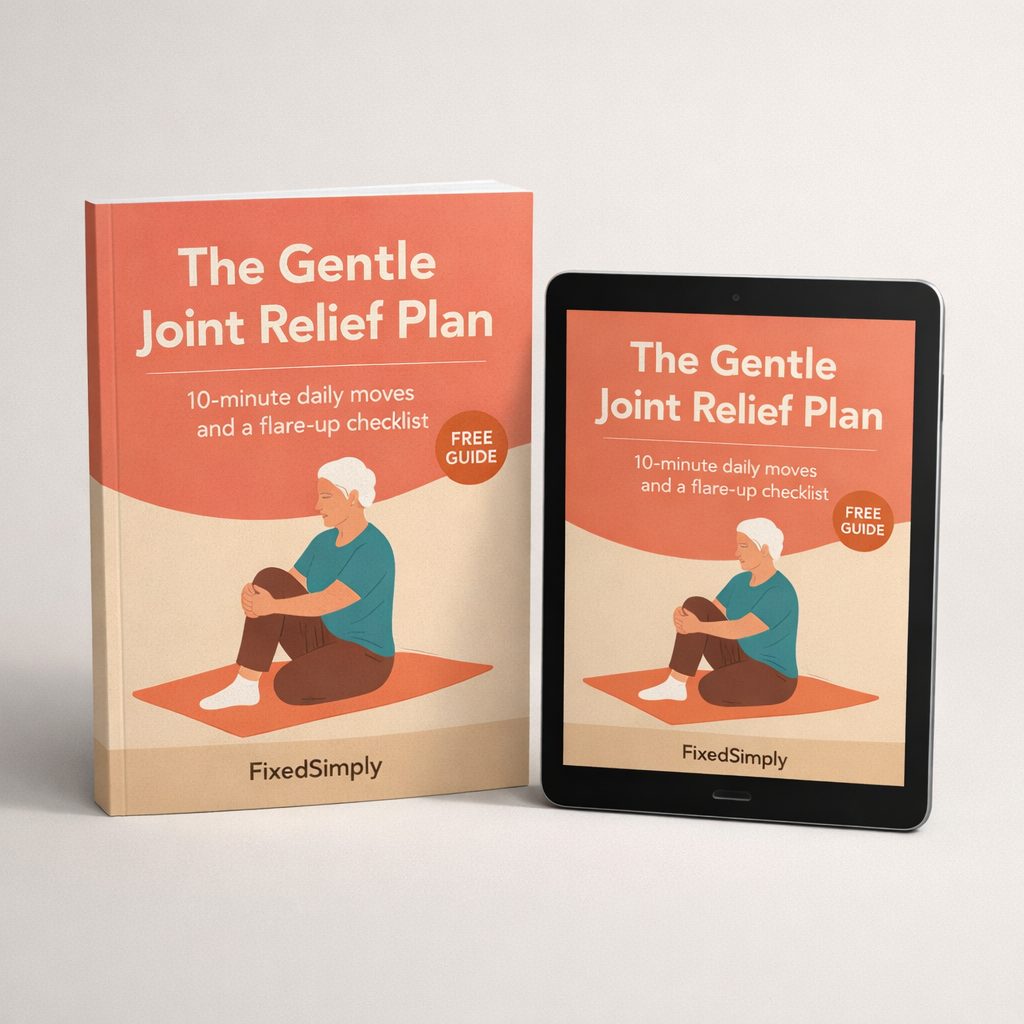
The Gentle Joint Relief Plan
Move easier, starting this week. Inside you get:
- A 10-minute daily routine of gentle moves
- A flare-up checklist for bad days
- Red flags that mean see a doctor
100% free. No spam, unsubscribe anytime. Privacy policy.
5. Lying hip flexor stretch
Lie near the edge of your bed, hug one knee to your chest and let the other leg relax down toward the floor.
- Tip: Keep your lower back flat on the bed. You should feel a stretch in the front of the hip and thigh of the leg hanging down.
- Common mistake: Letting your back arch or twisting your hips.
6. Figure-four stretch
Lie on your back, cross one ankle over the opposite knee and gently pull the lower leg toward you to stretch the hip and buttock.
- Tip: Keep your head and shoulders relaxed on the floor. Use your hands to gently pull the thigh toward your chest.
- Common mistake: Forcing the stretch or lifting your head and shoulders, which can strain your neck.
7. IT band stretch
Standing, cross one leg behind the other and lean your hips toward the back leg’s side until you feel a stretch along the outer hip and thigh.
- Tip: Keep your upper body upright and avoid twisting. The stretch should be felt along the outside of your hip and thigh.
- Common mistake: Leaning forward or twisting your torso, which reduces the effectiveness of the stretch.
Checklist: Safe and effective stretching
- Warm up first.
- Stretch both sides equally.
- Hold each stretch for at least 20 seconds.
- Breathe deeply throughout.
- Never force a painful movement.
- Stay consistent, aim for most days of the week.
- Pair stretching with strengthening for best results.
Add strengthening
Stretching helps, but strengthening has the strongest evidence for knee pain and arthritis. Try straight-leg raises, glute bridges, sit-to-stands from a chair and step-ups, 2 to 3 times a week. See knee pain when bending and joint pain after 50.
- Why strengthen? Strong muscles support the knee, improve balance, and take pressure off the joint. This can help prevent pain from returning.
- Getting started: Begin with bodyweight exercises. Progress slowly by adding repetitions or resistance as tolerated.
- Common mistake: Doing too much too soon, which can increase soreness or risk of injury.
When to get help
See a doctor or physical therapist for a knee that locks, gives way, swells or is very painful, and seek prompt care if you cannot bear weight.
- Red flags: Sudden swelling, severe pain, inability to move the knee, or signs of infection (redness, warmth, fever).
- If you have a history of knee surgery, injury, or chronic disease, consult your healthcare provider before starting a new exercise routine.
A guided program
If you prefer following a structured routine, Ageless Knees is an at-home program readers ask about.
A simple weekly routine
Knowing the stretches is one thing; doing them regularly is what makes the difference. A routine that fits into your week is far more useful than a long session you only manage once. Here is a simple structure many people find easy to stick with.
- Daily (5 to 10 minutes): Do the gentlest three or four stretches each morning, when knees often feel stiffest. Move slowly and stop well before pain.
- Three days a week (15 minutes): Go through all seven stretches, then add a short walk or a few minutes on a stationary bike to keep the joint moving.
- Once a week: Check in with yourself. Is climbing stairs or getting out of a chair a little easier? Small wins are a sign the routine is working.
Keep a simple note on your phone or a calendar by the fridge. Ticking off each session builds the habit. If any stretch makes your knee swell, lock or give way, skip it and talk to your doctor or a physical therapist before carrying on.
Frequently asked questions
How often should I stretch my knees?
Most people benefit from gentle stretching 4 to 6 days per week. Consistency is key. If you are new to stretching, start with 3 days a week and gradually increase as you feel comfortable.
Can stretching alone fix my knee pain?
No, stretching can help relieve tightness and improve flexibility, but it is most effective when combined with strengthening exercises. Addressing muscle weakness and imbalances is essential for lasting knee health.
Is it normal to feel discomfort during a stretch?
Mild tension or a gentle pulling sensation is normal, but you should never feel sharp pain, pinching, or joint discomfort. If you do, stop and modify the stretch or consult a professional.
What if my knee pain gets worse with stretching?
Stop immediately if stretching increases your pain, swelling, or causes your knee to feel unstable. Persistent or worsening symptoms should be evaluated by a doctor or physical therapist.
Are these stretches safe after knee replacement or surgery?
Some stretches may be appropriate after surgery, but always follow your surgeon’s or physical therapist’s instructions. Do not attempt new stretches without medical clearance if you have had recent knee surgery.
Can these stretches help with arthritis?
Gentle stretching and strengthening can help manage stiffness and discomfort from osteoarthritis. They are not a cure, but they can make daily activities easier and improve mobility. Always work within your comfort zone and consult your doctor if you have questions.
The bottom line
A few minutes of gentle stretching most days, plus simple strengthening, can make knees feel looser and more comfortable. Go gently and progress gradually.
Want this as a handy printable?
The Gentle Joint Relief Plan
Move easier, starting this week. Inside you get:
- A 10-minute daily routine of gentle moves
- A flare-up checklist for bad days
- Red flags that mean see a doctor
100% free. No spam, unsubscribe anytime. Privacy policy.
Disclosure: links marked as sponsored are affiliate links. If you buy through them we may earn a commission at no extra cost to you. This article is for information only and is not medical advice.
Sources and further reading
This guide is for general information only and is not a substitute for professional advice. See our editorial policy.
Products mentioned in this guide
 Joint GenesisSee official site
 ArcticBlastSee official site
 Ageless KneesSee official site
 Nerve FreshSee official site
Affiliate links. Results vary. This is not medical advice.