
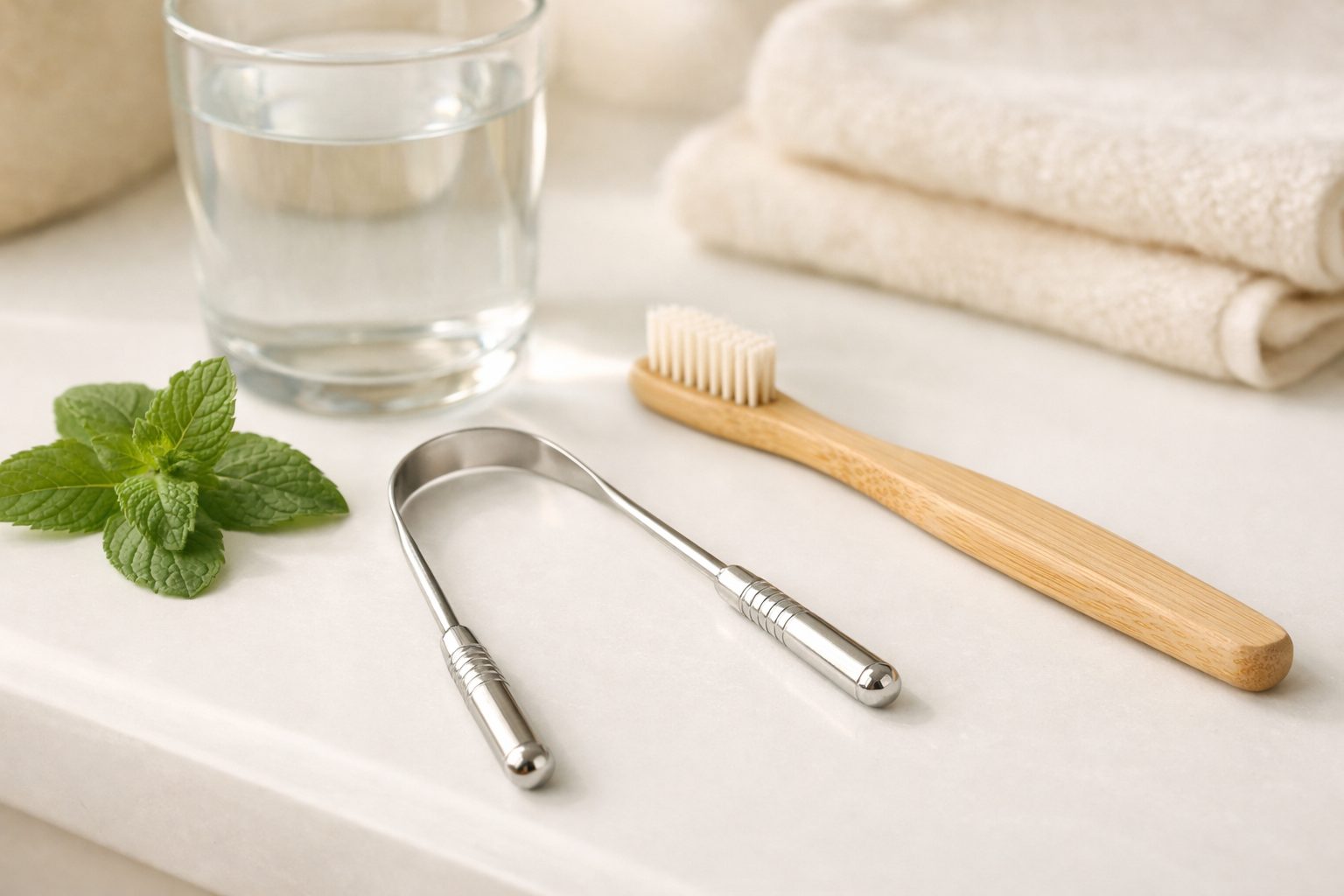
You brush twice a day, maybe even floss, yet your breath still is not as fresh as you would like. The missing step for many people is the tongue. Here is what you need to know about tongue scraping for bad breath.
- Key takeaways:
- Most bad breath starts in the mouth, especially on the tongue’s surface.
- Tongue scraping reduces odor-causing bacteria and sulfur compounds.
- It works best as a daily habit, not a quick fix.
- Proper technique is important to avoid irritation or gagging.
- Persistent bad breath may signal an underlying health issue and should be checked by a dentist or doctor.
Why the tongue matters so much
The surface of your tongue is covered in tiny bumps and grooves. Bacteria, dead cells and food debris collect there, especially at the back, forming a whitish or yellowish coating. Those bacteria release sulfur compounds, which are the main chemical cause of bad breath. Dentists estimate that most everyday bad breath starts in the mouth, and the tongue is one of the biggest contributors.
How the tongue harbors odor
The tongue’s rough texture acts like a sponge, trapping particles and bacteria that are hard to reach with a toothbrush alone. These bacteria thrive in the moist, protected environment at the back of the tongue, where oxygen is low. This allows “anaerobic” bacteria to multiply, breaking down proteins from food and dead cells and releasing volatile sulfur compounds (VSCs) that smell unpleasant.
Common foods like onions, garlic, dairy, and coffee can add to this problem, but even without them, the normal bacterial buildup is enough to cause noticeable odor if not removed regularly.
Why brushing alone is not enough
While brushing your teeth removes plaque and food particles from the tooth surfaces, it does little to clean the tongue’s deeper grooves. Even brushing your tongue with a toothbrush may not be as effective as scraping because bristles tend to move debris around rather than lift it off. That is why many dental professionals recommend a dedicated tongue scraper for this task.
Does tongue scraping actually work?
Studies have found that cleaning the tongue reduces the sulfur compounds that cause odor, and that a scraper may remove more coating than a toothbrush. The effect is real but short-lived: the coating builds back up, so it works best as a daily habit rather than a one-off fix.
What the research shows
Clinical research supports the use of tongue scraping for reducing bad breath. In controlled studies, participants who used a tongue scraper showed a significant decrease in VSCs compared to those who only brushed their teeth. Some studies found that scraping removes up to 30 percent more debris from the tongue than brushing alone.
However, the reduction in odor is temporary because bacteria and debris begin to accumulate again within hours. That is why consistency is key, tongue scraping should be part of your regular oral hygiene routine, just like brushing and flossing.
Who benefits most?
Anyone can benefit from tongue scraping, but it is especially helpful for people who:
- Notice a white or yellow coating on their tongue
- Have chronic or recurring bad breath
- Smoke or use tobacco
- Wear dentures or dental appliances
- Have dry mouth or take medications that reduce saliva
How to scrape your tongue
- Choose a smooth U-shaped scraper made of stainless steel, copper or plastic. The back of a toothbrush with a tongue cleaner also works.
- Stick out your tongue and place the scraper as far back as is comfortable.
- Pull it forward gently with light pressure. Do not press hard.
- Rinse the scraper and repeat five to ten times, covering the whole surface.
- Rinse your mouth with water. Clean the scraper with soap and hot water and let it dry.
Do it once a day, ideally in the morning after brushing. If you have a strong gag reflex, start further forward and breathe through your nose.
Step-by-step checklist for safe tongue scraping
- Wash your hands before starting.
- Use a clean scraper each time.
- Stand in front of a mirror for better control.
- Relax your tongue and stick it out comfortably.
- Place the scraper gently on the surface, not too far back to avoid gagging.
- Scrape from back to front in one smooth motion, applying light, even pressure.
- Rinse the scraper under running water after each pass.
- Repeat until you have covered the entire tongue (usually 5–10 times).
- Rinse your mouth with water to remove loosened debris.
- Wash the scraper thoroughly with soap and hot water, then let it air dry.
Common mistakes to avoid
- Scraping too hard: This can irritate or damage your tongue’s surface. Use gentle pressure.
- Going too far back: This may trigger gagging. Only go as far as is comfortable.
- Using a dirty scraper: Always clean your scraper after each use to prevent bacterial buildup.
- Neglecting other oral hygiene: Tongue scraping is not a substitute for brushing and flossing.
- Overdoing it: Scraping more than once or twice a day can cause soreness or irritation.
The 5-Minute Healthy Gums Routine
Fresher breath, healthier gums. Inside you get:
- A simple morning and night routine you can stick to
- A 30-day bleeding gums tracker
- What to ask at your next dental visit
100% free. No spam, unsubscribe anytime. Privacy policy.
Other habits that keep breath fresh
- Floss or use interdental brushes daily. Trapped food between teeth breaks down and smells.
- Drink water. A dry mouth lets odor-causing bacteria thrive. Sip water through the day, especially if you drink coffee or take medications that dry the mouth.
- Chew sugar-free gum after meals to boost saliva.
- Clean dentures and retainers daily.
- See your dentist. Gum disease, cavities and old fillings can all cause persistent odor.
Additional tips for fresher breath
- Replace your toothbrush every 3 to 4 months, or sooner if bristles are frayed.
- Avoid tobacco and limit alcohol, which dry out the mouth.
- Eat crunchy fruits and vegetables to help clean teeth naturally.
- Consider using an alcohol-free mouthwash if recommended by your dentist.
- Maintain regular dental cleanings and checkups at least twice a year.
When bad breath is a sign of something else
If your breath stays bad despite good cleaning, it is worth checking with a dentist or doctor. Persistent bad breath can be linked to gum disease, sinus infections, tonsil stones, acid reflux, diabetes or, rarely, liver or kidney problems. Bleeding gums alongside bad breath is a common sign of gum disease; our guide to bleeding gums and bad breath covers this in detail.
Red flags to watch for
- Bad breath that does not improve with good oral hygiene
- Sores, pain or white patches in your mouth
- Bleeding, swollen or tender gums
- Loose teeth or changes in bite
- Persistent dry mouth, even after drinking water
- Unexplained weight loss, fever or fatigue
If you notice any of these symptoms, schedule a dental or medical evaluation. Early attention can prevent more serious problems.
What about oral probiotics?
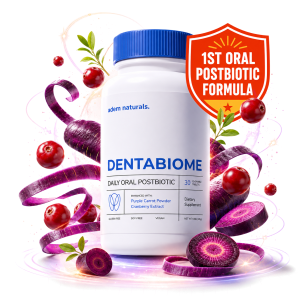
Oral probiotics aim to encourage helpful bacteria in the mouth. Research is still early, with some small studies suggesting a modest effect on breath odor. Some readers add one to their routine, often because it comes with a money-back guarantee. Options readers ask about include ProDentim, ProvaDent and DentaBiome. They are not a substitute for brushing, flossing and dental visits.
How do oral probiotics work?
Oral probiotics contain strains of bacteria that are naturally found in a healthy mouth. The idea is that by adding more of these “good” bacteria, they may help crowd out the odor-causing types. While some people report fresher breath, results can vary, and more research is needed to know how effective they really are for most people.
Frequently asked questions
Is tongue scraping safe for everyone?
For most people, tongue scraping is safe when done gently and with a clean tool. However, if you have open sores, cuts or infections on your tongue, or if you are recovering from oral surgery, wait until your mouth has healed before scraping. If you have questions about safety, ask your dentist.
How often should I scrape my tongue?
Once a day is usually enough for most people. Some people with a heavy tongue coating may want to do it twice a day, but scraping too often can cause irritation. If your tongue feels sore, reduce the frequency.
Can tongue scraping help with taste?
Removing the coating from your tongue may help improve your sense of taste, especially if the buildup is thick. Many people notice that food tastes fresher after they start scraping regularly.
What is the best type of tongue scraper?
Stainless steel and copper scrapers are durable, easy to clean and resist bacteria. Plastic scrapers are lightweight and gentle but may wear out more quickly. The best scraper is one that feels comfortable and is easy to use consistently.
Can I use a spoon or my toothbrush instead?
A spoon can work as an improvised scraper in a pinch, but purpose-made scrapers are designed to cover more surface area and are easier to maneuver. Some toothbrushes have a built-in tongue cleaner on the back, which is more effective than bristles alone, but usually not as thorough as a dedicated scraper.
Does tongue scraping replace mouthwash?
No, tongue scraping is not a substitute for mouthwash. While it removes physical debris and bacteria, mouthwash can help reduce bacteria in hard-to-reach places and freshen breath further. For best results, use both as part of your oral care routine if recommended by your dentist.
The bottom line
Tongue scraping is a cheap, simple habit that genuinely reduces bad breath for many people. Combine it with daily flossing, plenty of water and regular dental checkups for the best results.
Want this as a handy printable?
The 5-Minute Healthy Gums Routine
Fresher breath, healthier gums. Inside you get:
- A simple morning and night routine you can stick to
- A 30-day bleeding gums tracker
- What to ask at your next dental visit
100% free. No spam, unsubscribe anytime. Privacy policy.
Disclosure: links marked as sponsored are affiliate links. If you buy through them we may earn a commission at no extra cost to you. This article is for information only and is not medical advice.
Sources and further reading
This guide is for general information only and is not a substitute for professional advice. See our editorial policy.
Products mentioned in this guide
Affiliate links. Results vary. This is not medical advice.
1 thought on “Does Tongue Scraping Help Bad Breath? How to Do It Properly”
Comments are closed.