
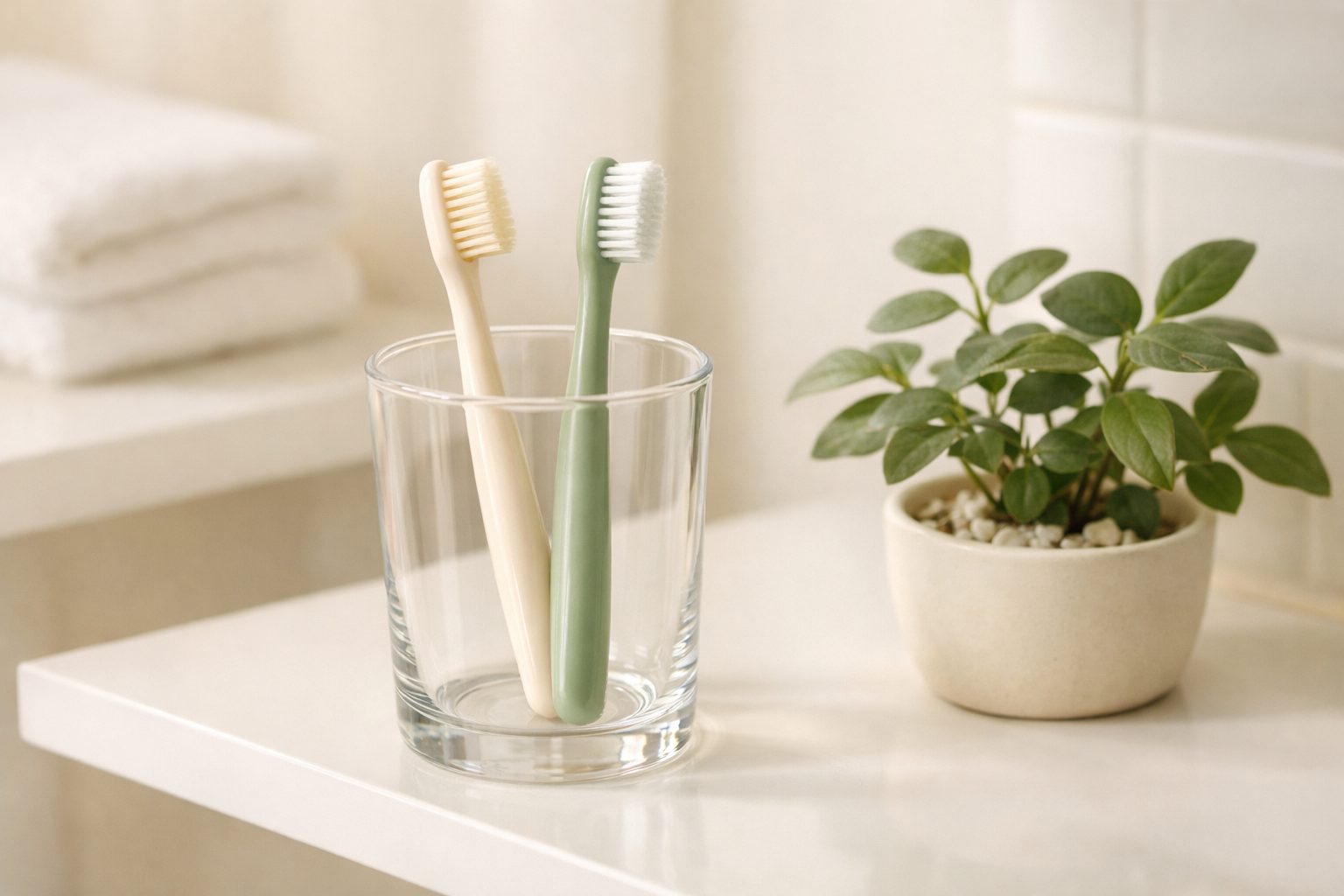
If your gums bleed when you brush, it is tempting to brush less or scrub harder. Both make things worse. The right tool and technique help bleeding gums settle. Here is what to know about choosing a soft bristle toothbrush for bleeding gums.
- Key takeaways:
- Bleeding gums are most often caused by plaque buildup and gingivitis, not brushing too hard or using the wrong brush.
- Soft bristle toothbrushes are safest and most effective for sensitive or bleeding gums.
- Proper brushing technique is just as important as the brush you use.
- Electric toothbrushes with pressure sensors can help prevent overbrushing.
- Persistent bleeding, swelling, or pain should be checked by a dentist.
- Oral probiotics may support gum health but should not replace brushing or dental care.
Why gums bleed
The most common reason is gingivitis: inflammation caused by plaque building up along the gumline. Plaque is a sticky film of bacteria that forms on teeth and gums. If not removed by regular brushing and flossing, it can irritate the gums, making them red, swollen, and prone to bleeding. Other causes include:
- Brushing too hard or using a stiff brush: This can damage delicate gum tissue.
- Hormonal changes: Pregnancy, menopause, and hormonal medications can increase gum sensitivity.
- Certain medicines: Blood thinners and some other drugs can make gums bleed more easily.
- Vitamin deficiencies: Especially vitamin C and vitamin K.
- Underlying health conditions: Diabetes, blood disorders, or immune system issues can contribute.
See our guide to bleeding gums and bad breath for more.
How plaque and gum disease develop
Plaque forms constantly and, if not brushed away, hardens into tartar. Tartar can only be removed by a dental professional. Plaque and tartar irritate the gums, leading to gingivitis. If left untreated, gingivitis can progress to periodontitis, a more serious gum disease that can cause tooth loss. Early signs, like bleeding gums, are a warning to improve your oral care routine.
Why soft bristles?
Dentists recommend soft bristles for almost everyone. They clean plaque effectively without scratching inflamed gums or wearing away the gumline. Medium and hard brushes can cause gum recession and sensitive teeth over time.
- Soft bristles: Gentle on gums, remove plaque effectively, and reduce the risk of gum recession.
- Medium/hard bristles: May feel like they clean better, but can actually scrape away gum tissue and enamel, leading to sensitivity and receding gums.
- Ultra-soft bristles: Available for people with very sensitive gums or after dental procedures.
How bristle stiffness affects gums
Soft bristles flex to reach between teeth and along the gumline without causing trauma. Harder bristles, especially when used with force, can create tiny cuts or abrasions on the gums. Over time, this can make gums pull back from the teeth, exposing roots and increasing the risk of decay and sensitivity. For anyone with bleeding gums, softer is always safer.

Manual or electric?
Both work well when used properly. Reviews of research have found that powered toothbrushes, especially oscillating-rotating ones, can remove slightly more plaque and reduce gingivitis a little more than manual brushes. Many models also have pressure sensors that warn you if you press too hard, which is helpful if your gums bleed.
- Manual toothbrushes: Affordable, widely available, and effective with proper technique. You control the pressure and motion.
- Electric toothbrushes: Oscillating-rotating and sonic models provide consistent motion and may help those with limited dexterity or who tend to brush too hard. Pressure sensors and timers are helpful features.
Comparison checklist: Manual vs. Electric Toothbrush
- Plaque removal: Electric slightly better, but both can be effective
- Ease of use: Electric is easier for those with arthritis or limited mobility
- Pressure control: Electric models with sensors can help prevent overbrushing
- Cost: Manual is less expensive up front
- Replacement: Both require changing brush heads every 3 months
Choose the type you will use consistently and comfortably. The best toothbrush is the one you use properly every day.
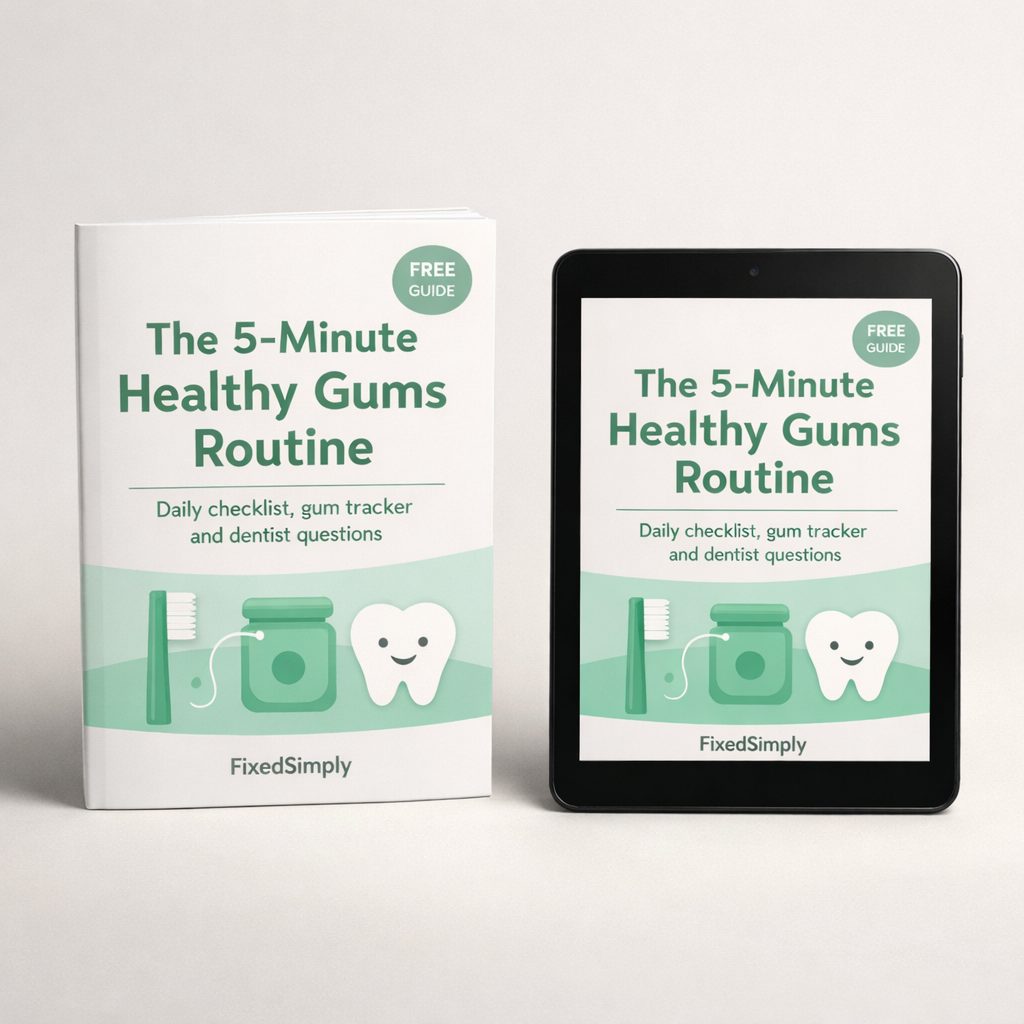
The 5-Minute Healthy Gums Routine
Fresher breath, healthier gums. Inside you get:
- A simple morning and night routine you can stick to
- A 30-day bleeding gums tracker
- What to ask at your next dental visit
100% free. No spam, unsubscribe anytime. Privacy policy.
How to brush bleeding gums
- Hold the brush at a 45-degree angle to the gumline. This angle helps the bristles reach just under the gum edge, where plaque collects.
- Use small, gentle circles or short back-and-forth strokes; do not scrub. Vigorous scrubbing can make bleeding and irritation worse.
- Brush for two minutes, twice a day, with fluoride toothpaste. Set a timer or use an electric brush with a built-in timer to help.
- Clean between teeth daily with floss or interdental brushes. Mild bleeding at first is common and usually improves within one to two weeks of daily cleaning. Interdental brushes are especially helpful for larger gaps.
- Replace your brush or brush head every three months, or sooner if the bristles splay. Worn bristles do not clean effectively and can harbor bacteria.
Step-by-step brushing tips
- Use only a pea-sized amount of toothpaste.
- Do not rinse with water immediately after brushing; let the fluoride stay on your teeth longer.
- Be gentle, think of massaging the gums rather than scrubbing them.
- If you have trouble reaching the back teeth, try a brush with a small head.
- Rinse your brush thoroughly after use and let it air dry.
Common mistakes to avoid
- Using a hard-bristle brush or brushing with too much force.
- Brushing for less than two minutes.
- Neglecting to clean between teeth.
- Skipping brushing because gums bleed, this allows plaque to build up further.
- Not replacing your toothbrush often enough.
When to see a dentist
See a dentist if bleeding lasts more than two weeks of good cleaning, or if you have swollen, receding or painful gums, loose teeth or persistent bad breath. Gum disease is very treatable when caught early. See a doctor if you bleed easily elsewhere or bruise easily.
- Red flag symptoms: Severe pain, pus, loose teeth, or sores that do not heal.
- Other warning signs: Gums pulling away from teeth, changes in bite, or teeth that feel loose.
- If you notice blood when you spit after brushing for more than two weeks, schedule a dental appointment.
- If you have a history of heart disease, diabetes, or immune issues, tell your dentist. Gum health can affect overall health.
Oral probiotics
Some readers add an oral probiotic alongside good brushing. Evidence is early. Options include ProDentim and ProvaDent; see our honest ProDentim review.

- Oral probiotics are supplements containing beneficial bacteria that may help balance the oral microbiome.
- Some small studies suggest they may reduce plaque or support gum health, but more research is needed.
- They should not replace brushing, flossing, or regular dental visits.
- If you have a weakened immune system or take medication, check with your doctor before starting any supplement.
Checklist: How to care for bleeding gums
- Use a soft-bristle toothbrush (manual or electric).
- Brush gently at the gumline for two minutes, twice a day.
- Clean between teeth daily with floss or interdental brushes.
- Use fluoride toothpaste.
- Replace your toothbrush or brush head every three months.
- Do not avoid brushing if gums bleed, gentle cleaning helps them heal.
- See a dentist if bleeding persists or if you have other symptoms.
- Consider oral probiotics as a possible supplement, not a replacement for brushing.
Frequently asked questions
Will brushing harder stop my gums from bleeding?
No. Brushing harder can actually make bleeding and irritation worse. Gentle, thorough cleaning with a soft-bristle brush is best. Bleeding is usually a sign of inflammation from plaque, not a sign you need to scrub harder.
Is it normal for gums to bleed when I start flossing?
Mild bleeding is common when you first start flossing or using interdental brushes, especially if your gums are inflamed. This should improve within one to two weeks as your gums become healthier. If bleeding continues, see your dentist.
How do I know if my toothbrush is too hard?
If your gums feel sore, look red or recede, or if the bristles feel stiff or scratchy, your brush may be too hard. Always choose a soft-bristle brush, especially if you have bleeding gums.
Can bleeding gums heal on their own?
Bleeding gums often improve with better oral hygiene: gentle brushing, flossing, and regular dental cleanings. If bleeding does not improve after two weeks, see your dentist to rule out gum disease or other issues.
Are electric toothbrushes better for bleeding gums?
Electric toothbrushes can be helpful, especially for people who tend to brush too hard or have trouble with manual brushing. Models with pressure sensors can help prevent overbrushing. The most important factor is using a soft-bristle head and gentle technique.
Should I stop brushing if my gums bleed?
No. Do not stop brushing. Skipping brushing allows plaque to build up and makes bleeding worse. Instead, use a soft-bristle brush and gentle technique. If bleeding persists, see your dentist.
The bottom line
Choose a soft-bristle brush (manual or electric), brush gently at the gumline for two minutes twice a day, and clean between teeth daily. If bleeding persists, see your dentist.
Want this as a handy printable?
The 5-Minute Healthy Gums Routine
Fresher breath, healthier gums. Inside you get:
- A simple morning and night routine you can stick to
- A 30-day bleeding gums tracker
- What to ask at your next dental visit
100% free. No spam, unsubscribe anytime. Privacy policy.
Disclosure: links marked as sponsored are affiliate links. If you buy through them we may earn a commission at no extra cost to you. This article is for information only and is not medical advice.
Sources and further reading
This guide is for general information only and is not a substitute for professional advice. See our editorial policy.
Products mentioned in this guide
Affiliate links. Results vary. This is not medical advice.