You have probably heard of probiotics, the helpful bacteria in yogurt and supplements. Prebiotic fiber is the food those bacteria eat. Getting enough of it is one of the simplest ways to support gut health.
- Key takeaways:
- Prebiotic fiber feeds your good gut bacteria and supports digestion, immune health and blood sugar control.
- Top sources include onions, garlic, oats, beans, bananas, apples and more.
- Increase fiber slowly to avoid bloating and discomfort.
- Most Americans eat less fiber than recommended. Whole foods are best, but supplements can help if needed.
- If you have IBS or digestive issues, some prebiotic foods may cause symptoms. Work with a dietitian for guidance.
What is prebiotic fiber?
Prebiotics are types of fiber that your body cannot digest but your gut bacteria can. As the bacteria ferment them, they produce short-chain fatty acids, which help nourish the gut lining and are linked with better digestion, blood sugar control and immune health.
Think of prebiotics as fertilizer for your gut’s “good” bacteria. Without prebiotic fiber, these helpful microbes struggle to thrive. When you eat enough prebiotic-rich foods, you’re supporting a diverse and healthy gut microbiome, which is now known to influence not just digestion but also mood, immunity and even weight regulation.
How prebiotic fiber works in your gut
Unlike most nutrients, prebiotic fibers travel through your digestive tract undigested because your body lacks the enzymes to break them down. When they reach your colon, your gut bacteria ferment them. This fermentation process produces short-chain fatty acids (SCFAs) like butyrate, acetate and propionate. These SCFAs help nourish the cells lining your gut, lower inflammation and may help regulate appetite and blood sugar.
In short, prebiotics help your gut bacteria flourish, and your gut bacteria in turn help keep your digestive system, immune system and metabolism running smoothly.

Best food sources
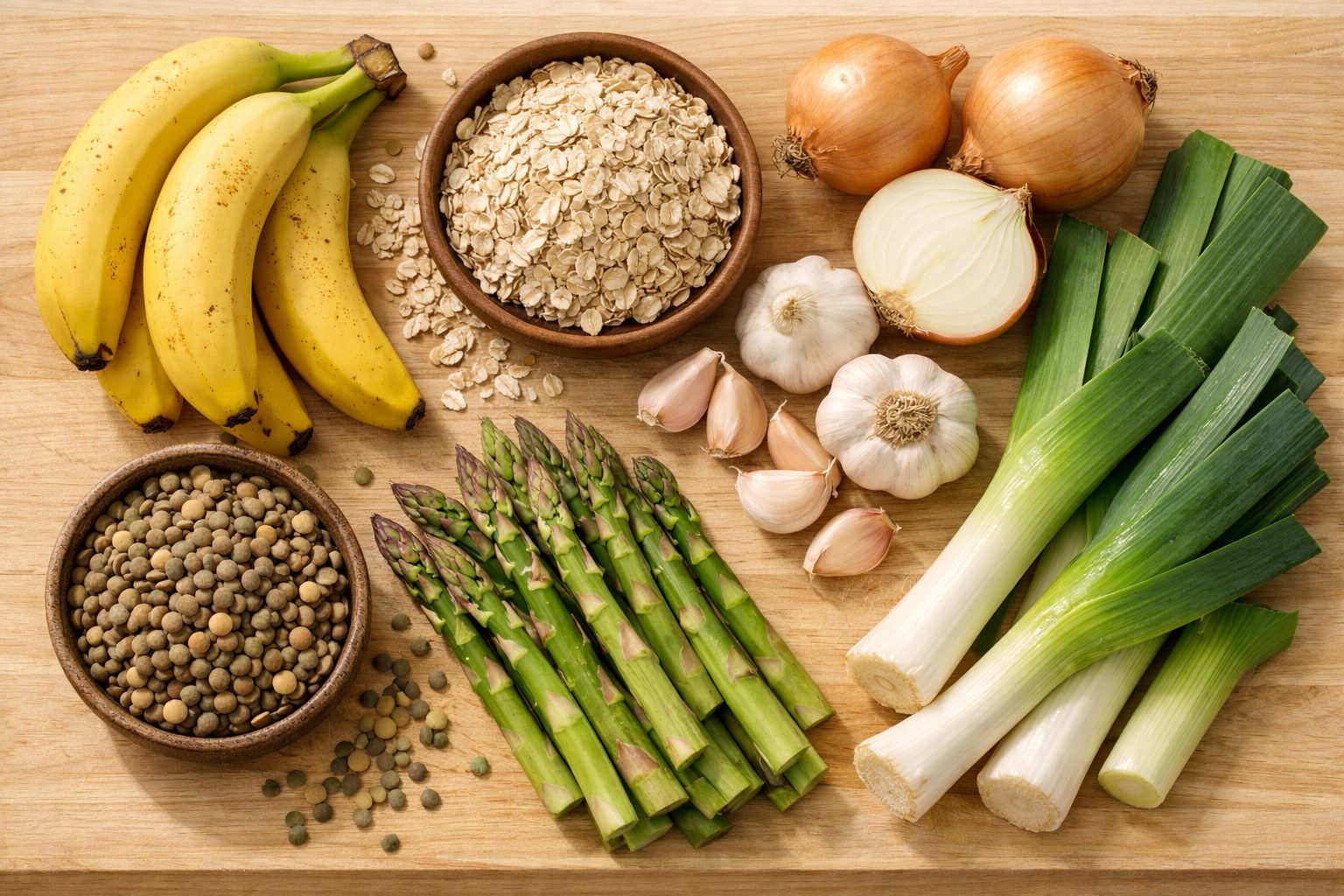
- Onions, garlic and leeks
- Asparagus and artichokes
- Slightly green bananas
- Oats and barley (beta-glucan)
- Beans, lentils and chickpeas
- Apples (pectin)
- Cooked and cooled potatoes or rice (resistant starch)
- Flaxseed and chicory root
These foods are rich in specific prebiotic fibers such as inulin, fructooligosaccharides (FOS), galactooligosaccharides (GOS), pectin, beta-glucan and resistant starch. Each type of fiber feeds different strains of gut bacteria, so variety is important.
Here’s a quick comparison of common prebiotic foods and their key benefits:
- Onions, garlic, leeks: High in inulin and FOS; also add flavor to meals.
- Asparagus, artichokes: Good sources of inulin; also high in antioxidants.
- Green bananas: Contain resistant starch, which is especially good for gut bacteria.
- Oats, barley: Contain beta-glucan, linked to heart and gut health.
- Beans, lentils, chickpeas: High in GOS and resistant starch; also provide protein.
- Apples: Rich in pectin, which supports the gut lining.
- Cooked and cooled potatoes or rice: Cooling after cooking increases resistant starch content.
- Flaxseed, chicory root: Flaxseed offers soluble and insoluble fiber; chicory root is one of the richest sources of inulin.

The Calm Belly Reset
A happier gut in 7 days. Inside you get:
- A 7-day gut-friendly meal plan
- A ready-to-print shopping list
- Easy habits that ease bloating
100% free. No spam, unsubscribe anytime. Privacy policy.
How to add more without bloating
- Increase slowly over 2 to 3 weeks; a sudden jump causes gas.
- Drink plenty of water.
- Spread fiber across the day rather than one big meal.
- If certain foods trigger bloating, track them; see food diary for bloating.
People with IBS may react to some prebiotic foods (high-FODMAP foods such as onion, garlic and beans). A dietitian can help find the right balance.
Step-by-step tips for adding prebiotic fiber
- Start small: Begin by adding one new prebiotic food at a time, such as half a banana or a few tablespoons of cooked beans.
- Hydrate: Fiber absorbs water. Drinking extra fluids helps prevent constipation and discomfort.
- Mix and match: Rotate your prebiotic foods to feed a wider variety of gut bacteria.
- Cook if needed: Some people find cooked onions, garlic and asparagus easier to digest than raw.
- Keep a food diary: Track what you eat and how you feel to spot patterns or triggers. See the food diary for bloating for guidance.
Common mistakes to avoid
- Adding too much fiber too quickly: This is the most common cause of gas and bloating. Always increase gradually.
- Ignoring water intake: Not drinking enough water with increased fiber can cause constipation.
- Relying only on supplements: Whole foods offer a broader range of fibers and nutrients.
- Skipping variety: Different fibers feed different bacteria. Eating a range of prebiotic foods is best.
- Not adjusting for sensitivities: If you have IBS or are sensitive to FODMAPs, some prebiotic foods may worsen symptoms. Consult a dietitian if needed.
How much fiber?
Dietary guidelines suggest around 25 grams a day for women and 30 to 38 grams for men; most adults eat far less.
Prebiotic fiber is just one part of total fiber intake, but aiming for the recommended daily amount from a mix of sources is a good goal. If you are not sure how much you are getting, try tracking your intake for a few days using a food diary or an app.
Here is a simple checklist to help you reach your fiber goals:
- Include at least one prebiotic-rich vegetable (like onions or asparagus) in your lunch or dinner.
- Add beans or lentils to soups, salads or stews a few times a week.
- Enjoy a banana (slightly green is best for resistant starch) as a snack.
- Swap white bread or rice for whole grain or cooked and cooled versions for extra resistant starch.
- Sprinkle ground flaxseed on oatmeal or yogurt.
- Snack on apple slices or add them to salads.
Do you need a supplement?
Food first: whole foods bring vitamins, minerals and a variety of fibers. Fiber supplements like psyllium or inulin can help if you struggle to get enough, but start low. Some readers try gut and metabolism formulas like Ikaria Lean Belly Juice; evidence varies.
If you are considering a fiber supplement, keep these points in mind:
- Start with a low dose: Begin with half the recommended amount and increase slowly to minimize gas and bloating.
- Choose the right type: Inulin and FOS are common prebiotic fibers in supplements. Psyllium is more of a general fiber but can support gut health.
- Check with your doctor: If you have digestive conditions, diabetes or take medications, talk to your healthcare provider before starting a supplement.
- Supplements are not a cure-all: They can help fill gaps, but they do not replace the benefits of a fiber-rich, whole food diet.
See also herbal teas for bloating and stubborn belly fat after 40.
Who should be cautious with prebiotic fiber?
Most people can benefit from more prebiotic fiber, but some need to take extra care:
- People with IBS or sensitive digestion: Many prebiotic foods are high in FODMAPs, which can trigger symptoms in some people. Common culprits include onions, garlic, beans and wheat. If you notice bloating, pain or changes in bowel habits after eating these foods, consider working with a dietitian to find alternatives.
- Those with digestive diseases: If you have Crohn’s, ulcerative colitis, or have had bowel surgery, talk to your doctor before making big changes to your fiber intake.
- Anyone starting a new supplement: Always introduce fiber supplements gradually and check for interactions with medications.
If you have persistent or severe digestive symptoms, unintended weight loss, blood in your stool or sudden changes in bowel habits, see a doctor promptly. These can be signs of underlying medical conditions that need evaluation.
Frequently asked questions
What is the difference between prebiotics and probiotics?
Prebiotics are types of fiber that feed your healthy gut bacteria. Probiotics are the live bacteria themselves, found in fermented foods like yogurt or in supplements. Both are important for gut health, but prebiotics are the fuel that help probiotics thrive.
Can I get enough prebiotic fiber from food alone?
Most people can meet their prebiotic fiber needs by eating a variety of fiber-rich whole foods, especially vegetables, fruits, whole grains and legumes. Supplements can help if you have trouble getting enough, but whole foods offer more health benefits overall.
Will prebiotic fiber cause gas or bloating?
It can, especially if you increase your intake quickly. Your gut bacteria ferment prebiotic fibers, which can create gas as a byproduct. To minimize discomfort, increase fiber slowly over a few weeks and drink plenty of water.
Are there any risks to eating too much prebiotic fiber?
For most healthy adults, the main risk is digestive discomfort like gas, bloating or loose stools if you eat much more fiber than your gut is used to. Rarely, people with certain digestive conditions may need to limit some prebiotic foods. If you have concerns, talk to your healthcare provider.
How do I know if prebiotic fiber is helping my gut?
Many people notice more regular bowel movements and less bloating after a few weeks of increased fiber. Other benefits, like improved energy or immune support, may be subtle. If you have ongoing discomfort, track your symptoms and consult a dietitian or doctor.
Can prebiotic fiber help with weight management?
Prebiotic fiber may help with appetite control and blood sugar regulation, which can support healthy weight management. However, it is not a magic solution. A balanced diet, regular physical activity and other healthy habits are also important.
The bottom line
Prebiotic fiber feeds your helpful gut bacteria. Add more onions, garlic, oats, beans, bananas and apples gradually, with plenty of water.
Want this as a handy printable?
The Calm Belly Reset
A happier gut in 7 days. Inside you get:
- A 7-day gut-friendly meal plan
- A ready-to-print shopping list
- Easy habits that ease bloating
100% free. No spam, unsubscribe anytime. Privacy policy.
Disclosure: links marked as sponsored are affiliate links. If you buy through them we may earn a commission at no extra cost to you. This article is for information only and is not medical advice.
Sources and further reading
This guide is for general information only and is not a substitute for professional advice. See our editorial policy.
Products mentioned in this guide
 Metabo DropsSee official siteLiv PureLiv PureSee official site
 Ikaria Lean Belly JuiceSee official site
 Java BurnSee official site
Affiliate links. Results vary. This is not medical advice.
1 thought on “Prebiotic Fiber for Gut Health: Best Foods and How to Add More”
Comments are closed.