
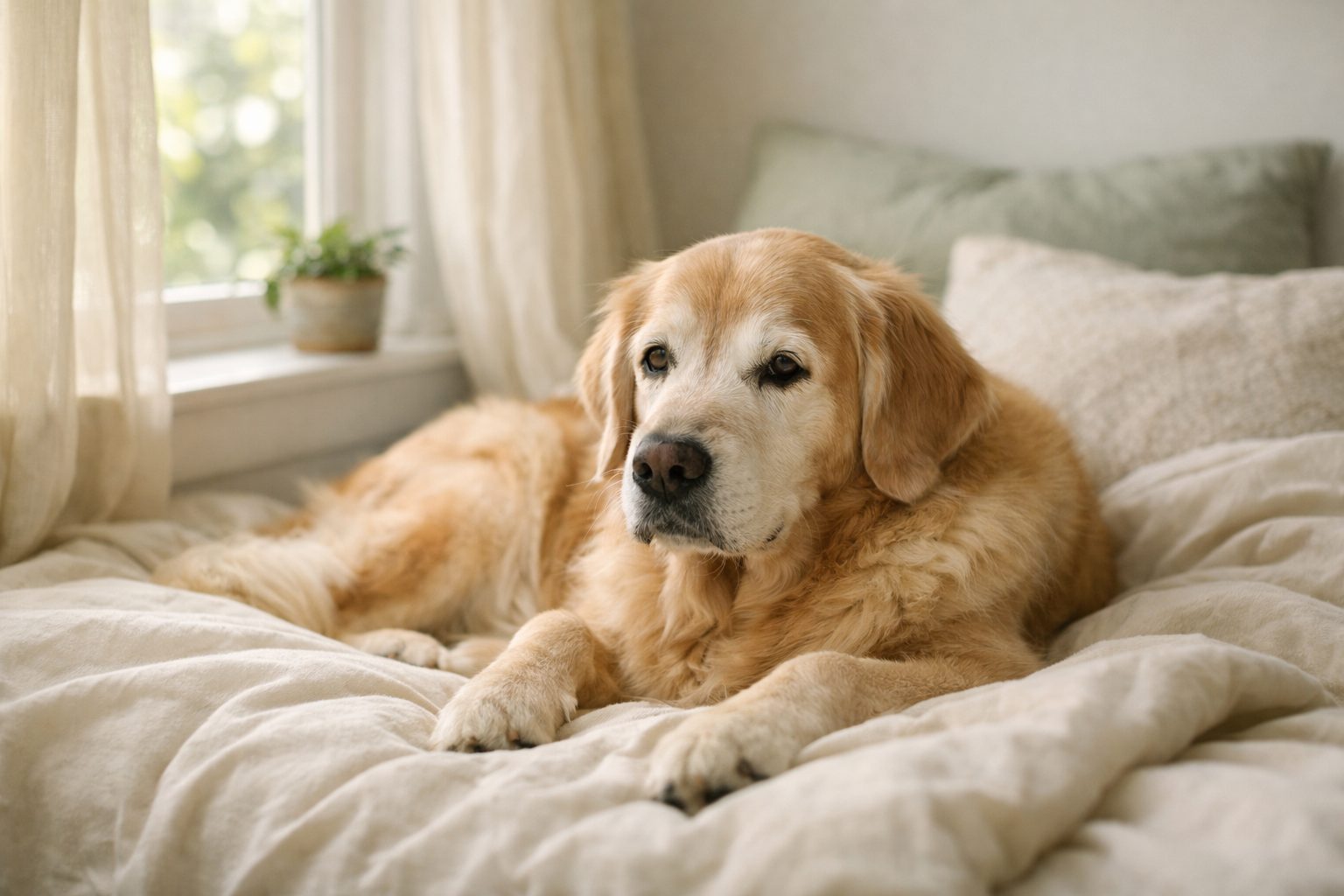
Your calm older dog suddenly starts howling, pacing or having accidents when you leave. Separation anxiety in senior dogs often has different triggers than in young dogs, and medical checks matter more. Here is how to help.
- Key takeaways:
- Senior dogs may develop separation anxiety due to sensory loss, cognitive decline, pain or changes in routine.
- Sudden behavior changes in older dogs should always be checked by a veterinarian to rule out medical issues.
- Gentle, consistent routines and comfort measures can ease anxiety for many senior dogs.
- Mental enrichment and short practice absences help keep older dogs calmer when alone.
- Severe or persistent anxiety may require professional help or medication.
Why older dogs develop anxiety
- Hearing or vision loss, which makes the world feel less predictable
- Cognitive dysfunction (a dog form of dementia): confusion, night waking, pacing
- Pain from arthritis or dental disease
- Changes in routine: a move, a new schedule, or losing a companion pet
As dogs age, their senses often decline. Hearing and vision loss can make even familiar environments seem strange and unsettling. Senior dogs may not notice you leaving, or they may become startled when they realize you are gone. Cognitive dysfunction, sometimes called canine dementia, affects memory and learning, leading to confusion or anxiety, especially around changes in routine. Pain from arthritis, dental disease or other conditions can make your dog more sensitive and less able to cope with stress.
Major life changes can also be harder for older dogs. A new home, a family member moving out, or the loss of another pet can all trigger anxiety. Even subtle changes, like a new work schedule, may unsettle a senior dog who relies on routine and predictability.
Rule out medical causes first
See your vet for a check-up, especially if anxiety appears suddenly, or comes with accidents, night waking, confusion or changes in appetite. Treating pain or other problems can make a big difference, and vets can prescribe medicines or diets that support older brains.
It is important to understand that behaviors like house soiling, restlessness or vocalizing may have a medical cause. Urinary tract infections, kidney disease, arthritis or even dental pain can make your senior dog more anxious or less able to control their bladder. Cognitive dysfunction can also mimic or worsen separation anxiety. Your veterinarian may suggest bloodwork, urine tests or a neurological exam to rule out underlying illness.
Addressing pain or illness can sometimes resolve the anxiety completely. If your dog is diagnosed with cognitive dysfunction, your vet may recommend special diets, supplements or prescription medications that support brain health. Never assume a change in your dog’s behavior is just “old age” without a vet check.
Gentle ways to help
- Keep routines predictable: meals, walks and departures at similar times.
- Calm departures: leave and return quietly.
- Short practice absences, building up slowly; see our separation anxiety training plan.
- Comfort: an orthopedic bed, a nightlight and an item that smells of you.
- Gentle enrichment: easy food puzzles and lick mats; see toys and music for separation anxiety.
- Background sound: soft music or talk radio.
- Company: a dog sitter, walker or friend for longer absences.
Older dogs thrive on routine. Try to keep feeding, walks and your departures at the same times every day. Sudden changes can increase anxiety. When you leave, keep your goodbye low-key. Avoid long, emotional farewells, which can signal to your dog that something is wrong. When you return, greet your dog calmly after a few minutes.
Practice leaving for short periods, then gradually extend the time you are away. This helps your dog learn that you always come back. For step-by-step help, see our separation anxiety training plan.
Comfort is very important for seniors. An orthopedic bed can relieve joint pain. A soft nightlight helps dogs with vision loss feel safe. Leave an unwashed shirt or blanket with your scent for comfort. Gentle enrichment, like food puzzles or lick mats, can distract and soothe your dog. For more ideas, see toys and music for separation anxiety. Playing soft music or talk radio can mask outside noises and provide reassurance.
If you must be gone for long periods, consider a pet sitter, dog walker or trusted friend to keep your dog company. Some older dogs do better with another calm dog in the house, but introducing a new pet should be done with care and only if your senior is up for it.

The Calm Dog Cheat Sheet
A happier, better-behaved dog. Inside you get:
- 10 five-minute brain games for any dog
- A daily routine that settles busy dogs
- Quick fixes for pulling, jumping and barking
100% free. No spam, unsubscribe anytime. Privacy policy.
Keep their brain active
Mental exercise helps older dogs stay sharp and settled. Easy, reward-based brain games are ideal; Brain Training for Dogs includes games that can be adapted for seniors (see our review).
Just like people, senior dogs benefit from mental stimulation. Simple scent games, treat hunts, or gentle training sessions can keep their minds active. Avoid overly challenging or frustrating activities, which may increase stress. Choose games that match your dog’s physical abilities and cognitive level. For example, hide small treats around a room and encourage your dog to find them, or use a soft puzzle toy that dispenses kibble with minimal effort.
Short, positive sessions are best. If your dog seems confused or frustrated, switch to an easier activity or take a break. Always end on a positive note with a treat or gentle praise.
Common mistakes to avoid
- Ignoring sudden changes: Always check with your vet if your dog’s behavior changes quickly.
- Punishing anxious behaviors: Scolding or punishing your dog for accidents or vocalizing will not help and can increase anxiety.
- Leaving your dog alone for long periods without preparation: Build up alone time gradually and provide comfort items.
- Overstimulating your dog: Avoid loud music, chaotic environments or too many visitors, which can overwhelm senior dogs.
- Inconsistent routines: Try to keep daily schedules as regular as possible.
Checklist: Helping a senior dog with separation anxiety
- Schedule a complete veterinary check-up to rule out pain and illness
- Keep daily routines consistent
- Use calm, quiet departures and arrivals
- Practice short absences, gradually increasing time away
- Provide comfort items (orthopedic bed, your scent, nightlight)
- Offer gentle enrichment (easy puzzles, scent games, soft music)
- Arrange for company if gone for long periods
- Monitor for worsening symptoms and seek professional help if needed
When to get extra help
For severe distress, self-injury or destruction, work with your vet and a certified behavior professional.
If your dog is panicking, breaking out of crates, hurting themselves or showing extreme distress when alone, do not try to handle it alone. Medication, behavior modification and professional support may be needed. Your vet can refer you to a certified veterinary behaviorist or a credentialed dog trainer with experience in senior dog anxiety. Never use punishment-based training or harsh methods, as these can worsen anxiety and damage your relationship with your dog.
Quick verdict: If your senior dog suddenly becomes anxious when left alone, always start with a vet check. Gentle routines, comfort, and gradual practice absences help most older dogs, but severe cases need professional help.
Frequently asked questions
How do I know if my senior dog’s anxiety is from aging or a medical problem?
It can be hard to tell. Sudden changes in behavior, house soiling, confusion or appetite changes should always be checked by a vet first. Medical issues like pain, infections or cognitive dysfunction often look like separation anxiety. Only a veterinarian can rule out underlying health problems.
Will my older dog’s separation anxiety get worse over time?
It can, especially if caused by untreated pain, cognitive decline or ongoing stress. Early intervention, medical care and gentle routines can help manage symptoms and may prevent worsening anxiety. Monitor your dog for new or worsening signs and adjust your support as needed.
Can I leave my senior dog alone for a full workday?
Many senior dogs struggle with long absences, especially if they have anxiety, pain or incontinence. Try to limit alone time, arrange for a dog walker or sitter, and provide comfort items. If you must be gone all day, ensure your dog has access to water, a comfortable bed, and a safe, familiar space.
Are there safe medications for senior dogs with severe anxiety?
Yes, your veterinarian can prescribe medications that are safe for older dogs, including those with cognitive dysfunction. Never give your dog human medications or over-the-counter remedies without your vet’s advice. Medication is usually combined with behavior support for best results.
Should I get another pet to keep my senior dog company?
Sometimes, but not always. Some older dogs enjoy another calm companion, while others may feel stressed by a new pet. Consider your dog’s health, personality and energy level before adding another animal. Introduce new pets gradually and watch for signs of stress.
What if nothing seems to help my dog’s anxiety?
If you have tried medical care, routines and comfort measures without success, consult a certified behavior professional. Severe anxiety may need medication, specialized behavior plans or environmental changes. Your veterinarian can help you find the right support.
The bottom line
Separation anxiety in older dogs is often linked to sensory loss, pain or cognitive changes. Start with a vet check, then use predictable routines, gentle practice absences, comfort and easy brain games.
Want this as a handy printable?
The Calm Dog Cheat Sheet
A happier, better-behaved dog. Inside you get:
- 10 five-minute brain games for any dog
- A daily routine that settles busy dogs
- Quick fixes for pulling, jumping and barking
100% free. No spam, unsubscribe anytime. Privacy policy.
Disclosure: links marked as sponsored are affiliate links. If you buy through them we may earn a commission at no extra cost to you.
Sources and further reading
This guide is for general information only and is not a substitute for professional advice. See our editorial policy.
Products mentioned in this guide
Affiliate links. Results vary. This is not medical advice.