
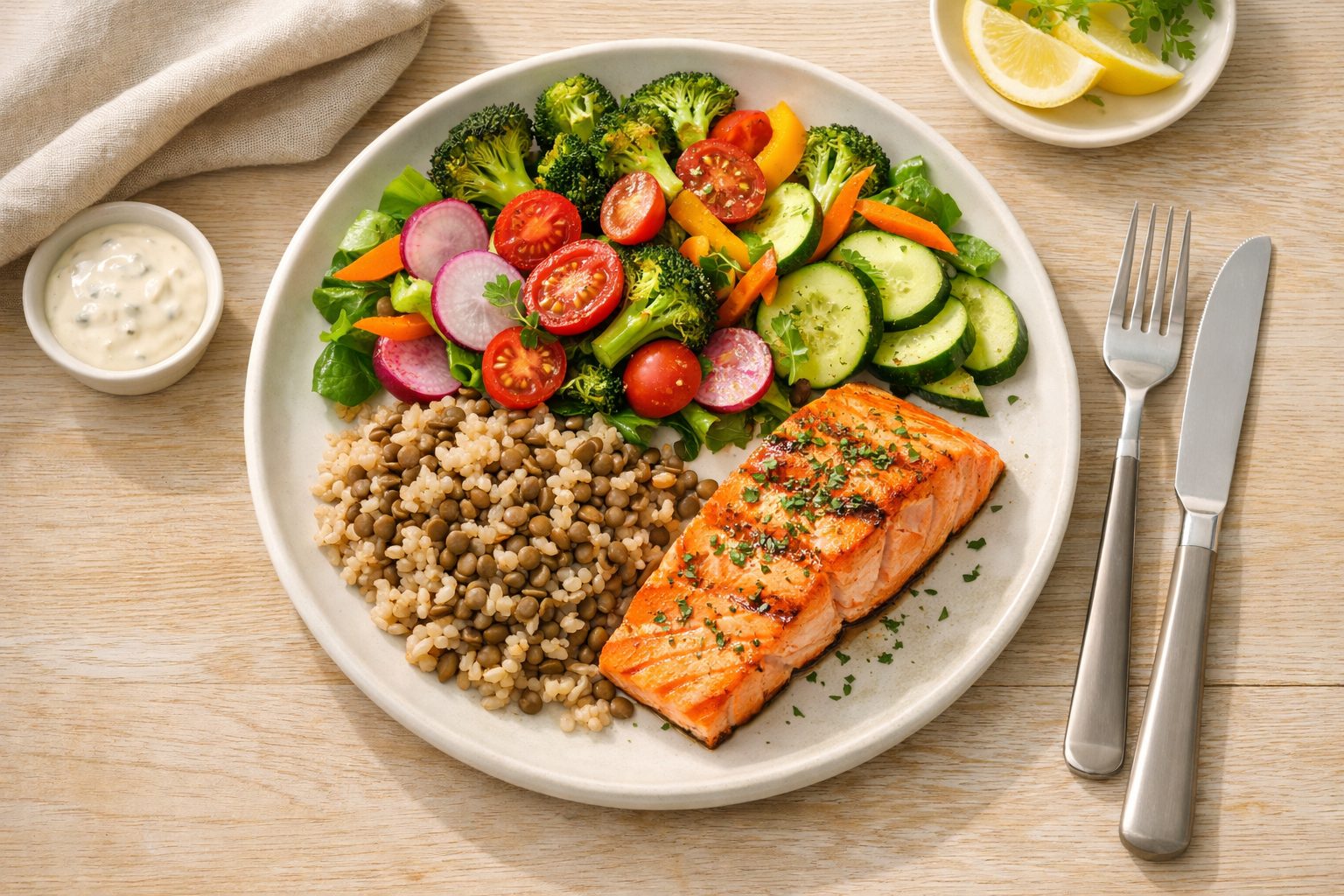
A prediabetes diagnosis can feel overwhelming, but a healthy diet for prediabetes does not mean giving up everything you enjoy. It is mostly about smarter portions, more fiber and fewer fast-acting sugars. Here is a simple guide.
- Key takeaways for a prediabetes diet:
- Focus on non-starchy vegetables, lean proteins and high-fiber carbs using the plate method
- Favor whole foods over processed and sugary options
- Small changes, like swapping white bread for whole grain, make a difference over time
- Physical activity, sleep and regular check-ins with your doctor are just as important as diet
- Supplements are optional and should be discussed with your doctor if you take blood sugar medication
Use the plate method
The easiest way to build a meal, recommended by diabetes educators:
- Half the plate: non-starchy vegetables such as salad, broccoli, green beans, peppers, cauliflower or spinach.
- A quarter: lean protein such as fish, chicken, eggs, tofu, beans or Greek yogurt.
- A quarter: high-fiber carbohydrates such as brown rice, quinoa, whole-grain bread, oats, sweet potato or lentils.
- Drink: water, unsweetened tea or coffee.
Why the plate method works
The plate method is a visual tool that makes portion control simple. By filling half your plate with non-starchy vegetables, you automatically lower the calorie and carbohydrate load of your meal. These vegetables are high in fiber and water, helping you feel full without spiking blood sugar. The quarter-plate portions for lean protein and high-fiber carbs ensure you get enough protein for muscle health and complex carbs for steady energy, while keeping overall portions in check.
This method helps you avoid overloading on starchy or high-calorie foods, which is crucial for blood sugar control. It is easy to use at home or when eating out, and you do not need to count grams or calories at every meal.
Common mistakes to avoid
- Letting starchy foods or protein crowd out vegetables
- Using creamy dressings or sauces high in added sugars or fats
- Ignoring beverages, sweet drinks can quickly add extra sugar
- Not paying attention to serving sizes, especially with rice, pasta or bread
Foods to eat more of
- Beans, lentils and chickpeas, which are rich in fiber and protein
- Whole grains such as oats, barley and quinoa
- Non-starchy vegetables
- Berries, apples, pears and citrus, eaten whole rather than juiced
- Nuts, seeds, olive oil and avocado
- Fish, especially oily fish like salmon and sardines
- Plain yogurt and other unsweetened dairy
How these foods help
High-fiber foods slow down digestion, which helps prevent blood sugar spikes after meals. Whole grains, beans and lentils provide complex carbohydrates that are digested more slowly than refined grains. Non-starchy vegetables are low in carbohydrates but high in vitamins, minerals and fiber. Healthy fats from nuts, seeds, olive oil and avocado support heart health, which is especially important for people with prediabetes. Oily fish provides omega-3 fatty acids, which can help reduce inflammation.
Eating a variety of these foods ensures you get a broad range of nutrients. Fiber, in particular, is key for blood sugar management. It helps you feel full, supports digestion and slows the absorption of sugars from your food. Healthy fats also help with satiety and can make meals more satisfying.

Foods to limit
- Sugary drinks, sweet coffees and fruit juice
- White bread, white rice, pastries and sugary cereals
- Sweets, cakes and cookies
- Processed meats and fried fast food
- Large portions of any starchy food
Why limit these foods?
Foods high in added sugars and refined starches can cause rapid spikes in blood sugar. Over time, this can make the body’s insulin work less effectively. Processed meats and fried foods are also linked to higher risks of heart disease and may make it harder to manage weight. Even healthy starchy foods, like potatoes or rice, can raise blood sugar if eaten in large amounts, so portion size is key.
Limiting these foods does not mean you can never have them, but they should be occasional treats rather than everyday staples. Watch out for hidden sugars in sauces, dressings and packaged foods. Reading nutrition labels can help you make better choices.
Sample day
Breakfast: oatmeal with cinnamon, walnuts and berries, or eggs with spinach and whole-grain toast.
Lunch: big salad with chickpeas, grilled chicken, olive oil and lemon.
Snack: apple with a small handful of almonds, or plain Greek yogurt.
Dinner: baked salmon, roasted vegetables and a small portion of brown rice.
How to build your own balanced day
- Start each meal with a vegetable or fruit
- Include a source of protein to help you feel full
- Choose whole grains or legumes for slow-release energy
- Plan snacks that combine fiber and protein, such as fruit with nuts or yogurt
- Drink water or unsweetened beverages throughout the day
Planning ahead is helpful. Try prepping vegetables or grains in advance, so healthy choices are easy when hunger strikes. If you eat out, look for menu items that follow the plate method, and ask for dressings or sauces on the side.
The Steady Blood Sugar Cheat Sheet
Fewer spikes, more energy. Inside you get:
- The simple plate method on one page
- 25 smart food swaps you will actually enjoy
- A printable reading and meal log
100% free. No spam, unsubscribe anytime. Privacy policy.
Easy swaps that add up
- Soda to sparkling water with lemon
- White rice to brown rice, cauliflower rice or half and half
- Sugary cereal to oats or plain yogurt with fruit
- Chips to nuts or roasted chickpeas
- Dessert every night to fruit most nights
Checklist: Smart swaps for every meal
- Breakfast: Swap white toast for whole grain; sweetened yogurt for plain yogurt with berries
- Lunch: Replace a sandwich bun with a whole grain wrap or lettuce leaves
- Dinner: Use roasted or steamed veggies in place of fries or extra rice
- Snacks: Choose nuts, seeds or air-popped popcorn instead of chips or crackers
- Dessert: Try baked apples with cinnamon or a square of dark chocolate instead of cake or cookies
These swaps may seem small, but over time they can make a real difference in blood sugar control and overall health. Focus on one or two changes at a time, and build from there.
Habits that boost the effect
Walk for 10 to 15 minutes after meals, aim for seven to eight hours of sleep, and if you have weight to lose, even 5% to 7% of body weight can cut your risk of type 2 diabetes by more than half. Our guide to signs of blood sugar spikes explains why timing and food pairing matter.
How movement and sleep help
Light activity after meals, such as walking, helps your muscles use up glucose from the blood, which can blunt post-meal blood sugar spikes. Getting enough sleep helps regulate hormones that affect hunger and insulin sensitivity. Both habits support your body’s ability to keep blood sugar in a healthy range.
Try to make movement part of your daily routine, even if it is just a short walk after dinner. Sleep is just as important. Sticking to a regular bedtime and limiting screen time before bed can help improve sleep quality.
Common pitfalls to watch for
- Skipping meals, which can lead to overeating or blood sugar swings
- Eating late at night, which may make blood sugar harder to control
- Letting stress or lack of sleep drive unhealthy food choices
- Not checking in with your doctor regularly
- Forgetting to adjust your plan as your needs change
Awareness is key. If you notice your habits slipping, do not be hard on yourself. Refocus on your next meal or day, and remember that progress is not always a straight line.
Do you need supplements?
Food comes first. Some readers add a blood sugar supplement as an extra, often because of a money-back guarantee, though evidence is mixed. Options readers ask about include Sugar Defender, Gluco6 and GlucoBerry. Check with your doctor first if you take any medicine for blood sugar.


What to know about supplements
- Supplements are not a substitute for a healthy diet and lifestyle
- Some ingredients may interact with prescription medications
- Always discuss new supplements with your healthcare provider, especially if you take medicine for blood sugar or other chronic conditions
- Look for evidence-based information and be wary of bold claims
For the bigger picture, see what actually helps when blood sugar is creeping up.
When to see your doctor
- If you have symptoms such as frequent urination, extreme thirst, blurry vision or unexplained weight loss, see your doctor promptly
- Recheck your blood sugar as recommended (usually every three to six months)
- If you start a new supplement or make major changes to your diet, let your healthcare provider know
- If you feel unwell or notice new symptoms, do not delay seeking medical advice
Regular medical checkups are important for monitoring your progress and catching any changes early. Your doctor may recommend blood tests, weight checks or adjustments to your plan as needed.
Frequently asked questions
Can I still eat fruit if I have prediabetes?
Yes, most people with prediabetes can enjoy fruit, especially whole fruits like berries, apples, pears and oranges. Whole fruits contain fiber, which helps slow down sugar absorption. Limit fruit juice, dried fruit and large portions of tropical fruits, as these can raise blood sugar more quickly.
Is it necessary to cut out all carbs?
No, you do not need to cut out all carbohydrates. The goal is to choose high-fiber, whole-grain sources and watch your portions. Carbs are an important energy source, but refined and sugary carbs should be limited.
How often should I eat?
Most people do well with three balanced meals a day, and a healthy snack if needed. Skipping meals can lead to overeating or blood sugar swings. Eating at regular times helps your body manage blood sugar more effectively.
Are artificial sweeteners safe?
Most artificial sweeteners approved by the FDA are considered safe in moderate amounts. Some people prefer to limit them, as they may increase cravings for sweet foods. Water, sparkling water with lemon and unsweetened tea are good alternatives.
Can diet alone reverse prediabetes?
Diet is a powerful tool, especially when combined with physical activity and weight loss if needed. Many people can return their blood sugar to the normal range with these changes. However, regular check-ins with your doctor are important, as some people may need additional support or medication.
What is the best way to track my progress?
Keep a food and activity journal, monitor your weight and follow your doctor’s advice on blood sugar checks. Small improvements add up, so celebrate progress even if it feels slow.
The bottom line
A healthy diet for prediabetes is built on vegetables, lean protein, high-fiber carbs and water, with fewer sugary drinks and refined starches. Combine it with daily movement and good sleep, and recheck your numbers with your doctor in three to six months.
Want this as a handy printable?
The Steady Blood Sugar Cheat Sheet
Fewer spikes, more energy. Inside you get:
- The simple plate method on one page
- 25 smart food swaps you will actually enjoy
- A printable reading and meal log
100% free. No spam, unsubscribe anytime. Privacy policy.
Disclosure: links marked as sponsored are affiliate links. If you buy through them we may earn a commission at no extra cost to you. This article is for information only and is not medical advice.
Sources and further reading
This guide is for general information only and is not a substitute for professional advice. See our editorial policy.
Products mentioned in this guide
Affiliate links. Results vary. This is not medical advice.
2 thoughts on “Healthy Diet for Prediabetes: A Simple Plate-by-Plate Guide”
Comments are closed.