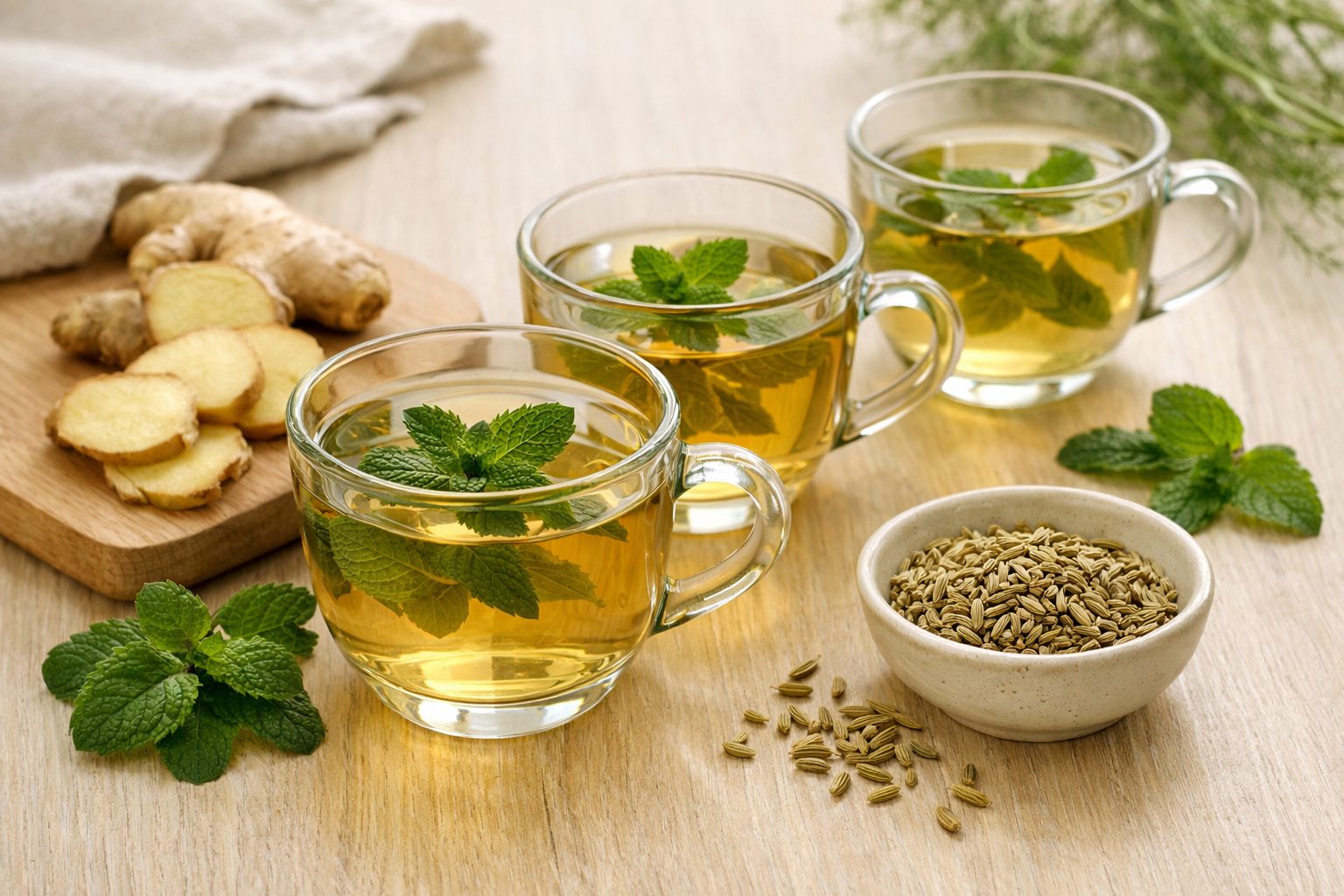
That tight, puffy feeling after a meal is uncomfortable but very common. A warm cup of tea is one of the gentlest ways to ease it. Here are the herbal teas for bloating with the most support, and how to use them.
- Key takeaways:
- Herbal teas like peppermint, ginger, fennel, and chamomile may help relieve mild bloating and gas.
- Drink teas after meals, unsweetened or with a little honey, and try one at a time to see what works best for you.
- Simple habits like eating slowly, walking after meals, and tracking foods can also reduce bloating.
- Persistent, severe, or worsening bloating should be checked by a doctor, especially with other symptoms.
- Some supplements are popular but should be used with caution and medical guidance.
Understanding Bloating and How Herbal Teas Help
Bloating is a feeling of fullness, tightness, or visible swelling in your abdomen. It often comes from excess gas, slow digestion, or sensitivity to certain foods. While occasional bloating is common, frequent discomfort can affect your quality of life.
Herbal teas are a traditional way to soothe the digestive system. Many contain natural plant compounds that relax gut muscles, reduce gas, and calm the mind. Sipping a warm cup of tea can also help you slow down and support healthy digestion after meals.
1. Peppermint Tea
Peppermint is one of the most studied and popular herbal remedies for digestive complaints. The menthol in peppermint relaxes the smooth muscles of the gut wall, which can relieve spasms, cramping, and trapped gas. This is why peppermint oil capsules are often recommended for irritable bowel syndrome (IBS) symptoms, including bloating and discomfort.
The tea form is gentler than concentrated oil but can still bring relief for mild symptoms. To make peppermint tea, steep 1 to 2 teaspoons of dried peppermint leaves (or a tea bag) in hot water for 5 to 10 minutes. Sip slowly after meals.
Important: Peppermint can relax the valve between your stomach and esophagus. If you have heartburn, acid reflux, or GERD, peppermint tea might make symptoms worse. Choose a different tea if you are prone to reflux.

2. Ginger Tea
Ginger has a long history in both traditional and modern medicine for easing nausea, indigestion, and bloating. The compounds in ginger, including gingerol and shogaol, help the stomach empty more efficiently and may reduce feelings of heaviness after eating.
To make ginger tea, slice a few thin pieces of fresh ginger root and steep them in hot water for 5 to 10 minutes. You can add a squeeze of lemon or a little honey for flavor. Ginger tea is especially helpful if you feel bloated and slightly nauseous after rich or spicy meals.
Tip: Ginger is generally safe for most people, but large amounts may thin the blood or interact with certain medications. If you take blood thinners or have bleeding disorders, check with your doctor first.
3. Fennel Tea
Fennel seeds are a traditional remedy for gas, bloating, and mild digestive discomfort. They contain compounds that relax the muscles of the digestive tract and help expel gas. Fennel tea is especially popular in Mediterranean and Indian cultures after heavy meals.
To prepare fennel tea, lightly crush a teaspoon of fennel seeds and steep in hot water for about 10 minutes. Strain and drink slowly. Fennel has a mild, slightly sweet, and licorice-like flavor.
Note: Fennel is generally safe, but large amounts can act as a mild estrogen. If you have hormone-sensitive conditions, consult your healthcare provider before regular use.
4. Chamomile Tea
Chamomile is known for its calming effects on both the mind and the digestive system. It can help relax the gut, which may ease bloating, mild cramping, and discomfort brought on by stress or anxiety. Many people find chamomile tea soothing in the evening, especially if stress makes their digestive symptoms worse.
Steep a chamomile tea bag or a tablespoon of dried chamomile flowers in hot water for 5 to 10 minutes. Enjoy before bed or after a meal to support digestion and relaxation.
5. Caraway or Anise Tea
Caraway and anise seeds are traditional remedies for gas, bloating, and mild indigestion. They are often combined with fennel in “digestive” tea blends. Both have a slightly sweet, aromatic flavor and can be prepared by steeping a teaspoon of seeds in hot water for 10 minutes.
These teas may help relax digestive muscles and ease trapped gas. If you enjoy their flavor, try adding them to your post-meal routine.
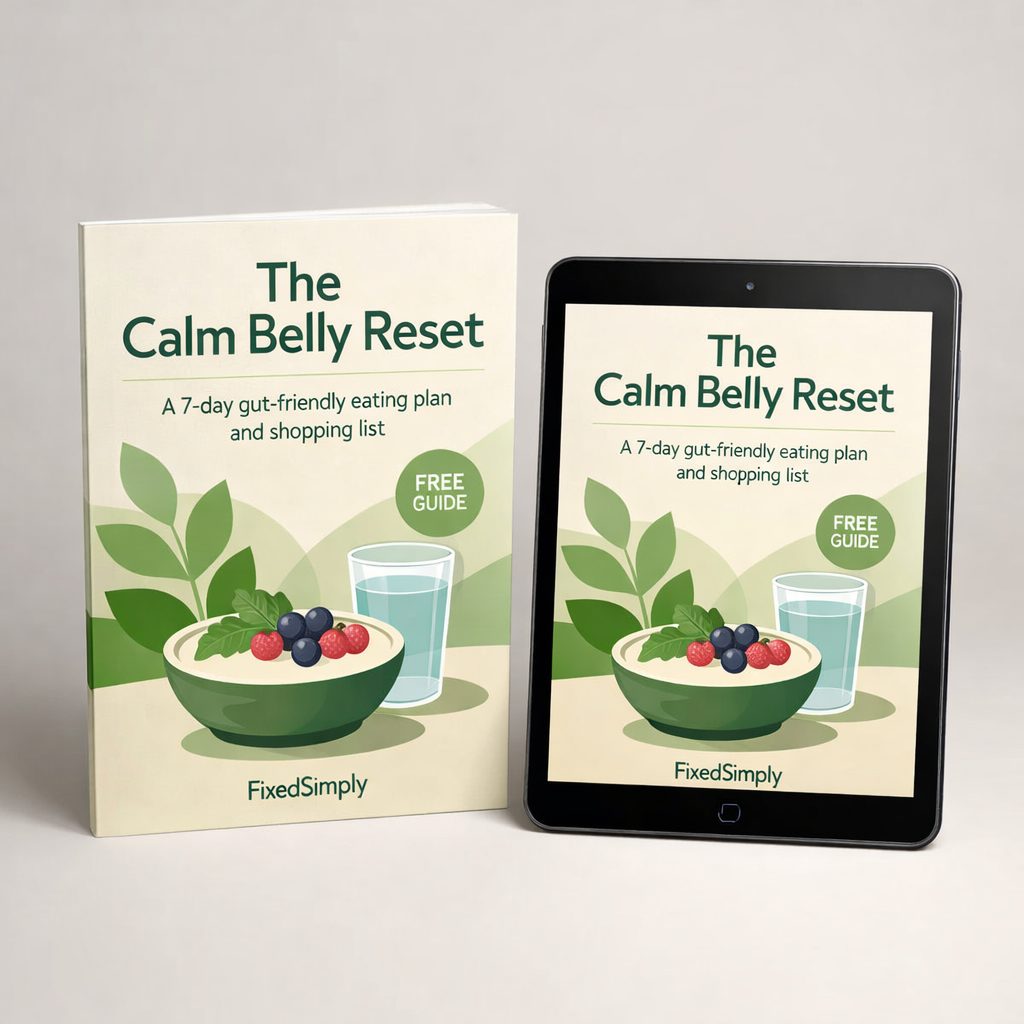
The Calm Belly Reset
A happier gut in 7 days. Inside you get:
- A 7-day gut-friendly meal plan
- A ready-to-print shopping list
- Easy habits that ease bloating
100% free. No spam, unsubscribe anytime. Privacy policy.
6. Lemon Balm Tea
Lemon balm is a gentle, lemon-scented herb from the mint family. It is often blended with peppermint or chamomile for digestive comfort. Lemon balm may help calm the nervous system, which can be helpful if stress or anxiety contribute to your bloating.
To make lemon balm tea, use a tablespoon of fresh leaves or a teaspoon of dried leaves per cup of hot water. Steep for 5 to 10 minutes and enjoy warm.
How to Use Teas for Bloating
- Drink a cup 20 to 30 minutes after meals, or whenever you feel bloated.
- Keep your tea unsweetened, or use a small amount of honey. Avoid sugar alcohols or artificial sweeteners, as they can worsen gas for some people.
- Try one type of tea at a time for a week. This helps you notice what works best for your body.
- If you are pregnant, breastfeeding, or take regular medications, ask your pharmacist or doctor before starting new herbal teas. Some herbs interact with medications or may not be safe in pregnancy.
- Use caution with herbal teas if you have allergies to plants in the same family (for example, chamomile is related to ragweed).
Practical Tips for Making Herbal Teas
- Use fresh, filtered water for the best flavor and extraction of herbal compounds.
- Cover your cup while steeping to keep the beneficial oils from evaporating.
- Store dried herbs and seeds in a cool, dark place to preserve their potency.
- If using loose herbs, strain before drinking to avoid swallowing plant bits.
- Start with mild teas and increase strength as needed to avoid stomach upset.
Common Mistakes to Avoid
- Drinking teas very hot, which can irritate your throat or stomach lining.
- Adding a lot of sugar, which can worsen bloating for some people.
- Trying too many new herbs at once, making it hard to tell what helps or causes side effects.
- Ignoring persistent or severe symptoms, which may need medical attention.
Checklist: Choosing and Using Herbal Teas for Bloating
- Identify your main symptom: Is it gas, cramping, fullness, or stress-related?
- Pick one tea to try: Start with peppermint, ginger, fennel, or chamomile based on your needs.
- Prepare properly: Use the right amount of herbs and steeping time for best results.
- Monitor your response: Keep a simple log of what you drink and how you feel.
- Check for interactions: Review any medications or health conditions with your pharmacist or healthcare provider.
- Adjust as needed: If one tea does not help after a week, try another or combine gentle blends.
Other Ways to Reduce Bloating
- Eat slowly and chew your food thoroughly to minimize swallowed air and help digestion.
- Cut back on fizzy drinks, chewing gum, and drinking through straws, all of which can increase swallowed air and gas.
- Take a gentle 10-minute walk after meals to help move gas through the digestive tract.
- Increase fiber in your diet gradually and drink plenty of water to prevent constipation and gas buildup.
- Keep a food diary to spot patterns and triggers. See our guide to using a food diary for bloating for tips.
- Pay attention to foods that commonly cause gas, such as beans, lentils, cruciferous vegetables, and some artificial sweeteners. Adjust as needed.
When to See a Doctor
Bloating is usually harmless, but sometimes it can signal a more serious condition. See your doctor if you notice any of the following:
- Bloating is persistent, severe, or getting worse over time.
- You have unexplained weight loss.
- There is blood in your stool.
- You have frequent vomiting or cannot keep food down.
- You notice a change in your usual bowel habits lasting more than a few weeks.
- You have a family history of bowel or ovarian cancer.
Prompt evaluation can rule out underlying issues such as bowel obstruction, inflammatory bowel disease, celiac disease, or even cancer. Never ignore red-flag symptoms.
Gut and Weight Supplements
Some readers add a gut or metabolism supplement as part of a broader routine. Evidence varies, so treat them as extras. Options readers ask about include Ikaria Lean Belly Juice and Metabo Drops. Check ingredients with your pharmacist.
See also: stubborn belly fat after 40.
Frequently Asked Questions
Which herbal tea works fastest for bloating?
Peppermint and ginger teas are often felt to work quickly, sometimes within 15 to 30 minutes after drinking. However, the speed and effectiveness can vary from person to person. Trying one tea at a time is the best way to find what works for you.
Can I drink herbal teas every day for bloating?
Most people can safely drink herbal teas like peppermint, ginger, fennel, or chamomile daily in moderate amounts. If you plan to use them long-term or have health conditions, check with your doctor or pharmacist for safety and possible interactions.
Are there any side effects to herbal teas?
Herbal teas are generally safe in moderate amounts, but some people may experience allergic reactions, stomach upset, or interactions with medications. Peppermint may worsen reflux, and fennel should be used with caution in hormone-sensitive conditions. Always start with small amounts and monitor your response.
Can herbal teas replace medication for bloating?
No, herbal teas are a gentle support for mild symptoms but are not a substitute for prescribed medications or medical care. If your bloating is frequent, severe, or accompanied by other symptoms, see your doctor for proper evaluation and treatment.
What if herbal teas do not help my bloating?
If you have tried several herbal teas and made lifestyle changes without relief, it is important to consult your healthcare provider. Persistent bloating may be a sign of food intolerances, digestive disorders, or other health issues that need medical attention.
Can I combine different herbal teas for better results?
Yes, many people enjoy blends of herbs like chamomile and lemon balm or fennel and anise. Start with small amounts to ensure you tolerate the combination, and avoid mixing too many new herbs at once. If you are taking medications or have health concerns, check with your pharmacist first.
The Bottom Line
Peppermint, ginger, fennel and chamomile are simple, inexpensive teas that help many people with bloating. Pair them with slower eating and a short walk after meals, and see a doctor for persistent or worrying symptoms.
Want this as a handy printable?
The Calm Belly Reset
A happier gut in 7 days. Inside you get:
- A 7-day gut-friendly meal plan
- A ready-to-print shopping list
- Easy habits that ease bloating
100% free. No spam, unsubscribe anytime. Privacy policy.
Disclosure: links marked as sponsored are affiliate links. If you buy through them we may earn a commission at no extra cost to you. This article is for information only and is not medical advice.
Sources and further reading
This guide is for general information only and is not a substitute for professional advice. See our editorial policy.
Products mentioned in this guide
 Metabo DropsSee official siteLiv PureLiv PureSee official site
 Ikaria Lean Belly JuiceSee official site
 Java BurnSee official site
Affiliate links. Results vary. This is not medical advice.