
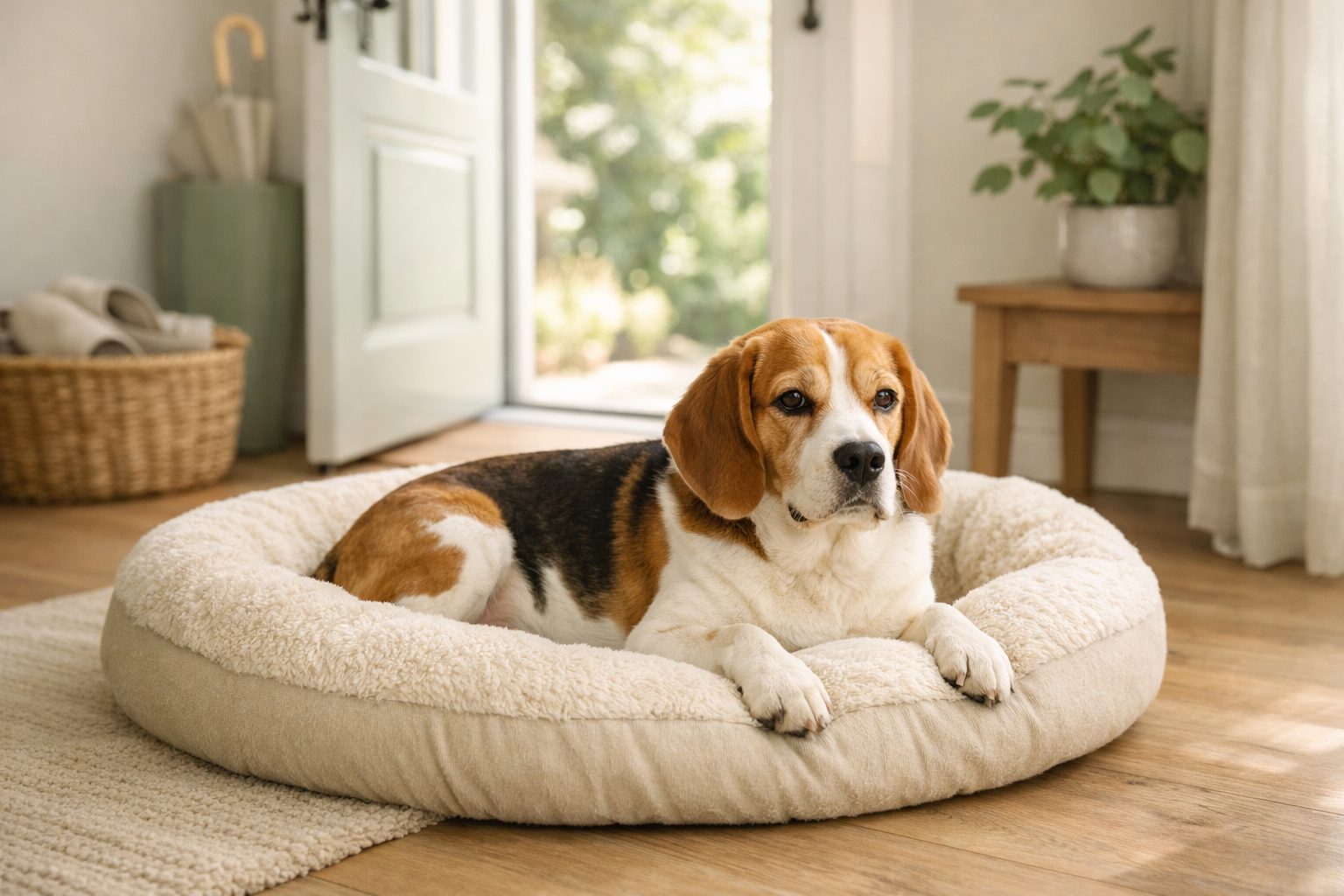
Howling, chewing doors, accidents indoors or frantic greetings when you come home can all point to separation anxiety. It is stressful for you and your dog, but it is very treatable with patient training. Here is a step-by-step dog separation anxiety training plan.
Key takeaways
- Separation anxiety is a real condition that causes distress when your dog is left alone, showing up as destructive behavior, vocalizing, or accidents.
- Gradual, step-by-step training is the most effective and humane way to help your dog become comfortable being alone.
- Quick fixes, punishment, or getting another dog rarely solve true separation anxiety.
- Rule out medical causes and consult your vet for any sudden or severe behavior changes.
- Professional help is recommended for severe cases, especially if your dog is injuring themselves or regressing.
Is it really separation anxiety?
True separation anxiety happens only when your dog is alone or separated from you, and starts soon after you leave. Signs include barking or howling, chewing or scratching at doors and windows, pacing, drooling, panting and toilet accidents in a house-trained dog. Boredom looks different: it usually happens later in the absence and the dog seems relaxed otherwise. A pet camera can help you tell the difference.
Check with your vet first to rule out medical causes, especially for accidents or sudden behavior changes.
Common causes of separation anxiety
- Change in routine: Dogs are creatures of habit. A new work schedule, move, or family change can trigger anxiety.
- New adoption: Dogs recently adopted from shelters often develop separation anxiety, especially if they’ve lost previous homes.
- Past trauma: Dogs who have been abandoned, rehomed, or experienced long periods of isolation are at higher risk.
- Over-attachment: Dogs who follow their owners everywhere and have little experience being alone may be more prone.
How to tell if it’s separation anxiety or something else
- Timing: Separation anxiety behaviors begin within minutes of your departure, not hours later.
- Intensity: The behaviors are intense and often destructive (chewing, digging, howling), not just mild mischief.
- Other signs: If your dog seems anxious even when you’re home, or has other symptoms (like limping, excessive thirst), see your vet.
A pet camera can be a helpful tool to observe your dog’s behavior after you leave, helping you and your vet or trainer make the right plan.
The step-by-step plan
Step 1: Make departures boring
Pick up your keys, put on your shoes or grab your bag several times a day without leaving. This takes the power out of the cues that trigger panic.
- Practice these cues at random times, not just when you’re actually leaving.
- Don’t look at or talk to your dog when you do these actions.
- Repeat until your dog no longer reacts with anxiety.
Step 2: Build a safe space
Set up a comfortable spot with a bed, water and something that smells of you. Some dogs relax in a crate, others panic; never force crating on an anxious dog.
- Try a favorite blanket or worn T-shirt for comfort.
- Choose a quiet, low-traffic area of your home.
- If your dog is crate-trained and finds it calming, use the crate. If not, use a gated room or pen.
- Leave the TV or soft music on for background noise, as some dogs find this soothing.
Step 3: Practice tiny absences
Step outside the door for a few seconds and come back before your dog becomes anxious. Gradually increase the time: 5 seconds, 10, 30, a minute, five minutes. Only move up when your dog stays calm. Progress is often slow at first and then speeds up.
- Start with super short absences, like stepping into another room for just a few seconds.
- If your dog stays calm, gradually increase the time you’re gone.
- If your dog shows signs of anxiety, shorten the time and repeat until calmness returns.
- Be patient. Some dogs need days or weeks at each step.
Consistency is key. Practice several times a day, always ending on a calm note.
Step 4: Keep greetings and goodbyes low-key
Leave and return calmly. Wait until your dog settles before saying hello.
- Avoid dramatic departures or excited greetings.
- If your dog is overexcited when you return, ignore them until they calm down, then greet them quietly.
- This teaches your dog that comings and goings are not big events.
Step 5: Add enrichment before you leave
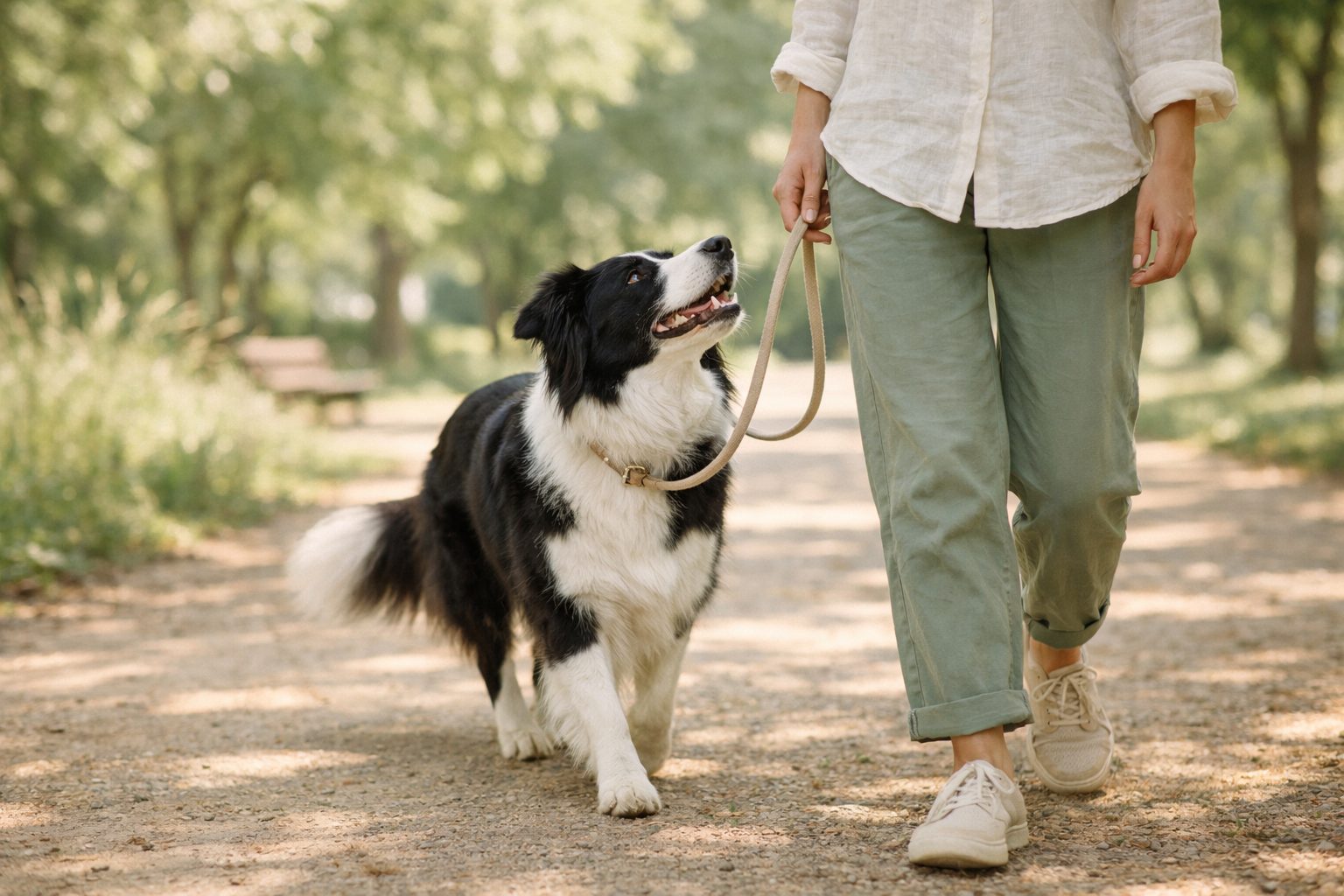
A good walk and a sniffing game before you go, plus a long-lasting chew or food puzzle when you leave, helps your dog settle. See toys and music for dog separation anxiety for ideas.
- Physical exercise helps burn off nervous energy.
- Mental exercise (like sniffing games or training) helps tire your dog out in a different way.
- Leave a safe, favorite chew or puzzle toy that will last for at least 10-15 minutes.
- Rotate toys to keep things interesting.
Step 6: Avoid real absences that exceed your dog’s limit
While training, use a dog sitter, daycare, a friend or bring your dog with you, so your dog is not pushed into panic, which sets progress back.
- Arrange your schedule so your dog is not left alone longer than they can handle.
- If you must leave, have someone your dog trusts stay with them.
- Each panic episode can make training take longer, so prevention is important.
The Calm Dog Cheat Sheet
A happier, better-behaved dog. Inside you get:
- 10 five-minute brain games for any dog
- A daily routine that settles busy dogs
- Quick fixes for pulling, jumping and barking
100% free. No spam, unsubscribe anytime. Privacy policy.
Checklist: How to set your dog up for success
- Rule out medical causes with a vet visit.
- Use a pet camera to monitor your dog’s behavior while you are gone.
- Practice calm departures and arrivals every day.
- Gradually increase alone-time only as your dog succeeds.
- Enrich your dog’s environment with toys, puzzles, and exercise.
- Arrange for help so your dog is not left alone beyond their comfort limit during training.
- Stay patient and consistent; progress may be slow at first.
Mistakes to avoid
- Punishing your dog for damage or accidents; this increases anxiety.
- Getting a second dog as a cure; it rarely helps true separation anxiety.
- Moving too fast through the steps.
- Long, emotional goodbyes.
- Leaving your dog alone for longer than they can handle during training.
- Using aversive collars or devices, which can worsen anxiety and damage trust.
When to get professional help
For severe cases, such as dogs that injure themselves trying to escape, work with your vet and a certified separation anxiety trainer or veterinary behaviorist. Anti-anxiety medicine prescribed by your vet can make training possible for some dogs.
- If your dog is harming themselves or destroying property despite training, seek help.
- If your dog’s anxiety is not improving after several weeks of consistent work, consult a professional.
- Look for trainers who use positive, reward-based methods and have experience with separation anxiety.
- Medication is sometimes necessary to help your dog learn while staying under their anxiety threshold, but only a vet can prescribe and monitor this.
A structured training program
Mental exercise is a big part of a calmer dog. Brain Training for Dogs is an online program of reward-based games that readers ask about, and it can be a useful structure alongside the plan above. Check what is included before buying.
See also: fixing common dog behavior problems.
Frequently asked questions
How long does it take to fix separation anxiety in dogs?
There is no set timeline. Some dogs improve in weeks, while others may need months of gradual training. Progress depends on your dog’s temperament, the severity of their anxiety, and how consistent you are with the plan. Patience and consistency are key.
Can I use crate training for a dog with separation anxiety?
Only if your dog already finds their crate a safe, comforting place. For some anxious dogs, crating increases panic and can lead to self-injury. Never force a dog with separation anxiety into a crate if they resist or show signs of distress.
Will getting another dog help?
Usually not. True separation anxiety is about being away from their human, not just being alone. A second dog rarely resolves the problem and can sometimes add new challenges.
Should I punish my dog for destructive behavior?
No. Punishment makes anxiety worse and damages your bond. Your dog is not misbehaving on purpose; they are panicking. Focus on prevention and gradual training instead.
What if I have to leave my dog alone during training?
Try to arrange for a pet sitter, family member, or friend to stay with your dog. If that is not possible, keep absences as short as you can and return to the last successful step in your training plan. Each panic episode can set back progress, so minimizing them is important.
When should I see my vet?
See your vet to rule out medical causes for new or severe anxiety, accidents, or destructive behavior. Also, consult your vet if your dog is harming themselves, not improving with training, or you are considering medication as part of the plan.
The bottom line
Separation anxiety improves with calm departures, very gradual practice absences, enrichment and patience. Rule out medical problems, avoid punishment, and get professional help for severe cases.
Want this as a handy printable?
The Calm Dog Cheat Sheet
A happier, better-behaved dog. Inside you get:
- 10 five-minute brain games for any dog
- A daily routine that settles busy dogs
- Quick fixes for pulling, jumping and barking
100% free. No spam, unsubscribe anytime. Privacy policy.
Disclosure: links marked as sponsored are affiliate links. If you buy through them we may earn a commission at no extra cost to you.
Sources and further reading
This guide is for general information only and is not a substitute for professional advice. See our editorial policy.
Products mentioned in this guide
Affiliate links. Results vary. This is not medical advice.
1 thought on “Dog Separation Anxiety Training: A Step-by-Step Plan That Works”
Comments are closed.