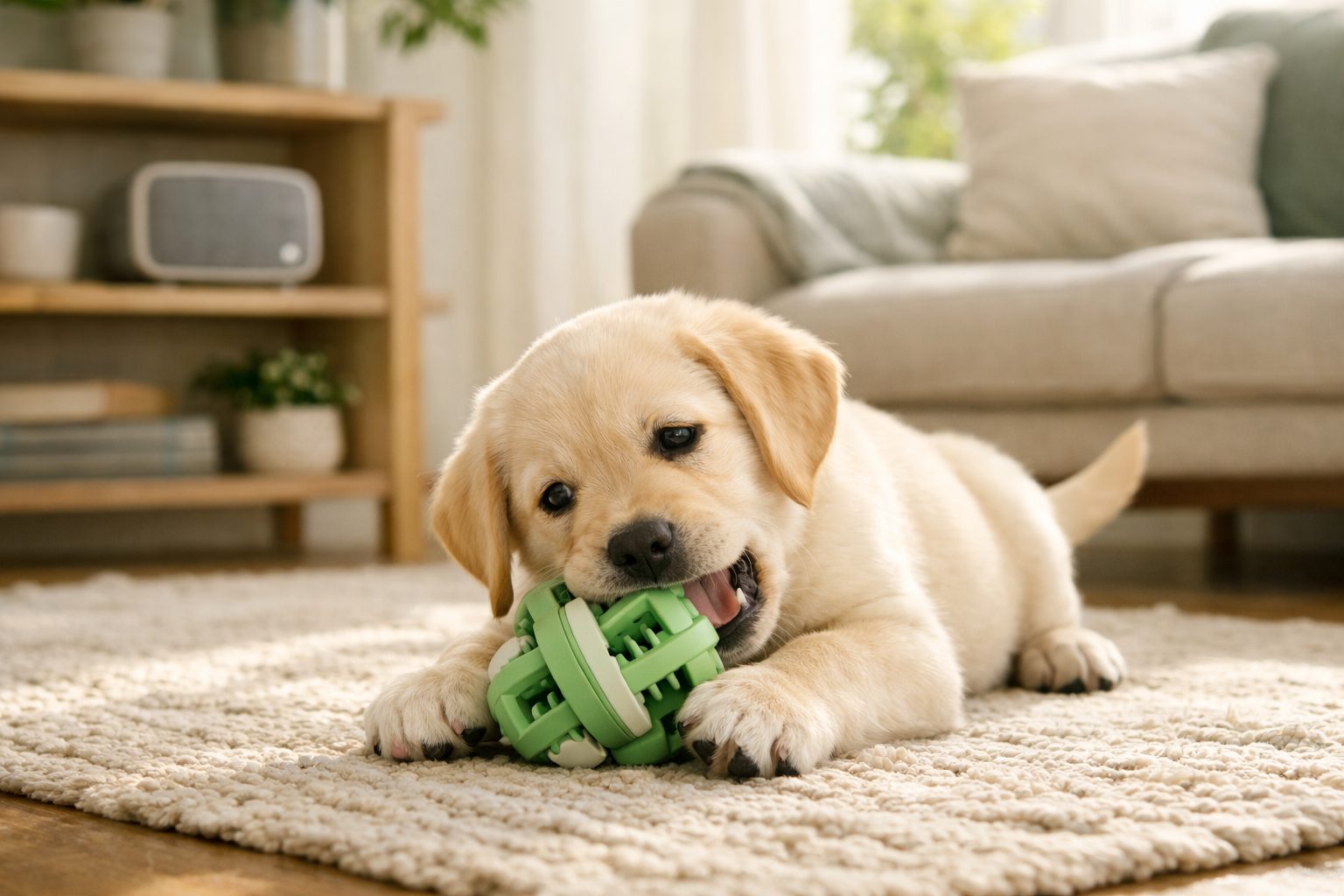
Toys and calming sounds will not cure separation anxiety on their own, but the right ones can make alone time much easier while you work on training. Here is a guide to toys for dog separation anxiety and the role of music.
- Key takeaways:
- Toys and music are helpful tools, not cures, for dog separation anxiety.
- Food puzzle toys, stuffable rubber toys, lick mats, snuffle mats and long-lasting chews can keep your dog occupied and calm.
- Classical music, soft rock, reggae and audiobooks may help reduce barking and stress.
- Always supervise new toys before leaving your dog alone with them.
- Combine toys and music with gradual training for best results.
- See a vet or behaviorist if your dog is in real distress or not eating when alone.
The best types of toys
Choosing the right toys can make a big difference for dogs with separation anxiety. These toys are designed to keep your dog’s mind engaged and offer comfort when you are away. Below are the main types that experts recommend for anxious dogs:
Food puzzle toys
Puzzle feeders and treat-dispensing balls make your dog work for food, which keeps the brain busy and is naturally calming. Start easy so your dog succeeds, then increase the difficulty.
- How they work: These toys require your dog to figure out how to get treats or kibble out, which can take several minutes or more.
- Why they help: Mental work is tiring and rewarding for dogs. Solving puzzles provides a healthy distraction and can reduce stress.
- Tips: Begin with simple puzzles and gradually introduce more challenging ones as your dog gains confidence and skill.
- Common mistake: Making the puzzle too hard at first can cause frustration. Always let your dog succeed early on.
Stuffable rubber toys
Hollow rubber toys filled with kibble, wet food or plain yogurt and frozen overnight can keep a dog occupied for 20 to 40 minutes, covering the first part of your absence when anxiety usually peaks.
- How they work: The frozen filling takes longer to eat and the act of licking and chewing is soothing for most dogs.
- Why they help: The first 20 to 40 minutes alone are often the hardest for anxious dogs. A frozen toy can help bridge this gap.
- Tips: Use dog-safe fillings like plain yogurt, canned pumpkin, or wet dog food. Avoid xylitol, grapes, raisins, onions, garlic and chocolate.
- Common mistake: Giving the toy only when you leave makes it a special treat, but avoid leaving it out all the time or it loses its effect.
Lick mats
Licking is soothing for dogs. Spread a little wet food or dog-safe spread on a lick mat and freeze it.
- How they work: The textured surface encourages licking, which can lower heart rate and calm nerves.
- Why they help: Licking releases endorphins, which help dogs feel better and more relaxed.
- Tips: Use a thin layer of food to avoid overfeeding. Clean the mat thoroughly after use to prevent bacteria buildup.
- Common mistake: Not supervising the first few uses. Make sure your dog does not try to chew or eat the mat itself.
Snuffle mats
Hiding kibble in a fabric snuffle mat lets your dog use their nose, one of the best ways to tire a dog mentally.
- How they work: Dogs sniff and root around to find hidden food, which mimics natural foraging behavior.
- Why they help: Sniffing is naturally calming and can help reduce anxiety by focusing your dog’s attention.
- Tips: Start by making the treats easy to find, then increase the challenge by hiding them deeper.
- Common mistake: Using too many treats. Count the food in the mat toward your dog’s daily allowance.
Long-lasting chews
Choose size-appropriate chews your dog cannot swallow whole. Avoid cooked bones, which can splinter.
- How they work: Chewing is a natural stress-reliever for dogs.
- Why they help: Chewing can release calming hormones and occupy your dog for long periods.
- Tips: Choose chews suited to your dog’s size and chewing style. Supervise new chews to make sure they are not a choking risk.
- Common mistake: Giving cooked bones or chews that are too small. Always pick chews that are larger than your dog’s mouth.
Safety tips
- Only leave toys you have seen your dog use safely while supervised.
- Pick the right size so nothing can be swallowed or get stuck.
- Avoid toys with small parts, strings or squeakers that can be pulled out.
- Count food from toys as part of the daily food allowance.
- Do not use these as the only strategy for a dog who panics; a dog in real distress often will not eat.
Checklist: Safe toy selection for anxious dogs
- Is the toy sturdy and made for your dog’s size?
- Have you watched your dog use it without chewing off pieces?
- Does it have any small parts or squeakers that could be swallowed?
- Is it easy to clean and inspect for damage?
- Have you checked the filling ingredients for dog safety?
Does music help dogs?
Several studies in shelters found that dogs spent more time resting and less time barking when classical music was played, and some found soft rock and reggae had similar effects. The effect can fade if the same music plays all the time, so variety helps. Audiobooks and calm talk radio are other options. Music also masks outside noises that set some dogs off.
- How it works: Calming music can reduce arousal and mask triggers like passing cars or voices outside.
- Best types: Classical, soft rock, reggae, audiobooks and calm talk radio are all options. Avoid music with sudden loud noises or high energy beats.
- Limitations: Not all dogs respond to music, and it is not a replacement for training or professional help.
How to use music
- Play it at a low volume, starting before you leave.
- Also play it at calm times when you are home, so it does not become a “you are leaving” signal.
- Rotate playlists every week or so.
Common mistakes to avoid with music
- Playing only when leaving can make it a trigger for anxiety.
- Leaving music on too loud can be stressful for dogs with sensitive hearing.
- Not changing playlists often enough may reduce the calming effect over time.
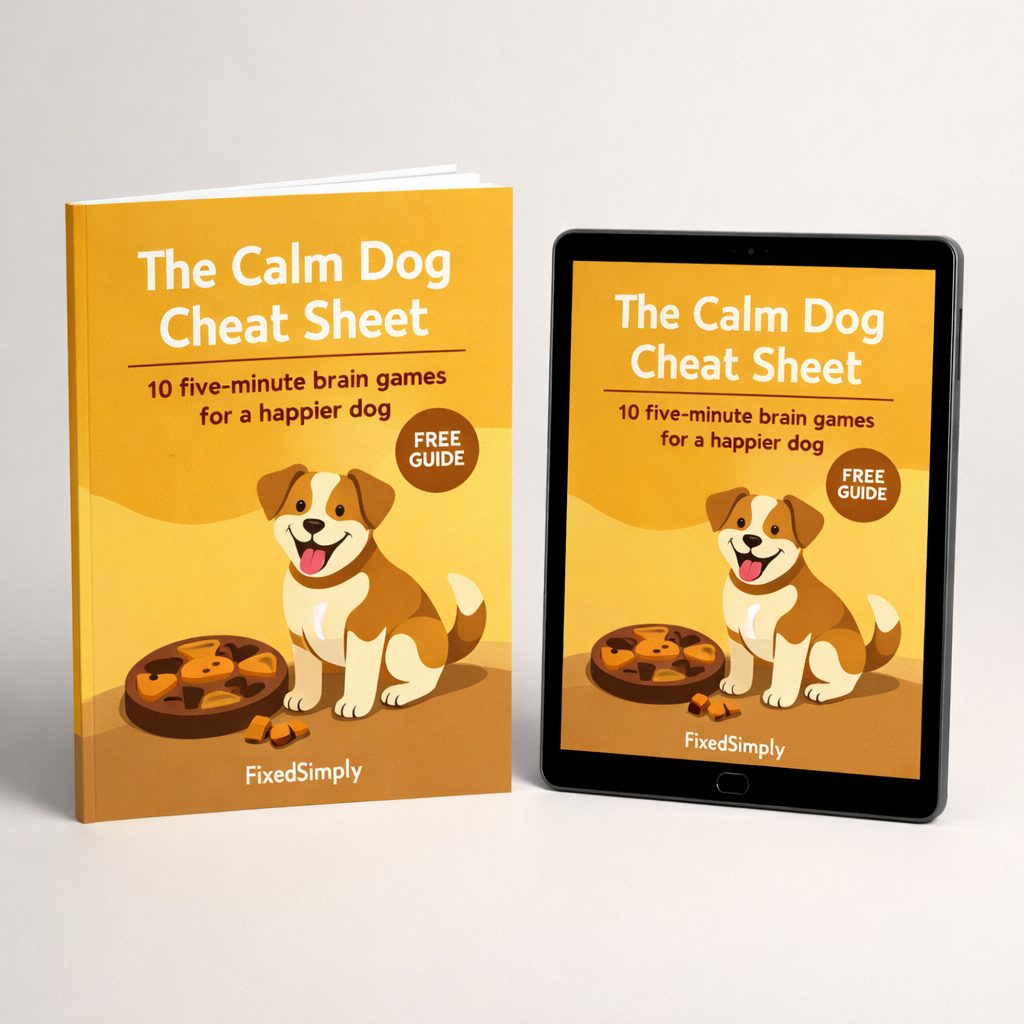
The Calm Dog Cheat Sheet
A happier, better-behaved dog. Inside you get:
- 10 five-minute brain games for any dog
- A daily routine that settles busy dogs
- Quick fixes for pulling, jumping and barking
100% free. No spam, unsubscribe anytime. Privacy policy.
Fitting it into training
Give the toy just as you leave and pick it up when you return, so it becomes a special “alone time” treat. Combine this with gradual practice absences as described in our dog separation anxiety training plan.
- Gradual departures: Start with very short absences and slowly increase the time as your dog becomes more comfortable.
- Consistency: Use the same routine each time so your dog learns what to expect.
- Reward calm behavior: Only return when your dog is calm, if possible, to avoid reinforcing anxious behavior.
- Monitor progress: Use a pet camera or ask a neighbor to check in and report on your dog’s behavior.
Mental games that build calm
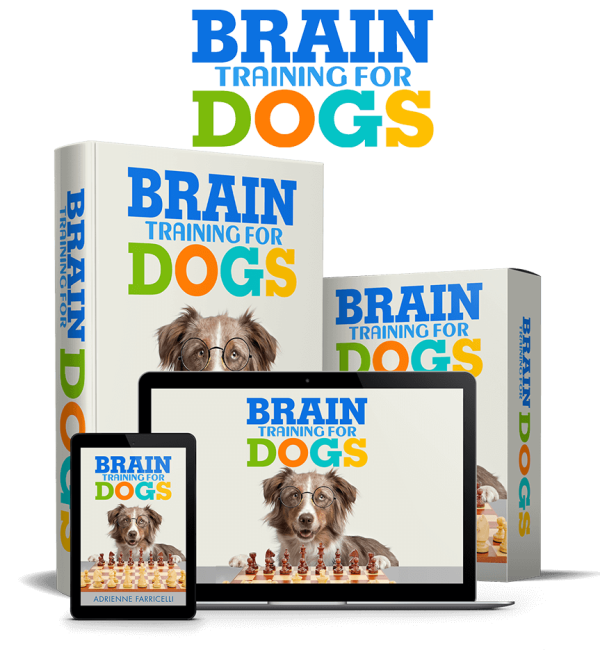
Daily brain games tire dogs out and build confidence. Brain Training for Dogs is an online program of reward-based games that readers ask about. Check what is included before you buy.
See also: fixing common dog behavior problems.
- Why mental games matter: Boredom and lack of stimulation can worsen anxiety. Brain games give your dog a positive focus and build self-control.
- Examples: Hide-and-seek with treats, teaching new tricks, scent games, and gentle agility exercises in the home.
- Tip: Keep sessions short and positive. Stop if your dog seems frustrated or tired.
When to see a vet or behaviorist
- Your dog destroys doors, windows or crates trying to escape.
- Your dog injures themselves or has accidents when left alone.
- Your dog refuses all food, even favorite treats, when alone.
- Attempts at training or comfort do not improve the anxiety.
- Separation anxiety is getting worse, not better.
These are signs of severe separation anxiety. Dogs in this state need professional help. A veterinarian can rule out medical causes and may recommend anti-anxiety medication. A certified dog behaviorist can create a customized training plan. Early intervention gives your dog the best chance of improvement.
Frequently asked questions
Can toys and music cure separation anxiety?
No, toys and music are helpful tools but are not cures. They can make absences easier for your dog while you work on a gradual training plan. Severe cases may require professional help.
My dog does not eat treats when I leave. What should I do?
This is a red flag for significant anxiety. If your dog will not eat even high-value treats when alone, consult your veterinarian or a certified behaviorist. Training may need to start with very short absences and professional support.
How do I know if a toy is safe to leave with my dog?
Always supervise your dog with a new toy at first. Only leave toys you have seen your dog use safely, and avoid anything with small parts or that can be chewed into pieces. Check toys regularly for wear and replace damaged ones.
What kind of music is best for calming dogs?
Classical music, soft rock and reggae have been shown to help some dogs relax. Avoid loud, jarring or high-energy music. Rotate playlists to keep the effect fresh, and play music at a low volume.
Should I leave the TV or radio on for my dog?
Yes, calm talk radio, audiobooks or certain TV programs can provide background noise that masks outside triggers. Choose content that is calm and free of sudden loud noises. Avoid shows with animal sounds that might excite or stress your dog.
How long should I leave my dog alone with a toy?
Start with short absences and gradually increase the time as your dog becomes more comfortable. Do not exceed the time your dog can safely handle, and always check that toys are intact and safe before each use.
The bottom line
Food puzzles, frozen stuffable toys, lick mats and gentle music can all help a dog cope with time alone. Use them alongside gradual training, choose safe toys, and see your vet or a behaviorist if your dog is in real distress.
Want this as a handy printable?
The Calm Dog Cheat Sheet
A happier, better-behaved dog. Inside you get:
- 10 five-minute brain games for any dog
- A daily routine that settles busy dogs
- Quick fixes for pulling, jumping and barking
100% free. No spam, unsubscribe anytime. Privacy policy.
Disclosure: links marked as sponsored are affiliate links. If you buy through them we may earn a commission at no extra cost to you.
Sources and further reading
This guide is for general information only and is not a substitute for professional advice. See our editorial policy.
Products mentioned in this guide
Affiliate links. Results vary. This is not medical advice.