

Walking into a room and forgetting why. Losing a word that was on the tip of your tongue. Reading the same paragraph three times. Most of us notice small memory slips as we get older, and it is natural to worry about what they mean. This guide explains what is normal, what deserves a check-up, and what actually helps.
- Key takeaways:
- Some forgetfulness is normal as we age, but worsening or disruptive memory issues should be checked by a doctor.
- Many treatable conditions can cause brain fog, including poor sleep, vitamin deficiencies, thyroid issues, and medication side effects.
- Regular exercise, healthy sleep, social engagement, and a balanced diet are the best-supported ways to protect memory.
- Supplements rarely help unless you have a true deficiency; talk to your doctor before trying them.
- Early assessment is important, as some causes of memory problems are reversible.
Normal ageing versus something more
Some slowing is a normal part of ageing. It is common to take longer to recall names, to misplace things now and then, or to need a moment to find a word. These slips are annoying, but they do not stop you from living independently.
It is worth talking to a doctor if memory problems are getting steadily worse, if you get lost in familiar places, repeat the same questions often, struggle with everyday tasks such as managing bills or following a recipe you know well, or if family members are noticing changes. Early assessment matters, because some causes are very treatable.
What is normal?
- Occasional forgetfulness, such as misplacing keys or blanking on a name
- Taking longer to recall information, but remembering it later
- Needing notes or reminders more often
- Momentary lapses that do not affect your ability to live independently
What is not normal?
- Memory loss that gets noticeably worse over months or years
- Getting lost in familiar places
- Difficulty managing finances, appointments, or following familiar recipes
- Repeating the same questions or stories in a short time
- Changes in personality, mood, or behavior that are new or unexplained
- Family or friends expressing concern about your memory or thinking
If any of the “not normal” signs apply, schedule a check-up. Early evaluation can uncover treatable causes and help plan next steps.
Treatable causes of brain fog
Many things besides ageing can cause memory slips and brain fog, especially after age 50. Some are reversible with the right treatment. Here are some of the most common:
- Poor sleep, including undiagnosed sleep apnoea
- Low vitamin B12, more common with age, a vegetarian diet or certain medicines such as metformin
- An underactive thyroid
- Depression, anxiety and stress, which strongly affect concentration
- Medication side effects, especially from some sleeping tablets, allergy medicines and bladder medicines
- Hearing loss, which makes the brain work harder and is linked to memory problems
- Too much alcohol
A doctor can check many of these with a conversation, a medication review and simple blood tests.
How these causes affect your brain
- Poor sleep: Sleep is crucial for memory consolidation. Conditions like sleep apnoea cause repeated interruptions in breathing, reducing oxygen to the brain and leading to daytime drowsiness and poor focus.
- Vitamin B12 deficiency: B12 is vital for nerve health. Low levels can cause confusion, memory loss, and even symptoms that mimic dementia. It is more common as we age because absorption decreases, especially if you take certain medications or follow a vegetarian or vegan diet.
- Thyroid problems: An underactive thyroid (hypothyroidism) slows metabolism, which can cause sluggish thinking, forgetfulness, and low energy.
- Mental health: Depression, anxiety and chronic stress can all interfere with the brain’s ability to process and store information.
- Medications: Some drugs, especially those with anticholinergic effects (like certain allergy or bladder medications), can slow thinking and memory.
- Hearing loss: Struggling to hear puts extra load on the brain, making it harder to focus and remember. Untreated hearing loss is linked to a higher risk of cognitive decline.
- Alcohol: Drinking too much, especially regularly, can damage brain cells and interfere with memory.
Checklist: When to see a doctor
- Memory loss is worsening or interfering with daily life
- Others have noticed changes in your memory or behavior
- You get lost or confused in familiar places
- You have new trouble managing bills, medications, or appointments
- You are experiencing depression, anxiety, or poor sleep
- You take new medications or multiple prescriptions
- You have a history of heavy alcohol use
- You notice hearing loss or have trouble following conversations
Bring a list of your medications and supplements to your appointment. Be ready to describe your symptoms and when they started. Early action can make a real difference.

Habits with the best evidence
There is no magic bullet for memory, but several lifestyle habits are strongly linked with keeping your mind sharp as you age. These habits not only support brain health, but also help protect your heart, mood, and overall wellbeing.
Move your body
Regular physical activity is one of the most consistently supported ways to protect thinking and memory. Brisk walking most days is a great start.
- Try to get at least 150 minutes of moderate activity (such as brisk walking, swimming, or cycling) each week.
- Even short bursts of movement, like gardening or dancing, count.
- Exercise improves blood flow to the brain and may help grow new brain cells.
Protect your sleep
The brain consolidates memories during sleep. Aim for a regular bedtime and wake time, and see a doctor if you snore loudly or wake unrefreshed.
- Adults over 50 usually need 7 to 8 hours of quality sleep each night.
- Keep your bedroom cool, dark, and quiet.
- Avoid screens and caffeine before bed.
- If you have persistent sleep problems, talk to your doctor about possible sleep disorders.
Look after your heart
What is good for the heart is good for the brain. Keeping blood pressure, blood sugar and cholesterol in a healthy range lowers the risk of memory decline.
- Get regular check-ups to monitor your blood pressure, cholesterol, and blood sugar.
- Manage diabetes, high blood pressure, and high cholesterol as recommended by your healthcare provider.
- Do not smoke, and limit alcohol to recommended amounts.
Stay social and keep learning
Conversation, hobbies, learning a new skill and staying connected with people all give the brain a workout.
- Join clubs, volunteer, or take classes to keep your mind engaged.
- Regular social contact helps reduce the risk of depression and cognitive decline.
- Learning new things, such as a language or musical instrument, may help build “cognitive reserve” that protects against memory loss.
Eat for your brain
Diets rich in vegetables, berries, beans, whole grains, nuts, olive oil and fish (such as the Mediterranean or MIND diets) are linked with better brain health over time.
- Fill half your plate with vegetables and fruits at most meals.
- Choose whole grains over refined grains.
- Include fish (especially fatty fish like salmon or sardines) at least twice a week if possible.
- Use olive oil as your main cooking fat, and snack on nuts or seeds.
- Limit processed foods, added sugars, and saturated fats.
Treat hearing loss
If you struggle to follow conversations, a hearing test and hearing aids where needed may help your brain as well as your ears.
- Schedule a hearing test if you notice difficulty understanding speech, especially in noisy places.
- Modern hearing aids are smaller and more effective than ever.
- Treating hearing loss can reduce strain on the brain and support social engagement.
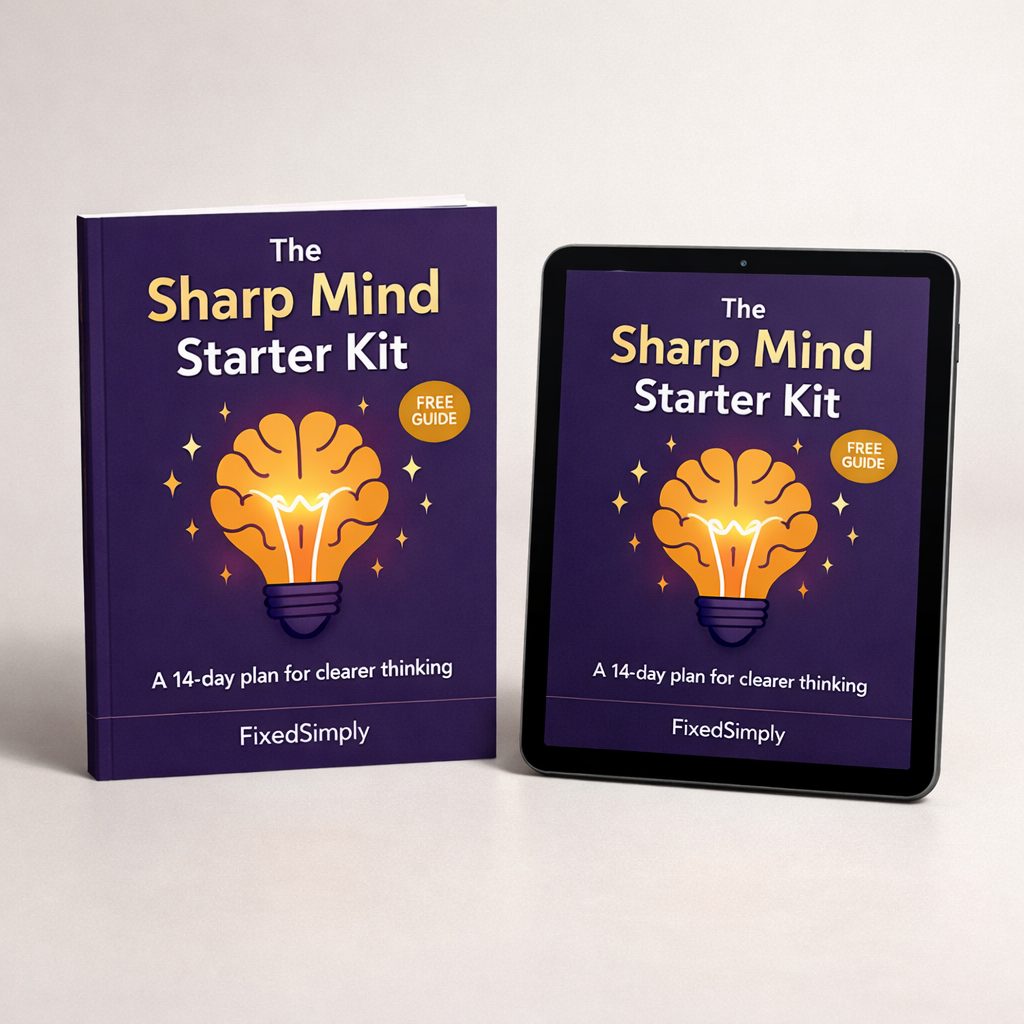
The Sharp Mind Starter Kit
Clearer thinking in 14 days. Inside you get:
- A day-by-day plan of easy brain habits
- Foods, sleep and movement that support focus
- A printable memory and mood log
100% free. No spam, unsubscribe anytime. Privacy policy.
Brain supplements: what to expect
Supplements marketed for memory often contain ingredients such as ginkgo biloba, bacopa, phosphatidylserine, lion’s mane mushroom, B vitamins and omega-3s. Some have small studies behind them, but overall the evidence that supplements improve memory in healthy adults is weak, and none have been shown to prevent dementia. The clear exception is correcting a genuine deficiency, such as low B12.
If you decide to try one, check the ingredients with your pharmacist (ginkgo, for example, can interact with blood thinners), give it a fixed trial period and keep up the habits above. Products readers ask about include Phytomem One and NeuroPrime, both supplements, and The Brain Song, an audio program. Their claims have not been evaluated by the FDA, and they are not a substitute for a medical assessment of memory problems.


- Supplements may help if you have a diagnosed deficiency (such as B12) but are unlikely to boost memory in healthy adults.
- Always check for interactions with your doctor or pharmacist, especially if you take blood thinners or other prescription medications.
- Be skeptical of products that promise dramatic results or claim to prevent or cure diseases.
- Supplements are not a replacement for healthy lifestyle habits or medical evaluation.
Common mistakes to avoid
- Ignoring worsening symptoms: Do not assume all memory problems are “just ageing.” Get checked if symptoms progress or interfere with daily life.
- Stopping social activities: Isolation can worsen memory and mood. Stay connected, even if it means trying new ways to socialize.
- Relying only on supplements: No supplement can replace a healthy lifestyle or medical care.
- Not reviewing medications: Some common drugs can cause or worsen brain fog. Ask your doctor to review your medications regularly.
- Neglecting sleep: Chronic poor sleep is a major, often overlooked cause of brain fog.
Comparison: Normal forgetfulness vs. concerning memory loss
| Normal Ageing | Possible Problem |
|---|---|
| Forgetting names or appointments but remembering them later | Forgetting recently learned information and not remembering it later |
| Occasionally misplacing items | Putting things in unusual places and not finding them |
| Pausing to find the right word | Frequent word-finding problems or trouble following conversations |
| Occasionally needing help with technology or settings | Difficulty completing familiar tasks, like managing finances or cooking |
| Changes do not affect independence | Changes interfere with daily life or safety |
Frequently asked questions
When should I worry about forgetfulness?
Occasional slips, like forgetting a name or why you walked into a room, are normal. Worry if memory loss gets worse, affects your daily life, or others notice changes. Get checked if you get lost, repeat yourself often, or struggle with tasks you used to do easily.
What kind of doctor should I see for memory problems?
Start with your primary care doctor. They can review your medications, order basic blood tests, and refer you to a neurologist, geriatrician, or memory clinic if needed.
Can stress or anxiety really cause brain fog?
Yes. Stress, anxiety, and depression can all make it harder to concentrate and remember things. Treating these conditions often improves memory and focus.
Are there any proven supplements for memory?
There is strong evidence only for correcting true deficiencies, such as vitamin B12. Most other supplements have little proof of benefit for memory in healthy adults. Always check with your doctor before starting anything new.
How can I tell if my memory problems are due to medication?
If your symptoms started after beginning a new medicine, or if you take several medications, ask your doctor or pharmacist to review them. Some drugs, especially those for sleep, allergies, or bladder issues, can cause brain fog.
Is it possible to reverse memory loss?
Some causes, such as vitamin deficiencies, thyroid problems, depression, or medication side effects, can be improved or reversed with treatment. Early assessment increases the chance of finding and fixing reversible causes.
The bottom line
Occasional forgetfulness is a normal part of getting older. Worsening memory deserves a check-up, because several common causes are treatable. Exercise, sleep, heart health, social connection and a brain-friendly diet are the most reliable ways to keep your mind sharp.
Want this as a handy printable?
The Sharp Mind Starter Kit
Clearer thinking in 14 days. Inside you get:
- A day-by-day plan of easy brain habits
- Foods, sleep and movement that support focus
- A printable memory and mood log
100% free. No spam, unsubscribe anytime. Privacy policy.
Disclosure: links marked as sponsored are affiliate links. If you buy through them we may earn a commission at no extra cost to you. This article is for information only and is not medical advice.
Sources and further reading
This guide is for general information only and is not a substitute for professional advice. See our editorial policy.
Products mentioned in this guide
Affiliate links. Results vary. This is not medical advice.
1 thought on “Brain Fog and Forgetfulness After 50: What Is Normal, What Is Not, and What Helps”
Comments are closed.