

When your head feels foggy, sitting still might seem like the last thing that would help. Yet many people find a short daily meditation for brain fog sharpens focus and calms the mental noise. Here is why, and how to start.
- Key takeaways:
- Short daily meditation may help clear mental fog by reducing stress and improving attention.
- It is not a replacement for medical care if you have ongoing or severe symptoms.
- Pairing meditation with other healthy habits, like sleep and movement, often works best.
- Even five minutes a day can make a difference for many people.
- Common mistakes include expecting instant results or being hard on yourself if your mind wanders.
How meditation may help
- Lower stress. Chronic stress clouds thinking. Mindfulness programs have good evidence for reducing stress and anxiety.
- Better attention. Studies suggest regular mindfulness practice can improve attention and working memory, even in short programs.
- Better sleep, which is one of the biggest drivers of clear thinking.
Meditation is not a cure for medical causes of brain fog, such as thyroid problems, anemia or medicine side effects, so get those checked if fog persists.
Understanding brain fog
Brain fog is not a medical diagnosis, but a common description for feeling mentally sluggish, unfocused or forgetful. Many factors can cause it, including:
- Poor sleep
- Chronic stress or anxiety
- Dehydration or poor diet
- Hormonal changes (such as menopause)
- Certain medications or medical conditions
Because brain fog can have many causes, meditation works best as part of a bigger plan that addresses sleep, movement and nutrition.
How meditation works in the brain
Meditation, especially mindfulness meditation, teaches you to bring your attention back to the present moment. Over time, this practice can:
- Reduce activity in the brain’s “default mode network” (linked to mind-wandering and rumination)
- Strengthen areas involved in focus, memory and emotional regulation
- Lower levels of stress hormones like cortisol
These changes do not happen overnight, but even after a few sessions, many people notice a sense of calm and clearer thinking.
A simple 10-minute practice
- Sit comfortably on a chair with feet flat and hands resting. Set a timer for 10 minutes.
- Close your eyes or soften your gaze.
- Notice your breath at the nose or belly. Do not change it.
- Count breaths from 1 to 10, then start again.
- When your mind wanders (it will), notice where it went and gently return to the breath. Each return is the exercise, not a failure.
- Finish with three slow, deeper breaths and notice how you feel.
Step-by-step guide
- Find a quiet spot. Turn off your phone or put it on silent. Sit upright, but not stiff.
- Set your intention. Remind yourself that this is time for your mind to rest and reset.
- Use a timer. This helps you relax without checking the clock.
- Focus on your breath. Feel the air at your nostrils, or the rise and fall of your belly. You do not have to breathe in any special way.
- Count each breath. Inhale (one), exhale (two), up to ten, then start again. If you lose track, just start over at one.
- Notice distractions. It is normal for your mind to wander. When you notice it, gently bring your attention back to your breath, without judging yourself.
- End gently. When the timer rings, open your eyes and take a moment before standing up. Notice any shift in how you feel.
Common mistakes to avoid
- Expecting instant clarity. Some days will feel easier than others. Meditation is a practice, not a quick fix.
- Judging yourself for distractions. Every time you notice your mind wander and return to your breath, you strengthen your focus.
- Trying to “empty your mind.” The goal is not to have zero thoughts, but to notice them and return to the present.
- Forcing yourself to sit uncomfortably. Find a position you can relax in, whether in a chair or on a cushion.

Tips to make it stick
- Pair it with a daily habit, like after morning coffee.
- Start with 5 minutes if 10 feels like too much.
- Try a guided app or recording at first.
- Walking meditation counts too: focus on each step.
Building a meditation routine
- Consistency over duration. Five minutes every day is better than 30 minutes once a week.
- Use reminders. Set an alarm or sticky note as a prompt.
- Track your practice. Mark a calendar or use a simple journal to note your sessions and any changes you notice.
- Be flexible. If you miss a day, simply start again the next day without guilt.
Checklist: Getting started with meditation for brain fog
- Choose a quiet, comfortable spot
- Decide on a time of day that works for you
- Set a timer for 5-10 minutes
- Pick a focus (breath, sound, or guided audio)
- Have a backup plan for busy days (even 2 minutes counts)
- Notice and celebrate small improvements in focus or mood
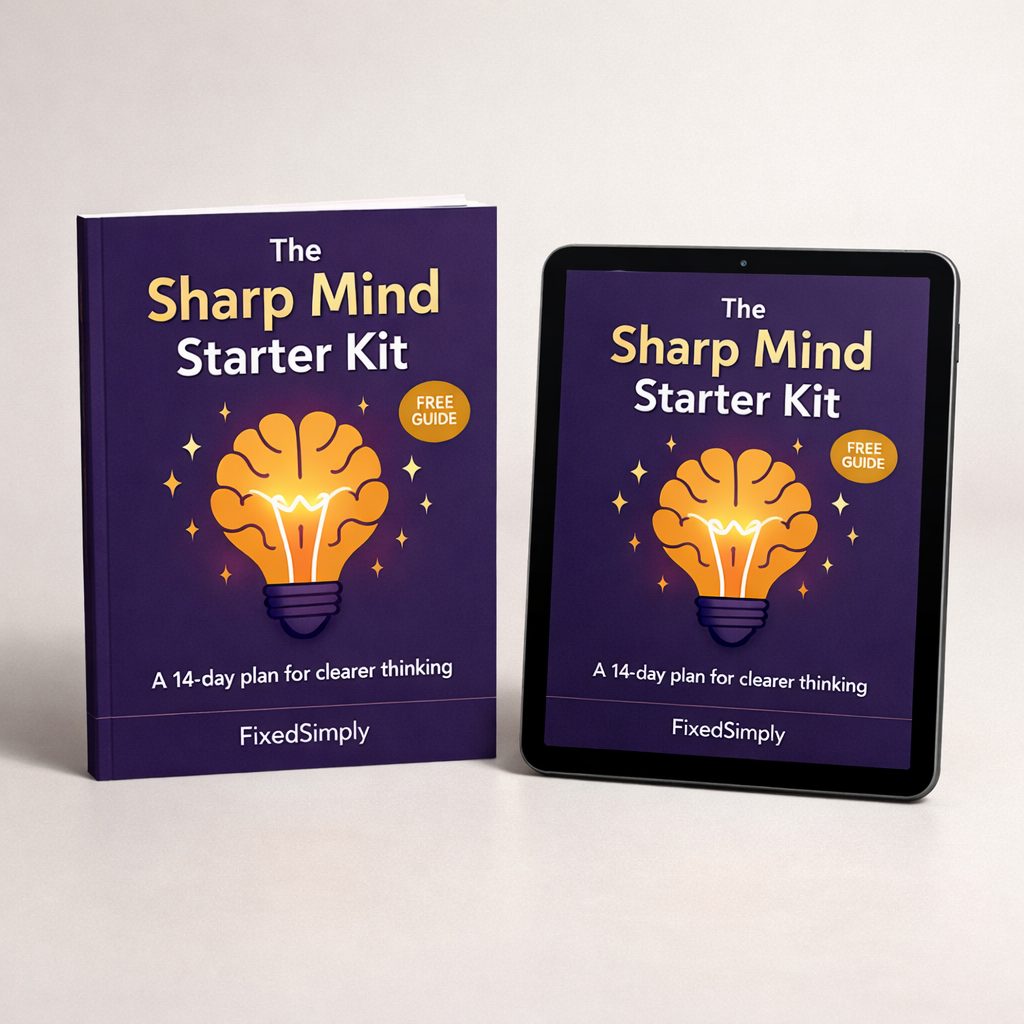
The Sharp Mind Starter Kit
Clearer thinking in 14 days. Inside you get:
- A day-by-day plan of easy brain habits
- Foods, sleep and movement that support focus
- A printable memory and mood log
100% free. No spam, unsubscribe anytime. Privacy policy.
Other quick fog-clearers
- A brisk 10-minute walk outside
- A glass of water and a protein-rich snack
- Single-tasking in focused blocks
- A consistent sleep schedule
Read brain fog symptoms and brain fog and forgetfulness after 50 for more.
Why these help
- Movement: Physical activity boosts blood flow to the brain and can quickly improve alertness.
- Hydration and nutrition: Dehydration and low blood sugar can make fog worse. Even a small snack and water can help.
- Single-tasking: Switching between tasks drains mental energy. Focusing on one thing at a time helps your brain work better.
- Sleep: Poor sleep is a major cause of brain fog. Sticking to a regular sleep schedule supports mental clarity.
Audio and supplements
Some readers like audio programs for relaxed focus, such as The Brain Song. Others try supplements like Phytomem One; evidence is limited.


If you use audio programs, look for ones designed for relaxation or focus, with gentle music or guided instructions. Supplements should only be used with your doctor’s knowledge, especially if you take other medications or have health conditions. There is no strong evidence that any supplement can cure or prevent brain fog.
When to see a doctor
- Your brain fog is severe, persistent or getting worse over time
- You have other symptoms, such as confusion, memory loss, weakness, or changes in speech or vision
- You recently started a new medication
- You have a history of thyroid problems, anemia, diabetes or other chronic conditions
Brain fog can sometimes be a sign of an underlying medical problem that needs attention. Never ignore red-flag symptoms or delay getting medical advice.
Troubleshooting common problems
Almost everyone runs into a few bumps when they start meditating. These are normal and easy to work around.
- “My mind will not stop wandering.” That is not failure, it is the practice. Each time you notice and gently come back to the breath, you are training the attention you want more of during the day.
- “I fall asleep.” Try sitting upright in a chair instead of lying down, practise earlier in the day, or keep your eyes slightly open with a soft gaze at the floor.
- “I feel restless or anxious.” Shorten the session to three or four minutes and build up slowly. Focusing on the feeling of your feet on the floor can be more settling than focusing on the breath.
- “I keep forgetting to do it.” Link it to something you already do every day, such as straight after your morning coffee or before you check email.
If brain fog is new, getting worse or comes with other symptoms such as memory loss, confusion or extreme tiredness, see your doctor. Meditation is a helpful habit, but it is not a replacement for a proper check-up.
Frequently asked questions
How long does it take for meditation to help with brain fog?
Some people notice a sense of calm or clearer thinking after just one session, but most benefits build over days or weeks of regular practice. Even five to ten minutes a day can help, but consistency is key.
Is meditation safe for everyone?
For most people, yes. However, those with certain mental health conditions (such as severe depression or PTSD) should talk to a healthcare professional before starting intensive meditation practices. If meditation makes you feel worse, stop and seek advice.
What is the best type of meditation for brain fog?
Simple mindfulness or breath-focused meditation is often recommended for brain fog. Guided meditations, body scans and walking meditation can also be helpful. The best type is the one you will actually do regularly.
Can I meditate lying down?
Yes, but you may be more likely to fall asleep. Sitting upright helps you stay alert and focused. If lying down is more comfortable due to pain or mobility issues, it is fine, just try to stay awake and aware.
Will meditation replace the need for sleep or medical treatment?
No. Meditation can support clearer thinking and stress reduction, but it is not a substitute for getting enough sleep, eating well, or treating underlying health problems. If your brain fog is persistent or severe, see your doctor.
What if I cannot clear my mind during meditation?
It is normal for your mind to wander. The goal of meditation is not to have zero thoughts, but to notice when your attention drifts and gently bring it back. Over time, this strengthens your ability to focus.
The bottom line
Ten minutes of simple breath-focused meditation a day can reduce stress, improve attention and help lift brain fog. Combine it with sleep, movement and good nutrition.
Want this as a handy printable?
The Sharp Mind Starter Kit
Clearer thinking in 14 days. Inside you get:
- A day-by-day plan of easy brain habits
- Foods, sleep and movement that support focus
- A printable memory and mood log
100% free. No spam, unsubscribe anytime. Privacy policy.
Disclosure: links marked as sponsored are affiliate links. If you buy through them we may earn a commission at no extra cost to you. This article is for information only and is not medical advice.
Sources and further reading
This guide is for general information only and is not a substitute for professional advice. See our editorial policy.
Products mentioned in this guide
Affiliate links. Results vary. This is not medical advice.