

Brain fog is not a medical diagnosis, but almost everyone knows the feeling: your thinking is slow, words are on the tip of your tongue, and it is hard to focus. Here are the most common brain fog symptoms, the usual causes, and what helps.
- Key takeaways:
- Brain fog is a group of symptoms affecting memory, focus and mental clarity.
- Poor sleep, stress, hormone changes and certain medical issues are common triggers.
- Staying hydrated, eating regularly, moving your body and managing stress can help clear brain fog.
- If brain fog persists or worsens, see your doctor to rule out underlying medical causes.
- Supplements have mixed evidence; lifestyle changes are the foundation for clearer thinking.
Common brain fog symptoms
- Trouble concentrating or staying on task
- Forgetting why you walked into a room, or what you were about to say
- Struggling to find the right word
- Feeling mentally tired or “slow”
- Taking longer to make decisions or follow conversations
- A sense of detachment or haziness
- Headaches or low mood alongside the fogginess
What does brain fog feel like?
Brain fog can feel like your thoughts are moving through molasses. You may notice:
- A sense of mental “cloudiness” or being in a daze
- Difficulty recalling recent information or names
- Simple tasks suddenly feel overwhelming
- Increased frustration with forgetfulness or word-finding
- Feeling unmotivated or less productive
These symptoms usually come and go, but when brain fog lingers, it can impact your work, relationships and overall well-being.
What commonly causes brain fog
- Poor sleep. The most common cause. Even one short night can dull focus and memory.
- Stress and anxiety, which tie up mental resources.
- Hormone changes, particularly perimenopause and menopause.
- Dehydration and skipped meals.
- Medicines, including some antihistamines, sleep aids, pain medicines and anxiety drugs.
- Medical conditions such as thyroid problems, anemia, low vitamin B12, depression, diabetes and long COVID.
- Too much screen time and multitasking, which fragments attention.
How these causes affect your brain
- Lack of sleep disrupts the brain’s ability to store memories and process new information.
- Stress hormones like cortisol can interfere with focus and make it harder to concentrate.
- Hormonal shifts (menopause, thyroid issues) can affect neurotransmitters and brain energy.
- Dehydration reduces blood flow and oxygen to the brain, leading to sluggishness.
- Low blood sugar from skipped meals can make you feel lightheaded and distracted.
- Medications that cross into the brain can slow reaction time and thinking speed.
- Medical conditions like anemia or low B12 mean less oxygen or nutrition for brain cells.
Checklist: Could one of these be causing your brain fog?
- Have you been sleeping poorly or waking up often?
- Are you under more stress than usual?
- Have you skipped meals or not been drinking enough water?
- Have you started a new medication recently?
- Are you experiencing hormonal changes (menopause, thyroid issues)?
- Do you have a chronic health condition (diabetes, anemia, depression, long COVID)?
- Have you been spending long hours on screens or multitasking?
If you answered yes to one or more, that may be a key factor in your brain fog.

How to clear brain fog
1. Protect your sleep
Keep a regular wake-up time, get morning daylight and avoid caffeine after early afternoon. See our guide to sleeping through the night.
- Stick to a consistent bedtime and wake-up time, even on weekends.
- Limit screens an hour before bed to help your brain wind down.
- Try a relaxing routine: gentle stretching, reading or calming music.
2. Move your body
A brisk 10 to 20 minute walk boosts blood flow to the brain and often lifts fog quickly. Regular exercise is linked with better memory over time.
- Even light activity, like gardening or housework, counts.
- Try to get up and move every hour if you are sitting for long periods.
- Stretching or yoga can also help clear your mind.
3. Eat and drink steadily
Eat regular meals with protein, fiber and healthy fats, and drink water through the day. Big sugary meals can cause energy crashes.
- Keep a water bottle nearby and sip throughout the day.
- Include snacks with nuts, yogurt or fruit for steady energy.
- Limit large, heavy meals that can make you sluggish.
4. Single-task
Work in focused blocks of 25 to 50 minutes with short breaks, and silence notifications while you do.
- Make a short to-do list and tackle one thing at a time.
- Use a timer to help you stay focused, then take a movement break.
- Turn off or mute devices you do not need for the task at hand.
5. Write things down
Lists, calendars and phone reminders take pressure off working memory.
- Jot down tasks as soon as they come to mind.
- Use sticky notes or a planner to keep track of appointments and errands.
- Set reminders on your phone for important events or medication times.
6. Manage stress
Breathing exercises, time outdoors and talking to someone you trust all help.
- Practice slow, deep breathing for a few minutes each day.
- Spend time in nature, even if it is just a walk around the block.
- Connect with friends, family or a support group to talk things out.
Other practical tips
- Give yourself permission to take breaks, especially when feeling overwhelmed.
- Reduce unnecessary commitments when possible.
- Try “brain games” like puzzles or crosswords to gently challenge your mind.
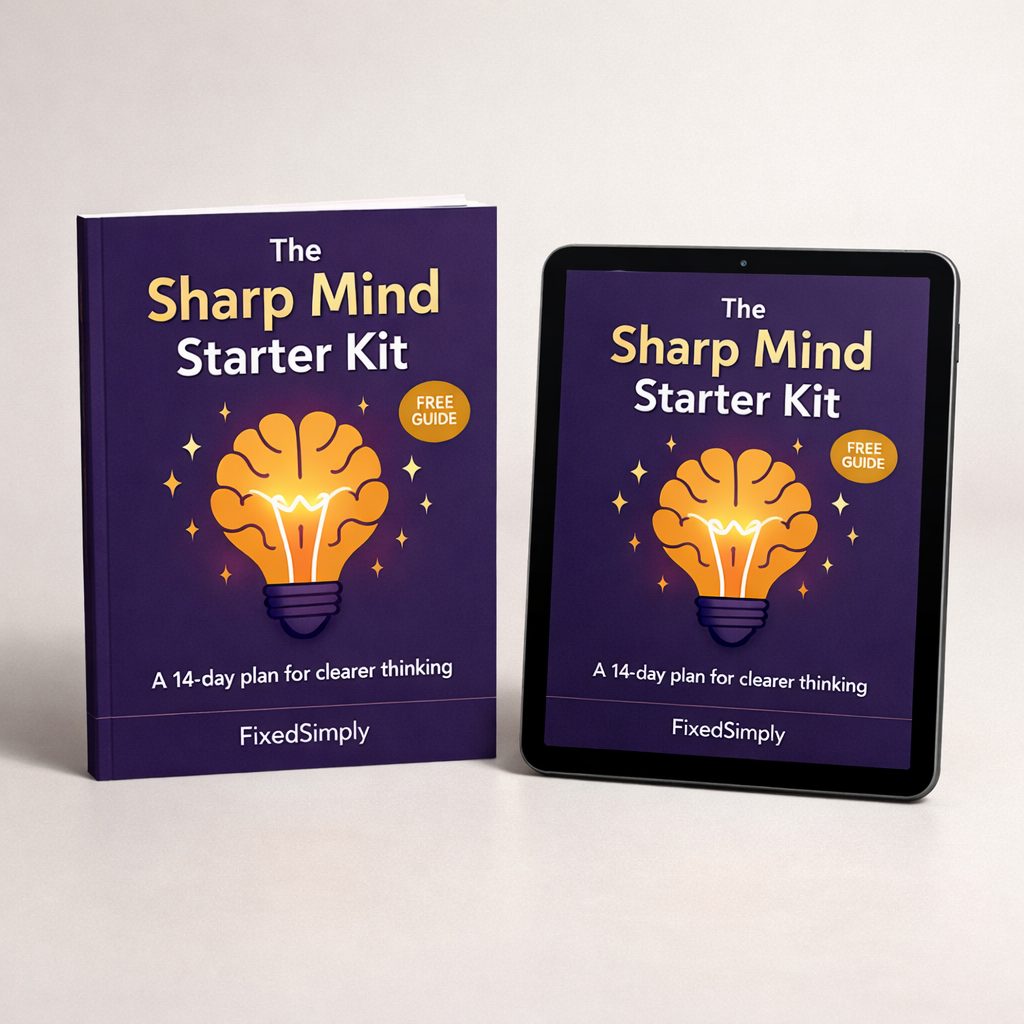
The Sharp Mind Starter Kit
Clearer thinking in 14 days. Inside you get:
- A day-by-day plan of easy brain habits
- Foods, sleep and movement that support focus
- A printable memory and mood log
100% free. No spam, unsubscribe anytime. Privacy policy.
When to see a doctor
See your doctor if brain fog lasts more than a few weeks, is getting worse, or comes with fatigue, weight changes, low mood, or problems with daily tasks. Simple blood tests can check thyroid, iron, B12 and blood sugar. Get urgent help for sudden confusion, slurred speech, weakness or a severe headache.
- Sudden changes in thinking or memory are a red flag for medical attention.
- Brain fog that interferes with your daily life or job should not be ignored.
- Underlying problems like thyroid disease or vitamin deficiencies can often be treated once identified.
What about brain supplements?
Evidence for “nootropic” supplements is limited and mixed. Some readers still try one as an extra alongside the habits above. Options readers ask about include Phytomem One and NeuroPrime, or the audio program The Brain Song. Check supplements with your pharmacist if you take other medicines.


- Supplements are not a replacement for medical care or healthy habits.
- Always discuss new supplements with your doctor or pharmacist, especially if you take prescription medications.
- Look for third-party tested brands if you choose to try a supplement.
For more on memory changes with age, read brain fog and forgetfulness after 50.
Frequently asked questions
Is brain fog a sign of dementia?
Not usually. Brain fog is common and often temporary, while dementia involves ongoing, progressive memory and thinking problems that interfere with daily life. If your memory loss is worsening or affecting your ability to function, see your doctor.
Can dehydration really cause brain fog?
Yes. Even mild dehydration can reduce blood flow and oxygen to your brain, making you feel tired, unfocused and foggy. Aim to drink water regularly throughout the day.
How long does brain fog last?
It depends on the cause. Brain fog from a poor night’s sleep or stress may clear in a day or two, while fog from medical conditions or ongoing sleep problems can last longer. If symptoms persist more than a few weeks, see your doctor.
Are there foods that help with brain fog?
Foods rich in protein, healthy fats (like nuts, seeds and fish), fiber, and plenty of fruits and vegetables support brain health. Avoiding big sugary meals and eating regularly helps keep your energy and focus steady.
Can screen time or multitasking make brain fog worse?
Yes. Too much screen time and trying to do too many things at once can scatter your attention and make it harder to concentrate. Taking regular breaks and focusing on one thing at a time can help clear your mind.
When should I be worried about brain fog?
Be concerned if brain fog is new, severe, worsening, or comes with other symptoms like confusion, weakness, vision changes or severe headache. Seek urgent care for sudden changes, and see your doctor for ongoing symptoms.
Key takeaways
- Brain fog is a collection of symptoms, not a disease, and is usually temporary.
- Lack of sleep, stress, dehydration, skipped meals and hormonal changes are common triggers.
- Improving sleep, moving your body, eating and hydrating regularly, and managing stress can help clear your mind.
- See a doctor if brain fog is persistent, worsening, or comes with other concerning symptoms.
- Supplements have limited evidence and should not replace healthy habits or medical care.
Checklist: Brain fog causes and what to do
- Poor sleep: Prioritize a regular sleep schedule, minimize caffeine, and create a restful bedtime routine.
- Stress: Try breathing exercises, regular breaks, and talking with someone you trust.
- Hormone changes: Discuss symptoms with your doctor, especially around menopause or thyroid changes.
- Dehydration: Carry a water bottle and sip throughout the day.
- Skipped meals: Eat small, balanced meals and snacks to keep blood sugar steady.
- Medications: Review any new or changed prescriptions with your doctor or pharmacist.
- Medical conditions: Schedule a checkup for bloodwork if brain fog is persistent.
- Screen time/multitasking: Take regular breaks and focus on one task at a time.
The bottom line
Brain fog usually comes from poor sleep, stress, hormones, diet or medicines, and it often lifts with better sleep, movement and focused work. If it persists, a few simple tests can rule out treatable causes.
Want this as a handy printable?
The Sharp Mind Starter Kit
Clearer thinking in 14 days. Inside you get:
- A day-by-day plan of easy brain habits
- Foods, sleep and movement that support focus
- A printable memory and mood log
100% free. No spam, unsubscribe anytime. Privacy policy.
Disclosure: links marked as sponsored are affiliate links. If you buy through them we may earn a commission at no extra cost to you. This article is for information only and is not medical advice.
Sources and further reading
This guide is for general information only and is not a substitute for professional advice. See our editorial policy.
Products mentioned in this guide
Affiliate links. Results vary. This is not medical advice.
1 thought on “Brain Fog Symptoms: What It Feels Like and How to Clear Your Head”
Comments are closed.